

I appreciate what Framework is offering, but it needs to follow through.
Framework Computer, known for its modular PCs, has officially scheduled its "Next Gen" event for April 21. The company aims to reveal its latest generation of hardware, maintaining its emphasis on upgradeable and user-controlled computing systems.
The event will be livestreamed worldwide, and a select group of attendees will have the opportunity to experience the new products in person. Although Framework has not disclosed specific product information, teasers and industry indications suggest a strong focus on modular upgrades and enhanced integration with open platforms like Linux.
Hints of a Transition Toward Next-Gen Modular and Open Computing
Framework has deliberately kept the details unclear, but its communications imply a significant shift in its approach. The company’s teaser campaign refers to Linux ecosystems and open computing, indicating that the forthcoming hardware may prioritize flexibility and user autonomy even further.
Reports suggest that the company may unveil updated modular laptops or desktops, potentially utilizing next-generation chips.
Moreover, Framework has presented the event as more than a simple product launch. Through its messaging, the company emphasizes rising concerns about the future of personal computing, particularly in light of constrained resources like memory and silicon in an AI-driven sector.
Why this Event is Important in Today’s PC Landscape
The timing of Framework’s announcement is noteworthy. The broader computing industry is currently grappling with supply constraints, increased component costs, and a shift toward cloud-based, AI-focused infrastructures.
Framework has positioned itself as an alternative to these trends. The company continues to promote repairable and upgradeable hardware that users can fully control, as opposed to systems locked to proprietary ecosystems.
This philosophy has gained popularity among enthusiasts and professionals who prioritize ownership and customization. The upcoming event is anticipated to further support this viewpoint, potentially introducing new methods to enhance device longevity and versatility.
Implications for Users and the Industry
For consumers, this event could signal new options in a market increasingly characterized by sealed, non-upgradable devices. If Framework makes substantial upgrades, it might bolster the case for modular computing as a legitimate alternative to conventional hardware cycles.
More broadly, the company’s messaging highlights an evolving debate within the tech sphere. As AI infrastructure demands escalate and centralized computing gains traction, issues related to ownership, control, and accessibility are becoming increasingly critical.
Framework’s strategy suggests that there remains a strong demand for devices that prioritize user freedom over mere convenience.
What to Expect Next
The Framework Next Gen event is set for April 21 at 10:30 AM PT, with a livestream for viewers around the globe.
While specific product announcements are still under wraps, anticipation is growing for new modular hardware and possible updates related to the software ecosystem. The company has indicated that its announcements may also address ongoing industry challenges, such as supply chain issues and escalating component costs.
Ultimately, the event is poised to offer more than just new devices. It may provide insights into how companies like Framework intend to navigate a swiftly evolving computing landscape, where control, flexibility, and long-term usability are becoming as crucial as raw performance.


Other articles
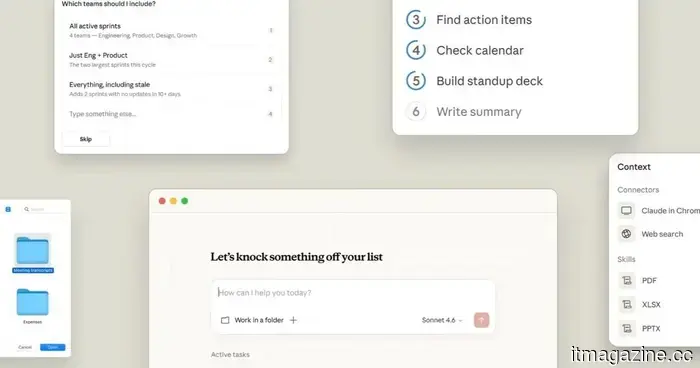 Claude Cowork is evolving into a shared workspace infrastructure.
Anthropic is advancing Claude Cowork beyond its preview stage by introducing enterprise controls, analytics, and connector governance, indicating its intention for the product to be utilized across various departments such as operations, finance, marketing, and legal, rather than being confined to technical teams.
Claude Cowork is evolving into a shared workspace infrastructure.
Anthropic is advancing Claude Cowork beyond its preview stage by introducing enterprise controls, analytics, and connector governance, indicating its intention for the product to be utilized across various departments such as operations, finance, marketing, and legal, rather than being confined to technical teams.
 You Inquired: Sony's significant decision has raised concerns among fans, in addition to anti-glare in dim lighting.
Sony's recent collaboration with TCL has raised concerns among viewers regarding the implications for quality, pricing, and privacy. We analyze the actual changes taking place, whether a new QD-OLED model is expected this year, and evaluate anti-glare screens in a dark environment.
You Inquired: Sony's significant decision has raised concerns among fans, in addition to anti-glare in dim lighting.
Sony's recent collaboration with TCL has raised concerns among viewers regarding the implications for quality, pricing, and privacy. We analyze the actual changes taking place, whether a new QD-OLED model is expected this year, and evaluate anti-glare screens in a dark environment.
 Mac mini and Mac Studio are currently out of stock – is this due to the RAM shortage or an upcoming M5 update?
The high-RAM configurations of the Mac mini and Mac Studio were removed from Apple's store on April 11, 2026. Could this be due to the worldwide DRAM shortage or a forthcoming refresh of the M5?
Mac mini and Mac Studio are currently out of stock – is this due to the RAM shortage or an upcoming M5 update?
The high-RAM configurations of the Mac mini and Mac Studio were removed from Apple's store on April 11, 2026. Could this be due to the worldwide DRAM shortage or a forthcoming refresh of the M5?
 OpenAI's new $100 ChatGPT Pro plan aims to compete with Claude Max by providing five times more access to Codex.
On April 9, 2026, OpenAI introduced a ChatGPT Pro subscription at $100 per month, aligning its price with Claude Max. The Pro tier offers five times more Codex compared to the Plus version and includes a promotion that provides ten times the usual features until the end of May.
OpenAI's new $100 ChatGPT Pro plan aims to compete with Claude Max by providing five times more access to Codex.
On April 9, 2026, OpenAI introduced a ChatGPT Pro subscription at $100 per month, aligning its price with Claude Max. The Pro tier offers five times more Codex compared to the Plus version and includes a promotion that provides ten times the usual features until the end of May.
 Microsoft Teams is set to resolve a completely awkward daily issue encountered during meetings.
Microsoft is introducing a pre-join microphone test to Teams, along with privacy-focused Copilot recaps. This will provide regular users with a more seamless call initiation and give businesses better control over AI-generated meeting summaries.
Microsoft Teams is set to resolve a completely awkward daily issue encountered during meetings.
Microsoft is introducing a pre-join microphone test to Teams, along with privacy-focused Copilot recaps. This will provide regular users with a more seamless call initiation and give businesses better control over AI-generated meeting summaries.
 The smart home was intended to be accessible, yet it is turning into a tollgate.
The smart home was expected to offer effortless convenience. Instead, it often provides a refined system of control, where screens, speakers, and dashboards dictate what can be viewed, what can be utilized, and what continues to charge even after the hardware costs have been covered.
The smart home was intended to be accessible, yet it is turning into a tollgate.
The smart home was expected to offer effortless convenience. Instead, it often provides a refined system of control, where screens, speakers, and dashboards dictate what can be viewed, what can be utilized, and what continues to charge even after the hardware costs have been covered.
I appreciate what Framework is offering, but it needs to follow through.
Framework hints at an upcoming hardware event concentrating on open computing and user empowerment.