
The AI health technology sector is experiencing rapid growth, but effective treatments are lacking.
The revolution in drug discovery is genuine but significantly exaggerated; health chatbots pose documented risks, and critical diseases remain persistently unresolved. In late 2025 at Novartis, a team investigating Huntington’s disease utilized generative AI to design 15 million possible compounds for a type of molecule known as a molecular glue degrader, which has the ability to cross the blood-brain barrier and target a protein involved in the disease. From these 15 million options, they synthesized approximately 60 in the lab, identifying a promising scaffold that is now moving towards further optimization. This reduction from 15 million to 60 is, by any fair assessment, an impressive achievement in computational selection. However, by the same token, it is not a cure for Huntington’s disease.
The gap between AI's laboratory capabilities and its actual contributions to patient care defines the tension within health technology in 2026. While the industry touts a narrative of revolution, the reality reveals incremental, uncertain, and often disappointing improvements. In the space between these perspectives, over 40 million people are daily inputting their symptoms into ChatGPT, with safety organizations warning that this might represent the most perilous application of technology available.
The allure of AI in drug discovery is compelling and somewhat accurate when viewed in limited terms. Developing a new drug traditionally spans 10 to 15 years and costs around $2.5 billion per successful product, with about 90 percent failing during clinical trials. AI has the potential to reduce early discovery timelines by 30 to 40 percent and shorten preclinical candidate development from three to four years down to as little as 13 to 18 months. For example, Insilico Medicine managed to advance an AI-discovered drug for idiopathic pulmonary fibrosis from target identification to Phase II trials in under 30 months, a process that typically takes six to eight years.
As of January 2024, at least 75 drugs or vaccines from AI-first biotech companies had entered clinical trials, as reported by Boston Consulting Group. While these are real milestones, they still fall short of reaching the finish line. By December 2025, no AI-discovered drug had received FDA approval; not one. The pharmaceutical industry's clinical failure rate of 90 percent has not seen demonstrable improvement. Experts have noted that the progression rates of AI-discovered compounds appear similar to those of traditionally discovered ones, indicating that while the technology may accelerate the process to the starting point, it does not enhance the likelihood of successfully advancing from there.
Dr. Raminderpal Singh summarized the situation in Drug Target Review in February 2026, emphasizing that the critical question this year is not whether AI can hasten preclinical timelines (it can) but whether it can boost clinical success rates. Until Phase III data and regulatory approvals can address that query, the pharmaceutical industry's cautious stance toward AI investment seems “entirely justified,” as he put it. An unnamed CEO was more blunt: “AI has really let us all down in the last decade regarding drug discovery. We’ve just observed continuous failures.”
The reason why computation hasn’t cured Alzheimer’s, pancreatic cancer, ALS, Huntington’s, or any of the other diseases that persist in causing mortality while AI companies amass billions in funding is not due to a lack of processing power. The root cause is the inherently complex nature of human biology. Diseases with mechanisms that are poorly understood do not become clear merely because millions of compounds can be screened more rapidly.
The bottleneck was never about the speed of molecular screening; it was, and continues to be, our fundamental lack of understanding regarding how these diseases function at the cellular level, how animal models often fail to predict human responses, and how clinical trials require years to determine if a compound is both safe and effective in actual patients. AI cannot circumvent biological complexity, cannot condense a five-year clinical trial into five months, and cannot manipulate a patient’s immune system to align with a predictive model. Novartis, to its credit, acknowledged at the World Economic Forum in January 2026 that human biology is profoundly complex, that translating research into clinical studies necessitates time, and that thorough and lengthy trials remain essential for many diseases. According to the company, AI is not a magic solution but rather a tool for navigating complexity more intelligently.
This claim can be defended; however, it contrasts sharply with the narrative suggested by Sam Altman, who speculated that one day we might simply instruct ChatGPT to cure cancer. While AI’s role in drug discovery may reflect genuine yet inflated progress, its performance as a health assistant is more akin to a cautionary tale.
In January 2026, ECRI, a patient safety organization, listed the misuse of AI chatbots in healthcare as the top health technology risk for the year. ECRI found that these tools are not regulated as medical devices, not validated for clinical use, and increasingly relied upon by patients, clinicians, and healthcare professionals. They documented instances where chat
Other articles
 AI is enhancing our speed and productivity while impairing our thinking skills.
AI is ubiquitous, yet the proof of its worth is scant, the fatigue is palpable, and the term "intelligence" serves more as a marketing tool than a scientific concept.
AI is enhancing our speed and productivity while impairing our thinking skills.
AI is ubiquitous, yet the proof of its worth is scant, the fatigue is palpable, and the term "intelligence" serves more as a marketing tool than a scientific concept.
 AI is enhancing our speed and productivity but also diminishing our critical thinking skills.
AI is omnipresent, yet the proof of its worth is scarce, the fatigue is genuine, and the term “intelligence” serves more as a marketing tool than a scientific concept.
AI is enhancing our speed and productivity but also diminishing our critical thinking skills.
AI is omnipresent, yet the proof of its worth is scarce, the fatigue is genuine, and the term “intelligence” serves more as a marketing tool than a scientific concept.
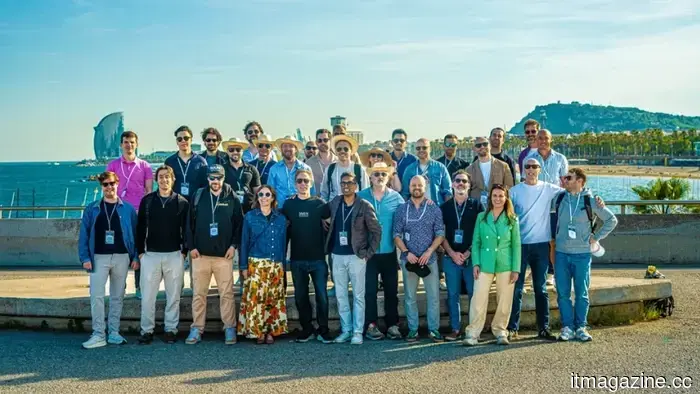 SaaS on the Beach is back in Barcelona.
SaaS on the Beach is set to return to Barcelona this May, featuring 60 SaaS founders, carefully curated discussions, and a no-pitch format designed for peer-to-peer exchange.
SaaS on the Beach is back in Barcelona.
SaaS on the Beach is set to return to Barcelona this May, featuring 60 SaaS founders, carefully curated discussions, and a no-pitch format designed for peer-to-peer exchange.
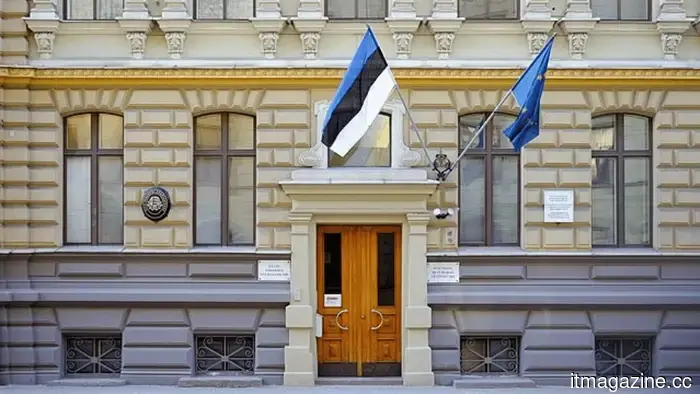 Estonia is one of the few EU countries that is against prohibiting children's use of social media.
Estonia rejected the EU's Jutland Declaration, claiming that age restrictions are impractical to enforce and suggesting that Europe should implement the GDPR on platforms rather than limit access for children.
Estonia is one of the few EU countries that is against prohibiting children's use of social media.
Estonia rejected the EU's Jutland Declaration, claiming that age restrictions are impractical to enforce and suggesting that Europe should implement the GDPR on platforms rather than limit access for children.
 UK startup Altilium secures £18.5 million to establish the first commercial EV battery refinery in Britain.
Altilium has obtained £18.5 million in grants from the UK government to establish ACT3, a refinery in Plymouth that will recycle critical minerals from 24,000 electric vehicle batteries annually.
UK startup Altilium secures £18.5 million to establish the first commercial EV battery refinery in Britain.
Altilium has obtained £18.5 million in grants from the UK government to establish ACT3, a refinery in Plymouth that will recycle critical minerals from 24,000 electric vehicle batteries annually.
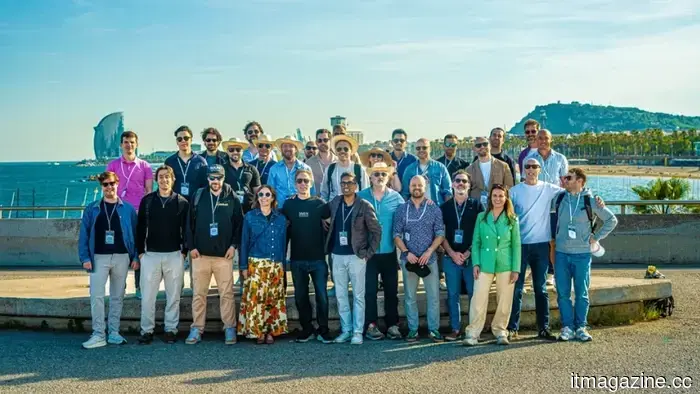 SaaS on the Beach is back in Barcelona.
SaaS on the Beach will take place in Barcelona this May, featuring 60 SaaS founders, carefully organized discussions, and a no-pitch approach designed for peer-to-peer exchange.
SaaS on the Beach is back in Barcelona.
SaaS on the Beach will take place in Barcelona this May, featuring 60 SaaS founders, carefully organized discussions, and a no-pitch approach designed for peer-to-peer exchange.
The AI health technology sector is experiencing rapid growth, but effective treatments are lacking.
No drug identified by AI has received approval. Every day, 40 million individuals seek health advice from ChatGPT. It's time to assess what AI can genuinely achieve in the field of medicine.