
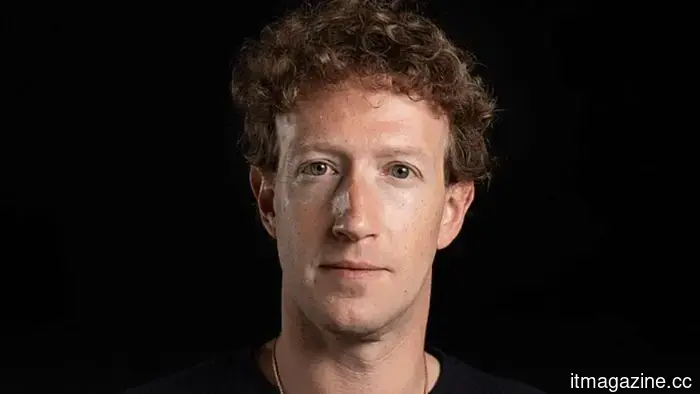
Meta has dedicated an additional $21 billion to CoreWeave, increasing its total expenditure on AI cloud to $35 billion.
In summary, Meta has allocated an additional $21 billion to CoreWeave for exclusive AI cloud capacity from 2027 until December 2032, raising the overall value of the partnership between the two companies to about $35 billion. This new agreement will enable early launches of Nvidia’s Vera Rubin platform at various locations and is particularly aimed at inference workloads rather than training tasks. CoreWeave also revealed plans to raise $4.25 billion in new debt, comprising $3 billion in convertible notes and $1.25 billion in junk bonds, to support ongoing expansion efforts. Following the announcement, CoreWeave's shares increased by around 5%, while Meta's shares rose roughly 3%.
From its origins in Ethereum mining, CoreWeave was established in 2017 in New Jersey as Atlantic Crypto, a side venture for commodity traders involved in mining Ethereum using GPUs. After the 2018 cryptocurrency downturn made mining less viable and Ethereum's eventual shift to proof-of-stake threatened to obsolete GPU mining, the founders—Michael Intrator, Brian Venturo, and Brannin McBee—recognized that the GPU resources they had were precisely what machine learning researchers needed but were hard to acquire through traditional cloud providers. The company was rebranded as CoreWeave in 2019 and shifted its focus to GPU cloud infrastructure. It went public on March 28, 2025, with a share price of $40, valuing the company at $23 billion. Its revenue for 2025 amounted to $5.13 billion, a 168% increase year-over-year, with its contracted backlog estimated at over $66 billion. The initial agreement with Meta, worth $14.2 billion and announced in September 2025, solidified CoreWeave's reputation as a serious competitor to large-scale cloud providers. The expansion on April 9, 2026, involving an additional $21 billion, marks Meta's most significant commercial relationship with CoreWeave, ensuring the company's revenue stability through the decade's end.
The contract focuses on inference rather than training. Meta's Llama model family is open-source and available for download, meaning the capital-heavy training process is largely completed before signing any cloud contracts; the ongoing expense revolves around serving those models to billions of users in real time. At Meta’s scale, which includes hundreds of millions of daily active users across Facebook, Instagram, WhatsApp, and Meta AI, inference requires consistent, low-latency computing across distributed infrastructures that Meta's own data centers cannot always manage at peak levels. CoreWeave will provide this capacity through various locations and will feature some of the first commercial uses of Nvidia’s Vera Rubin platform, introduced at GTC 2026 in March as the next generation of AI hardware. This new agreement is intended to complement, not replace, Meta's internal infrastructure development. Meta has indicated a capital expenditure budget between $115 billion and $135 billion for 2026, with AI infrastructure being a key focus, and the company is clear that it is building both its own data centers and sourcing external capacity at the same time. The CoreWeave expansion follows a $27 billion infrastructure deal signed with Nebius in March 2026, where the Dutch neocloud operator will provide dedicated computing starting in early 2027, also featuring early Vera Rubin deployments. These two agreements demonstrate that Meta is not merely seeking cloud capacity; it is establishing a diversified, multi-vendor infrastructure strategy to enhance flexibility and reliability on a large scale.
For CoreWeave, the expansion with Meta addresses a long-standing issue of revenue concentration that has lingered since its IPO: a heavy reliance on a single customer. Microsoft accounted for 62% of CoreWeave’s 2024 revenue, a figure that raised concerns among institutional investors, prompting the company to seek reduction. With the new commitment from Meta, CoreWeave's CEO, Michael Intrator, stated that no single customer will now exceed 35% of total sales. While this still represents a considerable concentration, it presents a significantly different risk than relying predominantly on one hyperscale client. Nvidia, which made a $2 billion strategic investment in Nebius in March 2026 and has strengthened its commercial ties with major AI cloud providers, is central to CoreWeave's business model: the entire infrastructure is built around Nvidia GPUs, and the Vera Rubin deployments in the Meta contract will extend that reliance into the next generation of hardware. CoreWeave has also recently expanded its agreement with OpenAI by up to $6.5 billion, further diversifying its clientele beyond Microsoft. The company's stock reached a peak of $187 in mid-2025 before declining to around $65 later that year due to broader concerns over AI investment returns; following the Meta expansion announcement, it traded between $88 and $95.
The foundation of this growth is the debt taken to fund it all. AI cloud infrastructure incurs substantial costs before revenue begins to stream in, leading CoreWeave
Other articles
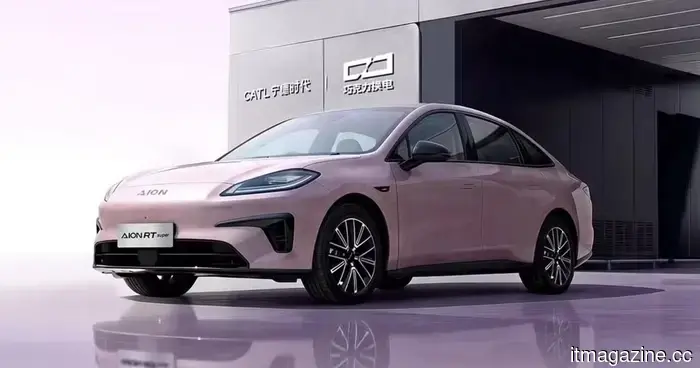 China's newest electric vehicle sensation is priced at $13,000, has a range exceeding 300 miles, and features a battery swap time of just 99 seconds.
Forget the discussion about charging speeds: the $13,000 Aion RT Super replaces its entire CATL battery pack in just 99 seconds, offers a range of 314 miles on a single charge, and may represent a significant shift in how budget-friendly EVs address range anxiety worldwide.
China's newest electric vehicle sensation is priced at $13,000, has a range exceeding 300 miles, and features a battery swap time of just 99 seconds.
Forget the discussion about charging speeds: the $13,000 Aion RT Super replaces its entire CATL battery pack in just 99 seconds, offers a range of 314 miles on a single charge, and may represent a significant shift in how budget-friendly EVs address range anxiety worldwide.
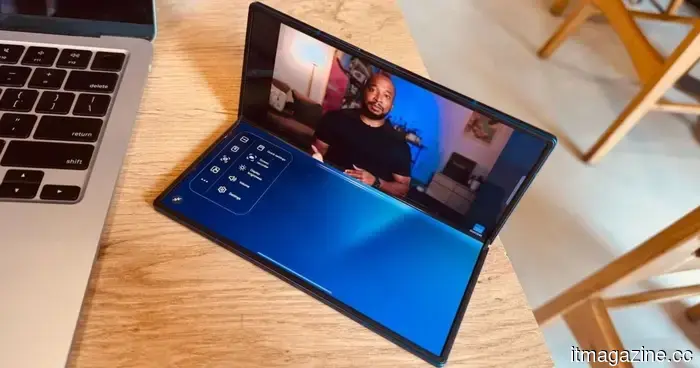 The powerful stylus may make a comeback in the upcoming Samsung Galaxy foldable.
Following the discreet removal of the S Pen from last year's Galaxy Z Fold 7, Samsung seems set to reintroduce it in a more prominent and daring format, coinciding with Apple's imminent entry into the foldable market with its first foldable iPhone.
The powerful stylus may make a comeback in the upcoming Samsung Galaxy foldable.
Following the discreet removal of the S Pen from last year's Galaxy Z Fold 7, Samsung seems set to reintroduce it in a more prominent and daring format, coinciding with Apple's imminent entry into the foldable market with its first foldable iPhone.
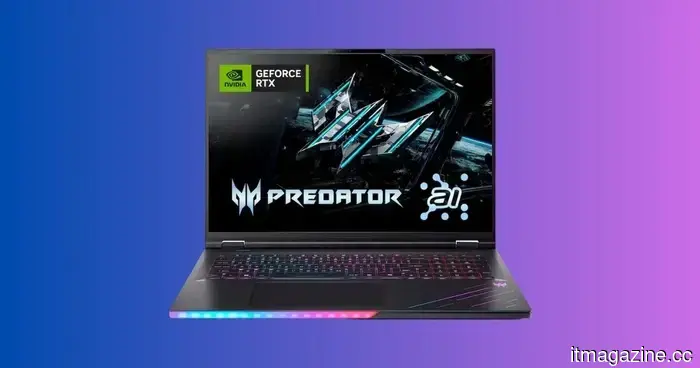 Get $560 off the Acer Predator Helios 18 AI, featuring an RTX 5080, a 24-core Ultra 9 processor, and a 250Hz Mini-LED display for less than $2,600.
The Acer Predator Helios 18 AI is now available for $2,539.99, offering a savings of $560 from its comparable price of $3,099.99. It features an impressive specification sheet that includes an RTX 5080 with GDDR7, a 24-core Intel Core Ultra 9, and a 250Hz Mini-LED display with 1000 nits that come together to [...]
Get $560 off the Acer Predator Helios 18 AI, featuring an RTX 5080, a 24-core Ultra 9 processor, and a 250Hz Mini-LED display for less than $2,600.
The Acer Predator Helios 18 AI is now available for $2,539.99, offering a savings of $560 from its comparable price of $3,099.99. It features an impressive specification sheet that includes an RTX 5080 with GDDR7, a 24-core Intel Core Ultra 9, and a 250Hz Mini-LED display with 1000 nits that come together to [...]
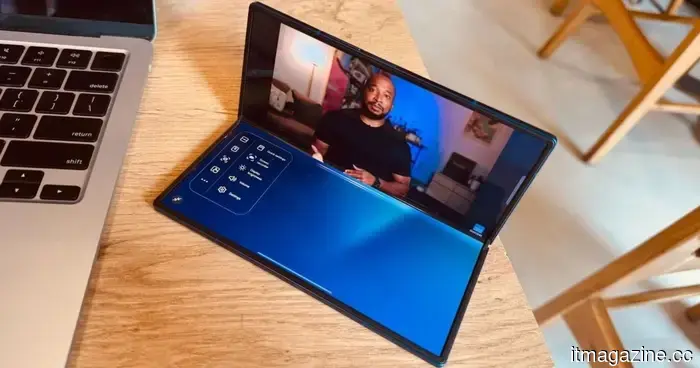 The powerful stylus may make a comeback in the upcoming Samsung Galaxy foldable.
Following the discreet removal of the S Pen from last year's Galaxy Z Fold 7, Samsung seems poised to reintroduce it in a more prominent and striking design, coinciding with Apple’s entry into the foldable market with its first foldable iPhone.
The powerful stylus may make a comeback in the upcoming Samsung Galaxy foldable.
Following the discreet removal of the S Pen from last year's Galaxy Z Fold 7, Samsung seems poised to reintroduce it in a more prominent and striking design, coinciding with Apple’s entry into the foldable market with its first foldable iPhone.
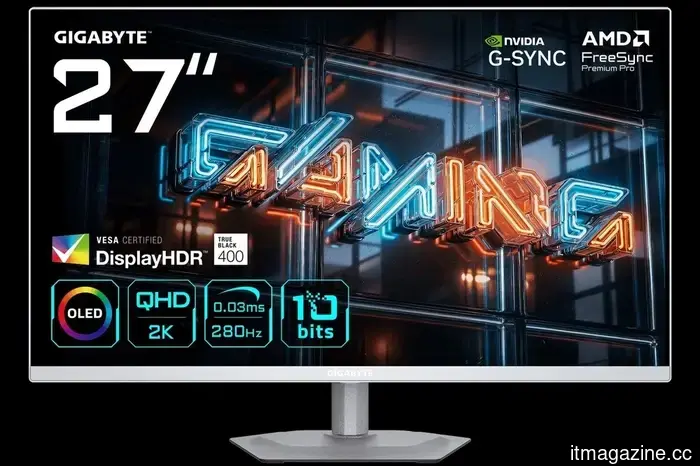 GIGABYTE has introduced a new OLED monitor.
The company announced the launch of sales for the gaming monitor MO27Q2A ICE. The new model features a 27-inch QD-OLED panel in a white casing.
GIGABYTE has introduced a new OLED monitor.
The company announced the launch of sales for the gaming monitor MO27Q2A ICE. The new model features a 27-inch QD-OLED panel in a white casing.
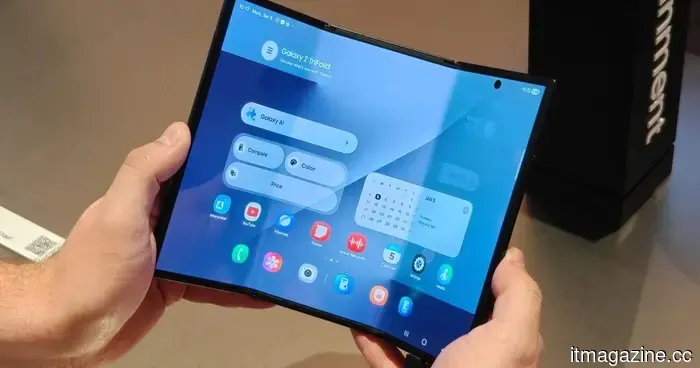 The Galaxy Z TriFold is set to return to Samsung stores, potentially for the final time.
Samsung will reintroduce the Galaxy Z TriFold to the US on April 10 via Samsung.com and certain Samsung Experience stores, and this may be the final direct restock.
The Galaxy Z TriFold is set to return to Samsung stores, potentially for the final time.
Samsung will reintroduce the Galaxy Z TriFold to the US on April 10 via Samsung.com and certain Samsung Experience stores, and this may be the final direct restock.
Meta has dedicated an additional $21 billion to CoreWeave, increasing its total expenditure on AI cloud to $35 billion.
Meta has increased its CoreWeave AI cloud contract by $21 billion, extending it to 2032, which brings the total value of the partnership to $35 billion and aims at the initial deployments of Nvidia's Vera Rubin.