
BILL enables enterprise suppliers to gather payments from any SMB, including those not using its platform.
In summary, BILL has enhanced its Supplier Payments Plus product, allowing large enterprise suppliers to receive card and ACH payments from any SMB customer, including those without a BILL account. This upgrade automatically converts paper checks into digital transactions and deposits card payments directly into supplier accounts, potentially reducing collection times by about seven days.
BILL introduced Supplier Payments Plus in June 2025 to aid large enterprise suppliers in managing and reconciling high volumes of payments from numerous small businesses. The recent enhancement marks a strategic shift: enterprise suppliers on BILL can now collect payments from SMB customers who have never engaged with BILL and do not intend to create an account, effectively moving away from the closed-network model that has long defined B2B payment platforms.
Opening the network to non-members
The centerpiece of the April update is a feature named Payment Links, which enables enterprise suppliers to send payment links to any SMB customer, allowing card or ACH payments without requiring the buyer to have a BILL account, log into a portal, or undergo onboarding hassles. Receivables are captured, reconciled, and integrated into the supplier’s existing workflow along with payments from businesses already part of BILL’s network of over eight million members.
This change means that enterprise suppliers with thousands of SMB customers no longer need to divide their clientele into “on BILL” and “off BILL,” managing separate collection processes. A single dashboard provides visibility across all incoming payments, regardless of their source, while the supplier’s existing payment preferences and settlement controls apply uniformly.
Mary Kay Bowman, the executive vice president and general manager of payments and financial services at BILL, explained the challenge her company aims to address: “B2B payments are complex, requiring coordination, trust, and precision between SMBs and their enterprise suppliers. BILL sits at the core, managing this complexity at scale so that customers on both sides can transfer funds with clearer visibility and control.”
Automating what was manual
In addition to Payment Links, two other features improve payment processing once transactions are received. Card Straight-Through Processing automates card payment settlements by directly depositing funds into supplier accounts, thereby eliminating the manual receipt processing and exception handling typical in high-volume card collections. Configurable payment rules allow suppliers to set preferences according to payment method, adjusting the balance between card and ACH based on cost and speed priorities, with the seven-day acceleration reflecting outcomes when these preferences are optimized for speed.
The third new feature, Intelligent Check Conversion, targets the segment of the SMB market that still relies on paper checks. BILL’s system intercepts checks and transforms them into digital transactions before reaching the supplier’s finance team, completely removing the manual processing stage. This feature specifically addresses a persistent structural issue in SMB-to-enterprise payment flows: the supplier modernizing its operations still encounters customers who have not, thus incurring reconciliation costs due to this gap.
According to industry research referenced by BILL, 93% of companies are prioritizing enhancements to cash application efficiency in 2026, pinpointing manual reconciliation and payment delays as key friction sources. BILL argues that its central position in the network, positioned between a large enterprise supplier and the thousands of SMBs that interact with it, makes it ideally suited to alleviate this friction rather than relocating it upstream or downstream.
The competitive moment
This expansion occurs in a rapidly consolidating B2B payments market. Xero, which finalized its acquisition of the SMB bill payments platform Melio last October for $2.5 billion, now offers a combined solution encompassing accounting, invoicing, and bill payment for small businesses in the U.S., with AI-assisted financial workflows becoming available to the accountants serving these businesses. The deal, which closed in October 2025, significantly bolstered Xero’s presence in the U.S. market where BILL operates.
BILL has responded by moving further up the value chain, enhancing capabilities for enterprise suppliers dealing with SMBs rather than focusing solely on the SMBs themselves. The Supplier Payments Plus expansion reflects this strategy: the deeper an enterprise supplier integrates its receivables processes into BILL’s platform, the less likely it is that the supplier will redirect to a competing network, regardless of which payment tool its SMB customers ultimately select. The broader arena of SMB financial operating platforms is attracting considerable investment, exemplified by the €175 million raised by the Paris-based company Pennylane in January 2026 to extend its integrated invoicing, payments, and bookkeeping platform throughout Europe, underscoring demand for this model on both sides of the Atlantic.
BILL processed 33 million transactions in its most recently reported quarter and reported core revenue of $1.3 billion for fiscal year 2025, representing a 16% year-over-year increase. Its network, which includes over eight million businesses, is a key factor in the leverage it offers enterprise suppliers: a supplier using BILL to accept payments accesses an existing base of SMB payers without needing to onboard each one separately. The same network-effect principle that has powered enterprise software marketplaces, where the platform's value grows with each
Other articles
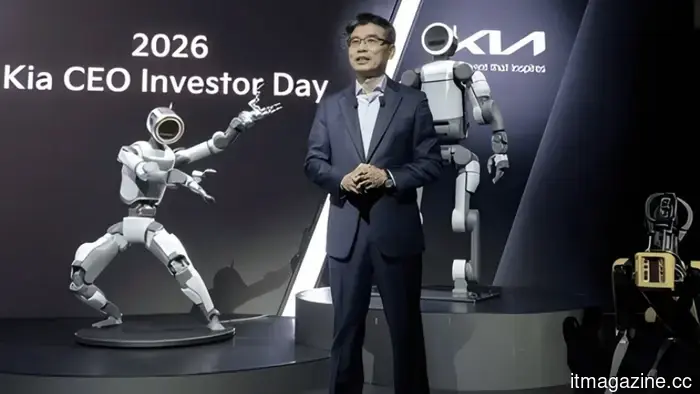 Kia reduces its EV target, announces an electric pickup, and intends to deploy Atlas robots in its factories in Georgia.
Kia's investor day in 2026 has revised its 2030 electric vehicle goal to 1 million units, announced the introduction of an electric pickup truck for North America, and established 2028 as the timeline for deploying the Atlas robot.
Kia reduces its EV target, announces an electric pickup, and intends to deploy Atlas robots in its factories in Georgia.
Kia's investor day in 2026 has revised its 2030 electric vehicle goal to 1 million units, announced the introduction of an electric pickup truck for North America, and established 2028 as the timeline for deploying the Atlas robot.
 Realme P4 Power with a 10001 mAh battery has been released in Russia.
realme announced the start of sales in Russia for the P4 Power model. The device is equipped with a silicon-carbon battery with a capacity of 10001 mAh. The manufacturer also claims a powerful chipset, a curved display, and water resistance.
Realme P4 Power with a 10001 mAh battery has been released in Russia.
realme announced the start of sales in Russia for the P4 Power model. The device is equipped with a silicon-carbon battery with a capacity of 10001 mAh. The manufacturer also claims a powerful chipset, a curved display, and water resistance.
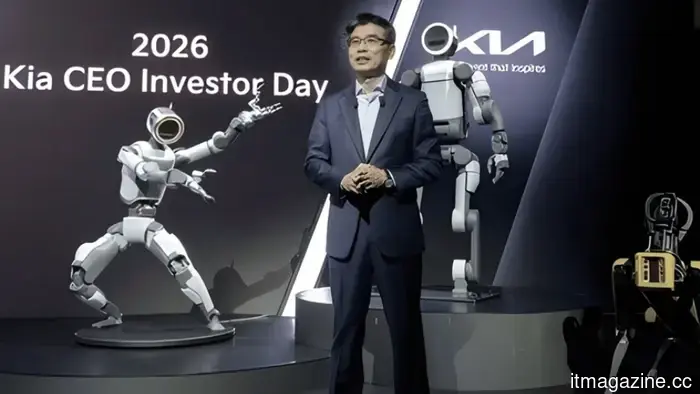 Kia reduces its EV target, announces an electric pickup, and intends to deploy Atlas robots in its factories in Georgia.
Kia's 2026 investor day has reduced its 2030 electric vehicle target to 1 million units, announced a North American electric pickup truck, and established a timeline for Atlas robot deployment in 2028.
Kia reduces its EV target, announces an electric pickup, and intends to deploy Atlas robots in its factories in Georgia.
Kia's 2026 investor day has reduced its 2030 electric vehicle target to 1 million units, announced a North American electric pickup truck, and established a timeline for Atlas robot deployment in 2028.
 YouTubers are taking legal action against Amazon for reportedly using their videos to train Nova Reel without permission.
H3H3 Productions and two golf channels claim that Amazon circumvented YouTube’s safeguards by utilizing rotating IPs and virtual machines to develop its Nova Reel video AI model.
YouTubers are taking legal action against Amazon for reportedly using their videos to train Nova Reel without permission.
H3H3 Productions and two golf channels claim that Amazon circumvented YouTube’s safeguards by utilizing rotating IPs and virtual machines to develop its Nova Reel video AI model.
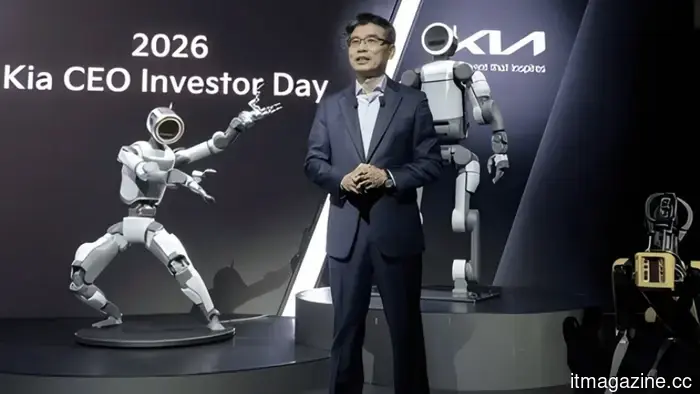 Kia reduces its electric vehicle target, announces the development of an electric pickup, and intends to implement Atlas robots in its factories in Georgia.
Kia's 2026 investor day revises its 2030 electric vehicle target to 1 million units, announces a North American electric pickup truck, and establishes 2028 as the timeline for deploying the Atlas robot.
Kia reduces its electric vehicle target, announces the development of an electric pickup, and intends to implement Atlas robots in its factories in Georgia.
Kia's 2026 investor day revises its 2030 electric vehicle target to 1 million units, announces a North American electric pickup truck, and establishes 2028 as the timeline for deploying the Atlas robot.
BILL enables enterprise suppliers to gather payments from any SMB, including those not using its platform.
BILL's Supplier Payments Plus expansion introduces payment links, direct card processing, and check conversion, reducing enterprise collection times by approximately 7 days.