
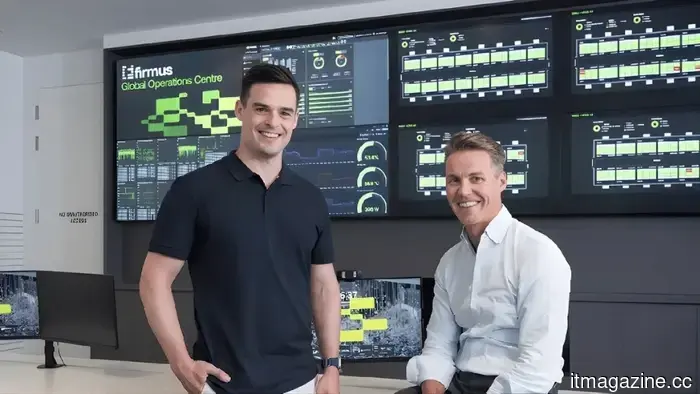
Nvidia-supported Firmus aims for a $2 billion IPO on the ASX following a $505 million capital raise and $10 billion in debt from Blackstone.
In summary, Australian AI data centre firm Firmus has secured $505 million at a $5.5 billion valuation in what it states will be its final pre-IPO round. The company is now aiming for a $2 billion listing on the ASX in June or July, supported by a $10 billion debt facility led by Blackstone that was established in February, alongside plans to implement 1.6 gigawatts of liquid-cooled AI computing across Australia by 2028.
Firmus Technologies, backed by Nvidia, is developing what it terms AI Factories powered by renewable resources and has raised $505 million in fresh equity at a $5.5 billion valuation in anticipation of its initial public offering on the Australian Securities Exchange later this year. The funding, revealed on April 6, 2026, and spearheaded by Coatue Management with ongoing support from Nvidia, marks the third equity round Firmus has completed in just six months, bringing the total equity raised during that period to about $1.35 billion.
The IPO, projected for June or July, aims to generate an additional $2 billion, which, if achieved, would rank among the largest technology listings in Australia’s history. Bank of America, JPMorgan, Morgans Financial, and Morgan Stanley are hosting a non-deal roadshow for potential investors this week in preparation for this event.
From Tasmania to a national network, Firmus's primary initiative is Project Southgate, a $4.5 billion initial construction project based in Launceston, northern Tasmania. This site is designed as a campus of modular, fully liquid-cooled AI Factories intended to operate Nvidia’s GPU clusters at a high density and will ultimately accommodate 36,000 Nvidia GB300 Grace Blackwell chips. The first phase, which will provide 90 megawatts of AI infrastructure, is expected to be completed in 2026.
The choice of Tasmania is significant. The island state operates on a grid chiefly powered by hydroelectric energy, allowing Firmus to claim a low-carbon computing footprint that few data centre operators can match. According to the company, its liquid-cooling technology lowers energy consumption by up to 60% compared to traditional air-cooled facilities and significantly reduces construction costs. If these figures hold true at a larger scale, they could dramatically impact the economics of extensive AI training operations, which are among the most power-hungry industrial activities currently in use.
Project Southgate is envisioned to extend beyond Tasmania into a nationwide network, with additional sites in Melbourne, Sydney, Canberra, and Perth, aiming for a total capacity of 1.6 gigawatts across five locations in Australia by 2028. The comprehensive program, developed alongside Nvidia and CDC Data Centres, has an anticipated construction cost of $73.3 billion, reflecting the capital demands of AI infrastructure and the ambition of the national rollout.
In February 2026, Firmus secured a $10 billion debt financing package led by funds managed by Blackstone Tactical Opportunities and Blackstone Credit & Insurance, with further backing from Coatue. This agreement stands as one of the largest private credit transactions recorded in Australia, structured as long-term infrastructure debt, which aligns with the attractiveness of contracted AI data centre assets to private credit investors.
The funds are intended to support the nationwide growth of Project Southgate. Kirkland & Ellis provided advice to Blackstone in this transaction. The combination of the $10 billion debt facility and the equity raised over six months positions Firmus in an exceptionally strong financial position for a company of its age and public profile, enabling it to commence multiple construction sites simultaneously before the IPO.
The significant commitment of private credit to AI infrastructure has become a hallmark of the current investment cycle, reflecting a trend similar to SoftBank’s $40 billion bridge loan to finance its OpenAI investment: the demand for computing power is increasing faster than any single company can sustain through equity financing alone, prompting institutional lenders to offer long-term capital against contracted revenue from major AI labs and hyperscalers.
Nvidia's involvement with Firmus is distinctive, acting both as a strategic investor and the main chip supplier for all the facilities Firmus develops. Nvidia became an investor during Firmus’s $330 million fundraising in late 2025, at which point the company’s valuation was $1.9 billion. The recent $505 million funding round has propelled the company's valuation to $5.5 billion, a near threefold increase in just six months. Nvidia’s investment creates a synergy of interests: as Firmus accelerates its development, Nvidia benefits from increased shipments of GB300 systems.
Project Southgate operates on Nvidia’s DSX reference architecture, a deployment standard that Nvidia designed specifically for high-density AI computing environments. Nvidia's expanding role as a foundational layer beneath most cutting-edge AI compute, either through its own hardware or partnerships, is a recurring theme in the ongoing AI infrastructure expansion. The integration deepens through Nvidia’s enterprise AI platform, making it increasingly difficult for competitors
Otros artículos
 HexemBio secures $10.4 million for a stem cell rejuvenation treatment.
HexemBio has initiated operations with a seed funding round spearheaded by Draper Associates to further develop a blood stem cell rejuvenation treatment supported by Robert Langer.
HexemBio secures $10.4 million for a stem cell rejuvenation treatment.
HexemBio has initiated operations with a seed funding round spearheaded by Draper Associates to further develop a blood stem cell rejuvenation treatment supported by Robert Langer.
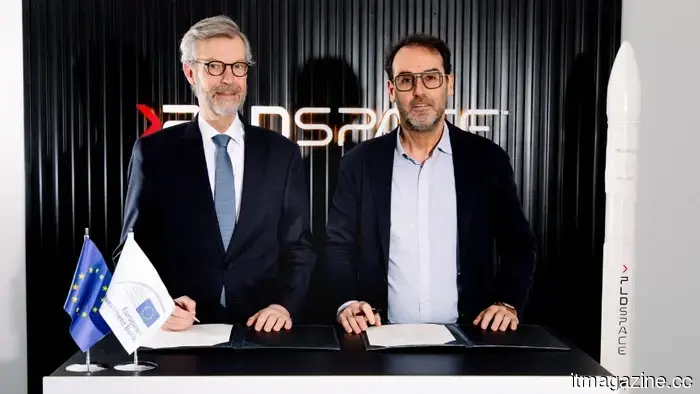 EIB provides PLD Space with a loan of €30 million to complete the construction of its MIURA 5 rocket.
EIB has agreed to a €30M venture debt loan with PLD Space, marking its initial direct investment in a small satellite launcher, in anticipation of MIURA 5's first test flight.
EIB provides PLD Space with a loan of €30 million to complete the construction of its MIURA 5 rocket.
EIB has agreed to a €30M venture debt loan with PLD Space, marking its initial direct investment in a small satellite launcher, in anticipation of MIURA 5's first test flight.
 Hermeus has secured $350 million in funding, reaching a valuation of $1 billion.
Hermeus has secured $350 million at a valuation of $1 billion to further develop autonomous hypersonic aircraft. A demonstrator the size of an F-16 completed a flight in March.
Hermeus has secured $350 million in funding, reaching a valuation of $1 billion.
Hermeus has secured $350 million at a valuation of $1 billion to further develop autonomous hypersonic aircraft. A demonstrator the size of an F-16 completed a flight in March.
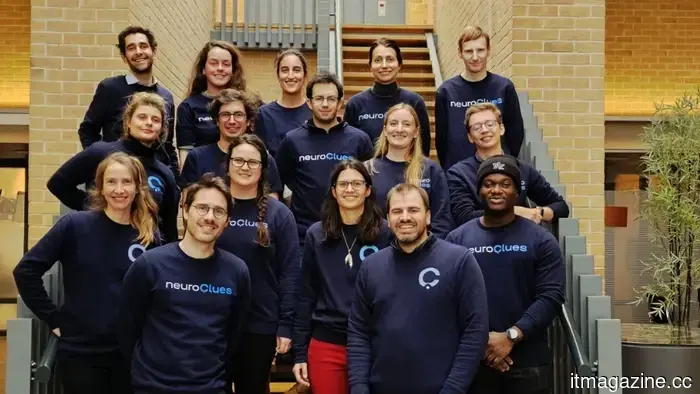 neuroClues has secured €10M to aid in the diagnosis of Parkinson's disease.
neuroClues has secured €10 million in a Series A funding round to commercialize its CE-marked eye-tracking device aimed at aiding early diagnosis of Parkinson’s and Alzheimer’s diseases.
neuroClues has secured €10M to aid in the diagnosis of Parkinson's disease.
neuroClues has secured €10 million in a Series A funding round to commercialize its CE-marked eye-tracking device aimed at aiding early diagnosis of Parkinson’s and Alzheimer’s diseases.
 HexemBio secures $10.4 million for its stem cell rejuvenation treatment.
HexemBio has been established with a seed funding round spearheaded by Draper Associates to develop a blood stem cell rejuvenation treatment supported by Robert Langer.
HexemBio secures $10.4 million for its stem cell rejuvenation treatment.
HexemBio has been established with a seed funding round spearheaded by Draper Associates to develop a blood stem cell rejuvenation treatment supported by Robert Langer.
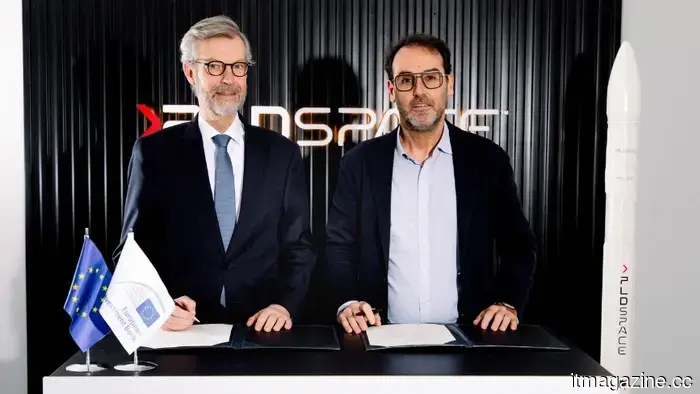 EIB provides PLD Space with a €30 million loan to complete the construction of its MIURA 5 rocket.
The EIB has finalized a €30 million venture debt loan agreement with PLD Space, marking its initial direct investment in a small satellite launch vehicle, in anticipation of the first test flight of MIURA 5.
EIB provides PLD Space with a €30 million loan to complete the construction of its MIURA 5 rocket.
The EIB has finalized a €30 million venture debt loan agreement with PLD Space, marking its initial direct investment in a small satellite launch vehicle, in anticipation of the first test flight of MIURA 5.
Nvidia-supported Firmus aims for a $2 billion IPO on the ASX following a $505 million capital raise and $10 billion in debt from Blackstone.
Firmus is on track for a $2 billion IPO on the ASX after securing $505 million at a valuation of $5.5 billion, along with a $10 billion debt package from Blackstone to establish 1.6GW of AI factories throughout Australia.