

Energy Analyst Discusses the Future of California's Power Grid
Each evening between 5 and 6 PM, the sun begins to set throughout California, prompting office workers to head home, ovens to turn on, and the electricity grid to enter one of its peak demand periods. During this time, electricity prices increase, natural gas plants quickly ramp up operations, and utilities strive to balance supply and demand in real-time.
For regular consumers, this evening timeframe increasingly influences how and when they utilize connected devices, such as smart thermostats adjusting temperatures or electric vehicles scheduling charging times to dodge peak prices.
Energy researchers often refer to this moment as a daily stress test for a power system that has become heavily reliant on renewable energy sources.
California’s grid operates under a distinctive combination of technologies and market regulations. Solar energy now accounts for a significant portion of electricity during the day, while natural gas plants still contribute to balancing supply when demand surges after sunset.
Energy market analysts note that the grid's behavior is often influenced as much by economic factors as by energy policies. These trends are becoming more evident at the household level as utility pricing models and consumer-oriented apps offer insight into when electricity is most affordable or expensive to use.
Why Solar Functions as a Double-Edged Sword
In contrast to New England, California's grid doesn't depend on coal or oil. Its fuel mix is cleaner yet not simpler.
Solar energy enters the grid at a very low marginal cost, which generally allows it to be dispatched first when available. Natural gas plants then meet any remaining demand as necessary.
Energy market researcher Neel Somani explains that this setup leads to an atypical pricing dynamic: electricity costs are often dictated by the last generator activated to satisfy demand. “So there are renewables, and there are natural gas units, but in California, you don’t have any of that other junk, like coal or other dirtier units,” Somani points out. “When there is a demand, you effectively first satisfy it with renewables, which have nearly $0 marginal cost, before activating less efficient natural gas units until all demand is met.”
This structure, overseen by the California Independent System Operator (CAISO), means that on any particular day, electricity pricing is primarily determined by one question: how inefficient must a natural gas plant be before the grid can no longer satisfy demand without it? When solar power is plentiful, the answer is very inefficient, keeping prices low. However, as the sun sets, the answer quickly changes.
Solar generation peaks during midday, flooding the grid with inexpensive electricity when residential and commercial demand is at its lowest. As the sun sets, this influx of $0 marginal cost power vanishes almost entirely just as people arrive home and activate various household devices. This results in what grid operators term the “duck curve,” a visual representation of net electricity demand that sharply dips at noon and then rises dramatically in the evening.
For consumers, this pattern is increasingly reflected in time-of-use pricing, making it financially beneficial to run appliances such as dishwashers, laundry machines, or home charging systems during midday hours.
The 5 PM Challenge
“When individuals return home at 5 PM, they readily turn on lights, TVs, ovens, all simultaneously, which causes a demand spike,” Somani explains. “If you examine the power price chart, you will see a spike around 5 PM, followed by a decrease during late evening hours.”
This spike is exacerbated, not alleviated, by solar energy. The issue lies in the system's design. To meet the sudden increase in demand following sunset, grid operators need to activate gas turbines. However, the quickest gas turbines to activate, known as simple cycle gas turbines, are also the least efficient. While combined cycle gas turbines are more efficient, they require more time to come online. “There are essentially two types of gas turbines,” notes Somani. “Combined cycle gas turbines and simple cycle gas turbines, and the ones that start quickly are the simple cycle gas turbines, which are also less efficient. Consequently, we end up with even higher evening prices than we would have had without renewables.”
The situation presents a bit of irony. The same expansion of solar energy that has established California as a leader in clean energy has, in certain respects, increased the volatility of evening prices. The greater the solar supply during the day, the steeper the ramp that conventional generators must navigate when it disappears.
The U.S. Energy Information Administration has diligently monitored this trend, observing that as California's solar capacity increases, the midday dip in net load continues to decline, resulting in a steeper ascent back to evening demand levels. Grid operators are now faced with a ramp that can reach between 10 and 17 gigawatts in just three hours, requiring precise coordination across numerous generating resources.
The Geography of the Issue: NP15 and SP15
California's grid issues are not uniformly distributed. The state's transmission system divides it into two primary pricing zones: Northern California, known as NP15 (North Path 15
Other articles
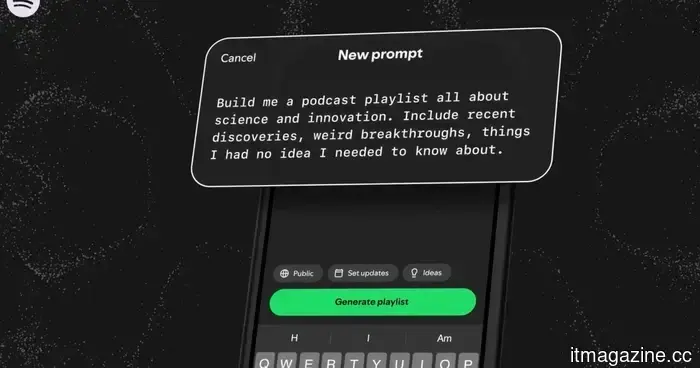 Spotify can now create a personalized podcast playlist for you based on just a straightforward request.
Spotify's Prompted Playlist feature has been updated to include podcasts, allowing Premium users to specify their desired content and receive a customized lineup of AI-curated episodes, which refreshes on a daily or weekly basis.
Spotify can now create a personalized podcast playlist for you based on just a straightforward request.
Spotify's Prompted Playlist feature has been updated to include podcasts, allowing Premium users to specify their desired content and receive a customized lineup of AI-curated episodes, which refreshes on a daily or weekly basis.
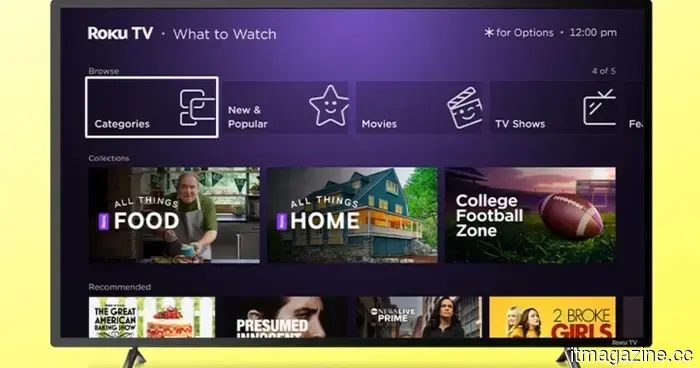 Roku has recently introduced six free channels featuring classic sitcoms, reality television, and movies.
Roku has introduced six additional free channels to The Roku Channel, offering classic Westerns, reality television, Spanish-language programming, and various other content to all Roku TVs and streaming devices.
Roku has recently introduced six free channels featuring classic sitcoms, reality television, and movies.
Roku has introduced six additional free channels to The Roku Channel, offering classic Westerns, reality television, Spanish-language programming, and various other content to all Roku TVs and streaming devices.
 Sony may soon introduce new headphones that will make the AirPods Max seem budget-friendly.
These headphones are quite expensive.
Sony may soon introduce new headphones that will make the AirPods Max seem budget-friendly.
These headphones are quite expensive.
 The most significant upgrade of the Galaxy Watch Ultra 2 might not be accessible to the majority of consumers.
The Galaxy Watch Ultra 2 may offer 5G connectivity, but a recent report indicates that this upgrade might be restricted to specific markets.
The most significant upgrade of the Galaxy Watch Ultra 2 might not be accessible to the majority of consumers.
The Galaxy Watch Ultra 2 may offer 5G connectivity, but a recent report indicates that this upgrade might be restricted to specific markets.
 Higgsfield invests in AI-created series while promoting originals chosen by viewers.
Higgsfield has introduced its inaugural AI-generated pilot, Arena Zero, along with a range of concepts, allowing viewers to vote on which shows should proceed to full series production.
Higgsfield invests in AI-created series while promoting originals chosen by viewers.
Higgsfield has introduced its inaugural AI-generated pilot, Arena Zero, along with a range of concepts, allowing viewers to vote on which shows should proceed to full series production.
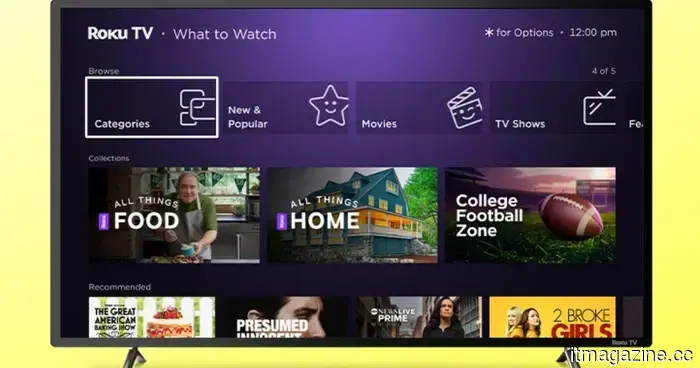 Roku has recently introduced six new free channels featuring classic sitcoms, reality shows, and movies.
Roku has introduced six additional free channels to The Roku Channel, offering classic Westerns, reality TV, Spanish-language programming, and more for all Roku TVs and streaming devices.
Roku has recently introduced six new free channels featuring classic sitcoms, reality shows, and movies.
Roku has introduced six additional free channels to The Roku Channel, offering classic Westerns, reality TV, Spanish-language programming, and more for all Roku TVs and streaming devices.
Energy Analyst Discusses the Future of California's Power Grid
Every evening from 5 to 6 PM throughout California, the sun begins to set, employees leave work, ovens are turned on, and the electricity grid faces one of its peak demand times. Electricity prices increase, natural gas plants rapidly adjust their output, and utilities strive to maintain a balance between supply and demand in real time. [...]