
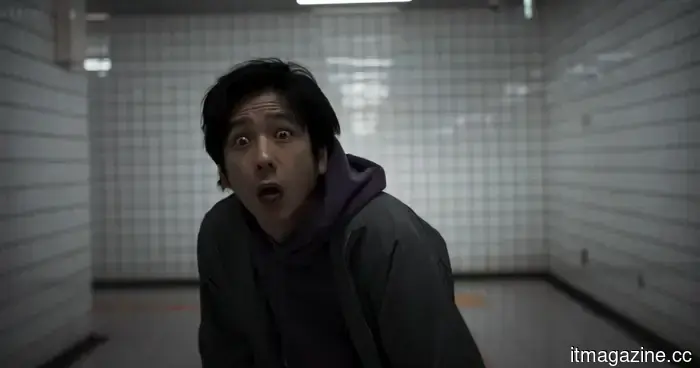
EXCLUSIVE: The director of Exit 8 discusses transforming a video game into a cinematic horror experience.
Video games have seen improved adaptations in film and TV recently. Since 2020, successful titles like the Sonic the Hedgehog films, HBO's The Last of Us, and Netflix's Arcane have emerged. Now, indie film distributor NEON (known for Parasite and Anora) is participating in this trend by showcasing one of the finest video game films to date, Exit 8. Directed and co-written by Genki Kawamura, this unsettling horror film is inspired by the walking simulator, The Exit 8, created by indie developer Kotake Create.
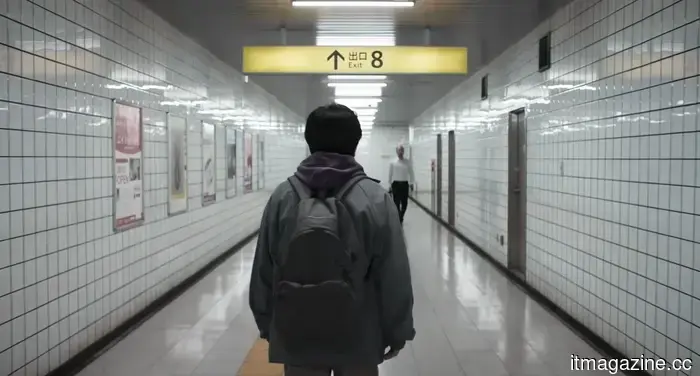
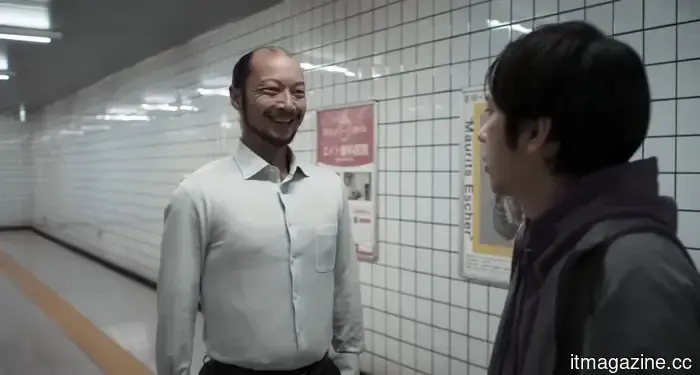
Exit 8 centers on “The Lost Man” (Kazunari Ninomiya) as he attempts to navigate a perpetually looping Tokyo subway tunnel. To find his way out, he must adhere to specific rules: “Do not ignore anything unusual. If you notice an anomaly, turn back immediately. If not, continue. Then exit through Exit 8.” Even the smallest error sends the protagonist back to the start, with anomalies varying from minor oddities to deeply frightening phenomena.
In an interview with Digital Trends, Kawamura shares how he was motivated to take a straightforward video game and turn it into a clever and profound nightmare.
This interview has been condensed for brevity and clarity.
Digital Trends: To begin... how are you feeling today?
Kawamura: I’m really excited to see how the audience in the U.S. will react to this film. I know it’s quite unusual and probably not a typical movie. With the U.S. release approaching, I’m eager to hear the feedback.
Digital Trends: As a U.S. citizen who attended an early screening, I think the audience will really appreciate it. Exit 8 is based on a well-known video game. Can you explain your approach to adapting it into a feature film?
Kawamura: The moment The Exit 8 was released, I played the game right away and watched numerous streamers and their recordings. It occurred to me that there were as many stories as there were players engaging with the game. Each player had their own unique drama, reminiscent of a panel discussion I had with Miyamoto Shigeru from Nintendo, where he mentioned that truly great games should entertain both the player and those watching them play.
With this film, I aimed to capture that phenomenon present in the gaming world itself, comprising players, streamers, and viewers alike.
Digital Trends: Right. I found the movie incredible. I was truly impressed by the cinematography and how you managed to execute so many long takes in the continuously changing hallway. Can you elaborate on how you filmed those scenes?
Kawamura: I wanted to keep it under wraps, but I’ll share a bit. We actually constructed two identical corridors. It was like a copy-and-paste situation. There were two physical corridors positioned back-to-back, which allowed us to perform single-cut looping shots practically.
For instance, the actor playing the Walking Man, Kochi Yamato, would walk down the corridor, and as soon as he passed the camera, he would dash to the exit, hop on a bicycle, ride back to the start of the other corridor, catch his breath, and then begin again.
Our filming methods were very practical and analog, as I wanted to minimize the use of CGI wherever possible. The two identical corridors often left the crew disoriented, so we named them; one was called “Hitchcock” and the other “Kubrick.”
Digital Trends: Fascinating. I’ve watched footage of The Exit 8 game, and the film truly captures its essence. I know you constructed the film’s narrative from scratch since the game had none. One notable difference is that the protagonist is about to become a father. Why did you choose to explore that storyline?
Kawamura: I commute daily on the Tokyo subway, surrounded by many people, but we're all engrossed in our smartphones. It creates a sense of isolation to the point where people may not even notice a crying baby on the train. Even on our timelines, we see instances of war and violence that we scroll past without a thought.
While no one on the train is directly responsible for harming anyone, many anomalies arise that we ignore, and we are all complicit in this. What if that guilt manifested as anomalies in a sterile, white corridor, reflecting back at those who pass by? I believe this is what could be truly horrifying.
Similarly, our protagonist and society at large have become increasingly self-centered. The concept of taking responsibility for a new life seems to get little consideration, particularly from the lead character.
Digital Trends: I gathered many of those themes from the story. Since the film depicts the characters traversing the same hallway repeatedly, were you concerned it might become too monotonous for the audience? How did you keep the film engaging and full of surprises?
Kawamura: I managed that through the characters. I

Other articles
 Fans of Crimson Desert are encountering a strange, bloodthirsty issue.
After investing more than 100 hours into Crimson Desert, some players are expressing concerns that certain areas of the game world seem unusually quiet.
Fans of Crimson Desert are encountering a strange, bloodthirsty issue.
After investing more than 100 hours into Crimson Desert, some players are expressing concerns that certain areas of the game world seem unusually quiet.
 X has just introduced a significantly improved built-in photo editor.
X is introducing a more advanced image editor within its post composer, now including essential features such as drawing, text overlays, and redaction-like blurring.
X has just introduced a significantly improved built-in photo editor.
X is introducing a more advanced image editor within its post composer, now including essential features such as drawing, text overlays, and redaction-like blurring.
 Google Chrome's newly introduced vertical tabs might simplify the management of tab clutter significantly.
Google is introducing vertical tabs and a more immersive reading mode for desktop Chrome, providing the browser with two truly beneficial quality-of-life enhancements.
Google Chrome's newly introduced vertical tabs might simplify the management of tab clutter significantly.
Google is introducing vertical tabs and a more immersive reading mode for desktop Chrome, providing the browser with two truly beneficial quality-of-life enhancements.
EXCLUSIVE: The director of Exit 8 discusses transforming a video game into a cinematic horror experience.
In an exclusive conversation with Digital Trends, director Genki Kawamura discussed his thought-provoking new horror film, Exit 8.