
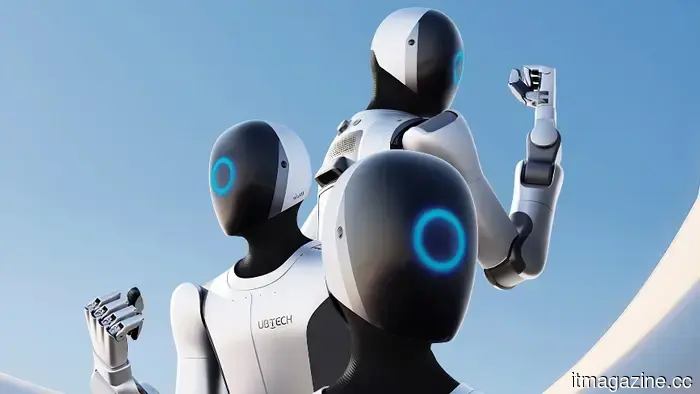
UBTech is proposing $18 million to recruit a chief AI scientist.
UBTech has set its salary range for the Chief Scientist of Embodied Intelligence between $2.2 million and $18 million. The Shenzhen-based company's revenue from humanoid robots increased twenty-fold last year. According to Bloomberg, this offer is considered unusual even by Chinese standards.
The Chinese humanoid robotics firm UBTech has issued a global recruitment announcement for a Chief Scientist of Embodied Intelligence, offering an annual salary that spans from 15 million to 124 million yuan, which translates to approximately $2.2 million to $18 million.
This role, described in a WeChat post by the company as responsible for defining UBTech’s complete technology roadmap and acting as ‘the helmsman of UBTECH’s technical path,’ has been confirmed by China’s Global Times. Bloomberg also remarked on the offer being atypical for China, as the country’s AI sector has generally steered clear of the substantial compensation packages that are typical in Silicon Valley.
Founded in 2012 and headquartered in Shenzhen, UBTech became the first publicly listed humanoid robot manufacturer, trading on the Hong Kong stock exchange. Its main product is the Walker S2, a 5-foot-9 humanoid robot engineered for autonomous operation in factories. Earlier this year, UBTech formed a partnership with Airbus to test Walker S2 units on aircraft production lines. In its annual results published on March 31, the company reported revenue of 2.01 billion yuan for 2025, marking a 53.3% increase year-on-year.
Specifically, revenue from humanoid products and services reached 820.6 million yuan, making up 41% of total revenue—a twenty-fold rise from the previous year when this segment accounted for only 35.6 million yuan and less than 3% of total revenue.
The Chief Scientist will oversee research into vision-language-action models, foundational robotics models, and manipulation and dexterity capabilities, with the aim of expediting large-scale implementation across manufacturing, commercial services, and what UBTech refers to as ‘family companionship.’
The compensation package includes a mix of cash, benefits, and equity. The job listing emphasizes that UBTech is unconcerned with candidates’ nationality, age, or gender, and asks merely, ‘Can you define the future?’ This recruitment initiative is part of a larger effort that also seeks reinforcement learning algorithm engineers, hardware engineers, and EtherCAT master system developers.
This opportunity arises at a time when China’s humanoid robot sector is receiving direct government backing. Premier Li Qiang has included robotics in the government work report for two consecutive years, and according to research firm Omdia, nearly 90% of global humanoid robot shipments in 2025 came from Chinese companies.
UBTech sold 1,079 full-size humanoid robots last year, generating 820 million yuan. Meanwhile, Tesla issued a notification in late March seeking over 80 experts for its Optimus humanoid program. The competition for AI talent that started with large language models is swiftly expanding into the field of embodied intelligence.
Other articles
 Bolt is expanding its Hopp ride-hailing brand into the corporate travel sector in Canada.
Hopp for Business has been introduced in 17 municipalities within the Greater Toronto Area, as Bolt advances into corporate accounts one year after its launch for consumers in Toronto.
Bolt is expanding its Hopp ride-hailing brand into the corporate travel sector in Canada.
Hopp for Business has been introduced in 17 municipalities within the Greater Toronto Area, as Bolt advances into corporate accounts one year after its launch for consumers in Toronto.
 IBM and Arm have teamed up to operate AI software on mainframes, but a date has not been specified yet.
IBM and Arm have revealed a partnership to operate Arm-based AI software on IBM Z mainframes through virtualization. No specific shipping date has been provided, as this is more of a roadmap than a product announcement.
IBM and Arm have teamed up to operate AI software on mainframes, but a date has not been specified yet.
IBM and Arm have revealed a partnership to operate Arm-based AI software on IBM Z mainframes through virtualization. No specific shipping date has been provided, as this is more of a roadmap than a product announcement.
 IBM and Arm have joined forces to operate AI software on mainframes, with no set date announced.
IBM and Arm have revealed a partnership to execute Arm-based AI software on IBM Z mainframes through virtualization. A shipping date has not been provided, as this announcement serves as a roadmap rather than a product release.
IBM and Arm have joined forces to operate AI software on mainframes, with no set date announced.
IBM and Arm have revealed a partnership to execute Arm-based AI software on IBM Z mainframes through virtualization. A shipping date has not been provided, as this announcement serves as a roadmap rather than a product release.
 OpenAI advocates for implementing taxes on robots, establishing a public wealth fund, and adopting a four-day workweek.
OpenAI is advocating for robot taxes, the establishment of a public wealth fund, and a 32-hour workweek. Altman suggests that the imminent arrival of superintelligence makes all three measures necessary.
OpenAI advocates for implementing taxes on robots, establishing a public wealth fund, and adopting a four-day workweek.
OpenAI is advocating for robot taxes, the establishment of a public wealth fund, and a 32-hour workweek. Altman suggests that the imminent arrival of superintelligence makes all three measures necessary.
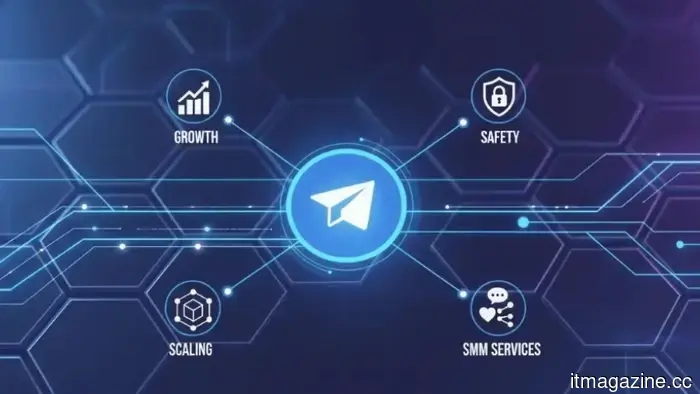 Which Telegram growth service will be worthwhile in 2026? An explanation of effective growth strategies.
Discover which Telegram growth services are effective in 2026. Investigate intelligent automation, engagement techniques, and hybrid growth methods that expand in a sustainable manner.
Which Telegram growth service will be worthwhile in 2026? An explanation of effective growth strategies.
Discover which Telegram growth services are effective in 2026. Investigate intelligent automation, engagement techniques, and hybrid growth methods that expand in a sustainable manner.
 The iPhone 17 Pro Max captures breathtaking images from a lunar mission.
NASA’s Artemis II mission demonstrates the iPhone 17 Pro Max capturing actual images from space, indicating a transition where consumer devices start to enhance traditional cameras in extreme conditions beyond our planet.
The iPhone 17 Pro Max captures breathtaking images from a lunar mission.
NASA’s Artemis II mission demonstrates the iPhone 17 Pro Max capturing actual images from space, indicating a transition where consumer devices start to enhance traditional cameras in extreme conditions beyond our planet.
UBTech is proposing $18 million to recruit a chief AI scientist.
UBTech is providing up to $18 million for a chief AI scientist, as the revenue from its humanoid robots surged twenty times in 2025.