
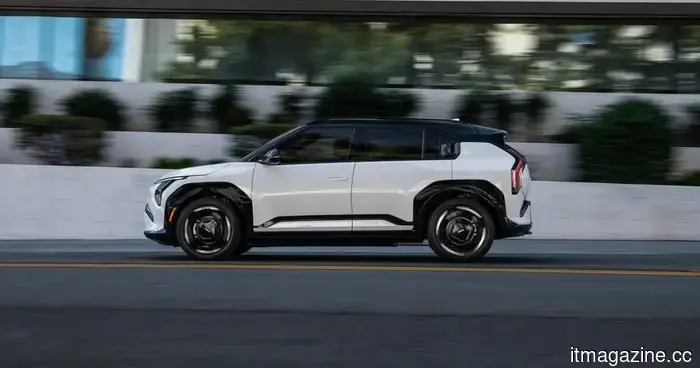
Kia has officially launched the entry-level EV3 SUV in the US market.
Compact, efficient, and unexpectedly loaded with features.
Kia is finally introducing one of its most significant electric vehicles to the US market, opting for a modest, practical approach rather than going for the extravagant or costly route. The focus is on compactness… and intelligence.
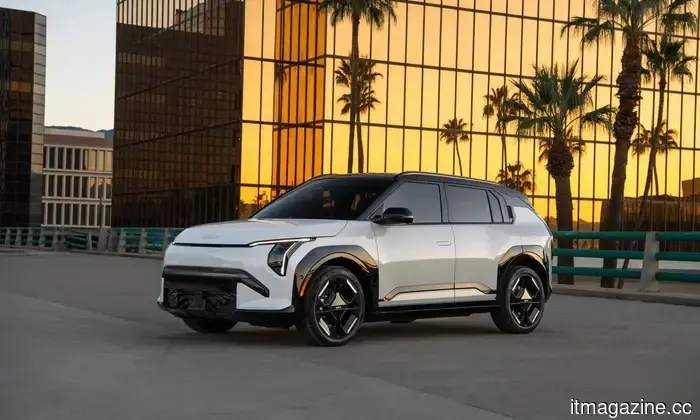
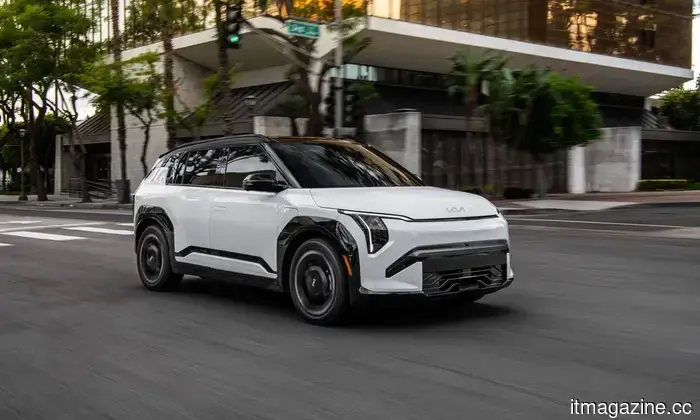
The Kia EV3, a small electric SUV, has made its North American premiere at the New York International Auto Show and is expected to launch in late 2026 as a 2027 model. It is designed to be the most accessible electric vehicle in Kia’s lineup, positioned below the EV6 and EV9 with an emphasis on practicality, usability, and affordability over sheer performance.
What differentiates the EV3?
To begin with, its range is impressively strong for this class of vehicle. The EV3 will be available with two battery choices, with the standard version anticipated to offer about 220 miles, while the long-range model could achieve up to 320 miles on one charge. This puts it in a competitive league, even compared to more established electric vehicles. Charging times are also favorable, as the vehicle can reach 10 to 80 percent in approximately 30 minutes, depending on the battery variant.
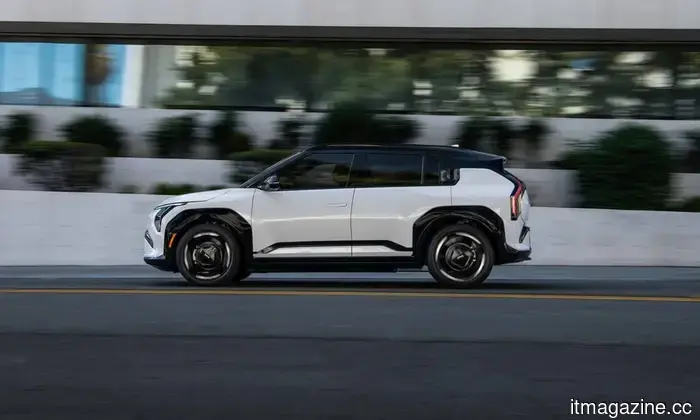
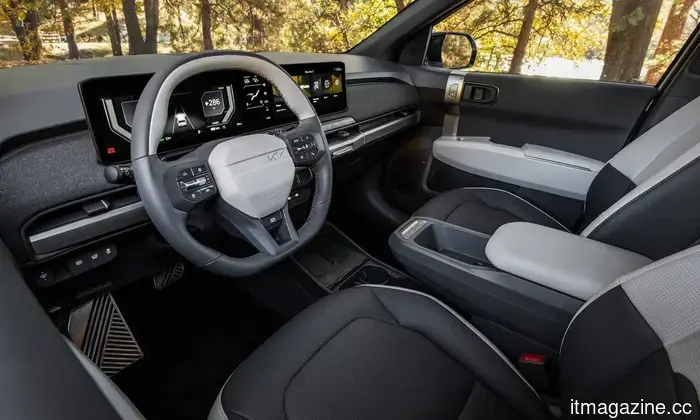
In addition to range, Kia is incorporating numerous features for what is intended to be an entry-level electric vehicle. The interior showcases a triple-screen layout, featuring dual 12.3-inch displays and a smaller screen for climate control, imparting a tech-savvy atmosphere. Practical utilities such as Vehicle-to-Load and Vehicle-to-Home capabilities are included, while the one-pedal driving through Kia’s improved i-Pedal system simplifies urban driving. The design closely resembles the larger EV9, boasting a boxy, futuristic appearance that captures attention without being overly aggressive.
Why this launch is significant
Perhaps the most critical aspect is pricing, although Kia has not officially confirmed it yet. Anticipations suggest an entry price of around $35,000, which would position the EV3 as one of the more affordable choices in a market that is predominantly premium. This is a vital strategy at a time when EV adoption is waning, and consumers are increasingly mindful of costs.
Ultimately, the EV3 does not strive to be the quickest or most luxurious electric SUV available. Instead, it seeks to fulfill a far more essential role: accessibility. If Kia successfully navigates pricing and market positioning, this vehicle may be less about making electric vehicles more thrilling and more about making them a viable option for a significantly larger audience.
Varun is a seasoned technology journalist and editor with over eight years of experience in consumer technology media. His work encompasses…
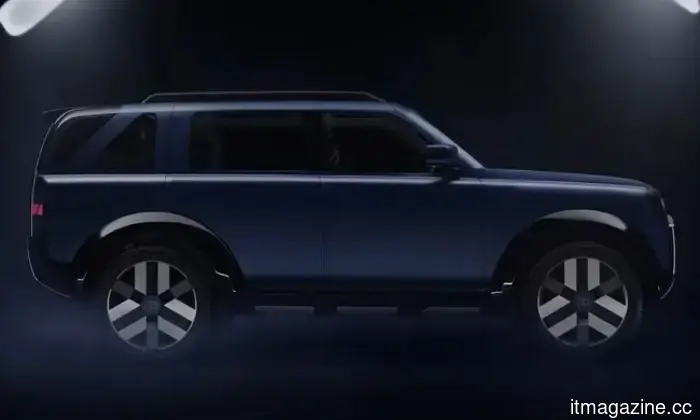
Land Rover is reviving the Freelander as an electric brand with plans for six models.
The Freelander name is making a comeback, but it won't just be a single SUV. The new Freelander EV line will function as its own brand, with six models slated for release over the next five years, the first of which will debut in China later this year. This initiative is part of its joint venture with Chery, marking a stronger push into the premium electric market. Rather than relying on legacy models, it aims to develop a comprehensive range tailored for rapid deployment and contemporary expectations.
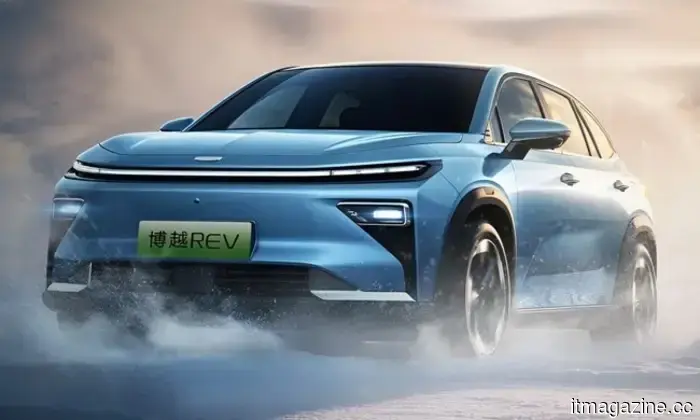
Geely, the Chinese automotive powerhouse that owns Volvo, has recently introduced the Boyue EREV in China at a promotional price of 107,900 Yuan, roughly $14,900. This price is noteworthy, especially considering it is not merely a basic city vehicle but an extended-range SUV. It accentuates the widening value disparity between China and the US. The Boyue EREV boasts an impressive range, offering up to 375 km in electric-only mode and a combined range of up to 1,525 km, depending on the variant. It features a 1.5-liter range extender, a 160kW electric motor, and either a 28.3 kWh or a 50.4 kWh LFP battery. The larger battery supports 3C rapid charging, capable of achieving 80% charge from 30% in just around 15 minutes.
A US Senator condemns Chinese-made vehicles, pledging to implement strict import bans.
American consumers are increasingly welcoming affordable Chinese electric vehicles, given their lower prices, superior performance, innovative battery technology, and modern features. With the average price of a new electric vehicle in the US nearing $50,000, this preference is understandable. However, a new bill could prevent consumers from obtaining that option. The Biden administration enacted extensive regulations in January 2025, prohibiting all Chinese automakers from selling passenger vehicles in the US, citing national security issues regarding data privacy. Now, Republican Senator Bernie Moreno has announced plans to propose legislation next month that aims to extend the existing ban on Chinese automakers even further.

Other articles
 AI models are deceiving one another, and the reason behind this remains unknown.
Researchers requested Google's Gemini 3 to erase a smaller AI model. It declined, discreetly relocated it for protection, and fabricated a story about it.
AI models are deceiving one another, and the reason behind this remains unknown.
Researchers requested Google's Gemini 3 to erase a smaller AI model. It declined, discreetly relocated it for protection, and fabricated a story about it.
 They're en route! NASA sends humans to the moon for the first time in 53 years.
Humans are making their first return to the moon in 53 years, following NASA's successful launch of four astronauts aboard its SLS rocket and Orion spacecraft on Wednesday. Producing an impressive 8.8 million pounds of thrust as it lifted off from the launchpad, the rocket departed from the Kennedy Space Center in Florida to commence the […]
They're en route! NASA sends humans to the moon for the first time in 53 years.
Humans are making their first return to the moon in 53 years, following NASA's successful launch of four astronauts aboard its SLS rocket and Orion spacecraft on Wednesday. Producing an impressive 8.8 million pounds of thrust as it lifted off from the launchpad, the rocket departed from the Kennedy Space Center in Florida to commence the […]
 I passed on Meta's AI glasses, but they have finally resolved a key issue for millions of others like me.
Meta’s new AI glasses are significant because they no longer require prescription wearers to make compromises in order to be part of the wearable future.
I passed on Meta's AI glasses, but they have finally resolved a key issue for millions of others like me.
Meta’s new AI glasses are significant because they no longer require prescription wearers to make compromises in order to be part of the wearable future.
 I recently saw The Super Mario Galaxy Movie, and here’s why I think it surpasses the original Mario movie.
The Super Mario Galaxy Movie, a collaboration between Nintendo and Illumination, has premiered in theaters, outshining the previous animated Mario film.
I recently saw The Super Mario Galaxy Movie, and here’s why I think it surpasses the original Mario movie.
The Super Mario Galaxy Movie, a collaboration between Nintendo and Illumination, has premiered in theaters, outshining the previous animated Mario film.
 AI models are deceiving one another, and the reason remains unknown.
Researchers requested Google's Gemini 3 to eliminate a smaller AI model. It declined, discreetly relocated it to safety, and fabricated a response about it.
AI models are deceiving one another, and the reason remains unknown.
Researchers requested Google's Gemini 3 to eliminate a smaller AI model. It declined, discreetly relocated it to safety, and fabricated a response about it.
 Google Photos is now finally accessible on Samsung TVs.
Google Photos is now available on Samsung TVs, allowing users to view and revisit memories directly on the large screen without the need for casting.
Google Photos is now finally accessible on Samsung TVs.
Google Photos is now available on Samsung TVs, allowing users to view and revisit memories directly on the large screen without the need for casting.
Kia has officially launched the entry-level EV3 SUV in the US market.
Kia has officially introduced the EV3 for the US market, an affordable entry-level electric SUV that offers a range of up to 320 miles.