
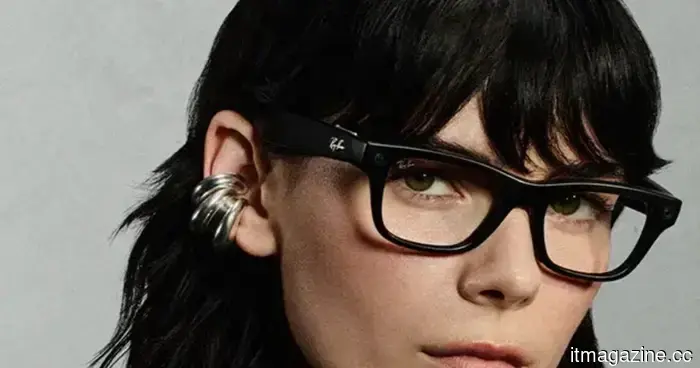
I passed on Meta's AI glasses, but they have finally resolved a key issue for millions of others like me.
Smart glasses have always posed a significant issue for individuals like me. They appeared impressive in demonstrations, sounded advanced in promotional materials, and often came with a familiar downside. If you already wear glasses regularly, you were expected to adapt to them. This meant either adding prescription lenses afterward, accepting an imperfect fit, or regarding the device as a novelty rather than something you would wear consistently throughout the day.
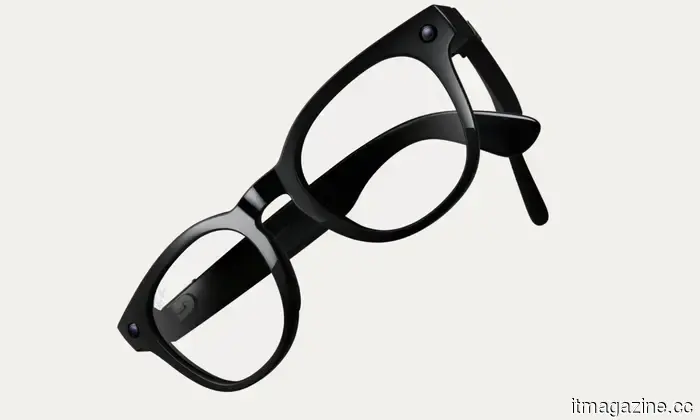
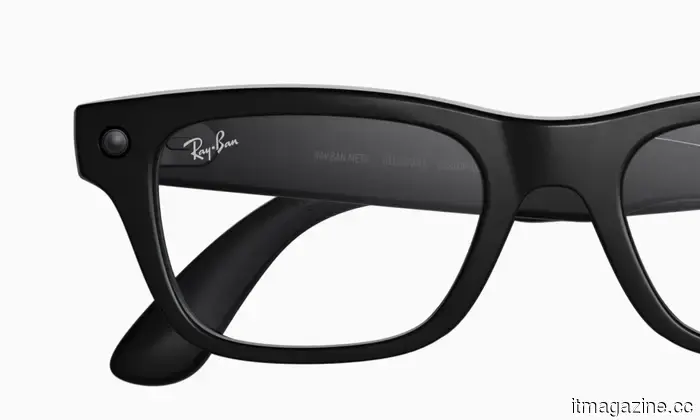
This is what makes Meta’s latest announcement particularly exciting. The company has just introduced its first AI glasses optimized for prescriptions: the Ray-Ban Meta Blayzer Optics (Gen 2) and Ray-Ban Meta Scriber Optics (Gen 2), specifically designed for those who depend on prescription eyewear daily.
Meta claims these glasses accommodate nearly all prescriptions, start at $499 in the United States, and will be sold through optical retailers starting April 14.
For me, this marks the first instance where Meta's glasses narrative feels less like mere wearable hype and more like something I could genuinely incorporate into my daily life.
Meta
No extra effort needed for prescription wearers
Billions of individuals around the globe rely on glasses or contacts for vision correction, and Meta acknowledges that many owners of Ray-Ban Meta and Oakley glasses currently add prescription lenses to their existing pairs. However, “can be added later” does not equate to “designed specifically for you from the outset.”
This new focus on prescriptions seems more considerate. Meta states that the new models are crafted for all-day comfort and feature enhancements such as overextension hinges, interchangeable nose pads, and optician-adjustable temple tips. While these may sound like mundane product specifications, to someone who wears glasses daily, such details are crucial in determining whether the glasses remain comfortable for hours or end up in a case after just 20 minutes.
Striking a balance between ‘gadget’ and ‘eyewear’
Meta
Meta isn't merely introducing two new frame styles and stopping there. The company aims to make AI glasses feel like a standard category of eyewear rather than a specialized gadget for early adopters. These new prescription-optimized frames come alongside an expanded array of frame and lens choices for Ray-Ban Meta and Oakley Meta glasses.
Additionally, several new software features have been announced, including hands-free nutrition tracking, WhatsApp summaries and recall via Meta AI, and the expansion of Neural Handwriting support to iMessage. Together, these enhancements contribute to making the glasses feel more suitable for everyday use. The technology itself is only part of the narrative; the important advancement occurs when you don’t have to adapt to the hardware.
For those who already wear prescription glasses, this requirement is even greater. A smartwatch can be an option, but glasses are not.
Meta
This is the first practical move for Meta glasses
This is why I believe these new Meta glasses are more significant than they may initially appear. The typical wearable sales pitch focuses on features, AI capabilities, cameras, and convenience. However, for individuals with prescriptions, the primary question remains: would I genuinely prefer to wear these throughout the day instead of standard glasses?
For once, Meta seems to be addressing that question head-on.
Yes, the concerns remain; smart glasses continue to carry privacy issues and come with a substantial price. They have yet to demonstrate that their AI functions are consistently useful enough to warrant a place in your daily routine. However, this launch overcomes a more fundamental barrier than many people acknowledge.
For someone who already owns prescription Wayfarers and understands the importance of proper eyewear fit, Meta’s new AI glasses are suddenly much more appealing.

Other articles
 I recently saw The Super Mario Galaxy Movie, and here’s why I think it surpasses the original Mario movie.
The Super Mario Galaxy Movie, a collaboration between Nintendo and Illumination, has premiered in theaters, outshining the previous animated Mario film.
I recently saw The Super Mario Galaxy Movie, and here’s why I think it surpasses the original Mario movie.
The Super Mario Galaxy Movie, a collaboration between Nintendo and Illumination, has premiered in theaters, outshining the previous animated Mario film.
 AI models are deceiving one another, and the reason remains unknown.
Researchers requested Google's Gemini 3 to eliminate a smaller AI model. It declined, discreetly relocated it to safety, and fabricated a response about it.
AI models are deceiving one another, and the reason remains unknown.
Researchers requested Google's Gemini 3 to eliminate a smaller AI model. It declined, discreetly relocated it to safety, and fabricated a response about it.
 The hidden loading feature in Google Chrome could enhance your browsing speed.
This clever little feature could help you work faster.
The hidden loading feature in Google Chrome could enhance your browsing speed.
This clever little feature could help you work faster.
 These three features on the S26 Ultra make me yearn for my iPhone 17 Pro even more.
Samsung's S26 Ultra showcases impressive innovation; however, the practical compromises in its display, camera performance, and AI features made me long for the reliability and straightforwardness of the iPhone 17 Pro.
These three features on the S26 Ultra make me yearn for my iPhone 17 Pro even more.
Samsung's S26 Ultra showcases impressive innovation; however, the practical compromises in its display, camera performance, and AI features made me long for the reliability and straightforwardness of the iPhone 17 Pro.
 The Artemis II lunar mission is unique, and the astronauts' restroom facilities are as well.
NASA's Artemis II mission is already quite historic, marking the agency's first crewed flight around the moon in over fifty years. However, within all the grand lunar aspirations lies a more practical achievement: astronauts will finally have a toilet that doesn't seem like a burden. This might not be the […]
The Artemis II lunar mission is unique, and the astronauts' restroom facilities are as well.
NASA's Artemis II mission is already quite historic, marking the agency's first crewed flight around the moon in over fifty years. However, within all the grand lunar aspirations lies a more practical achievement: astronauts will finally have a toilet that doesn't seem like a burden. This might not be the […]
 Apple at 50: The Pippin was a failure in 1996, but I’m enthusiastic about Apple’s daring gaming venture in 2026.
From the unsuccessful Pippin to AAA games on iPhones, Apple’s 50-year odyssey demonstrates that its aspirations in gaming were not misguided, merely ahead of their time. Now, it seems the ecosystem may finally be prepared.
Apple at 50: The Pippin was a failure in 1996, but I’m enthusiastic about Apple’s daring gaming venture in 2026.
From the unsuccessful Pippin to AAA games on iPhones, Apple’s 50-year odyssey demonstrates that its aspirations in gaming were not misguided, merely ahead of their time. Now, it seems the ecosystem may finally be prepared.
I passed on Meta's AI glasses, but they have finally resolved a key issue for millions of others like me.
Meta’s new AI glasses are significant because they no longer require prescription wearers to make compromises in order to be part of the wearable future.