

Enkei secures a pre-seed funding round with a valuation of €3 million.
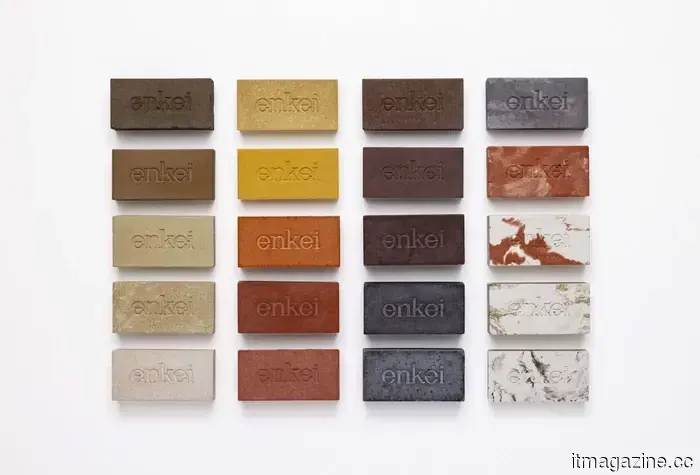
ReCeramix™, created from over 90% reclaimed ceramic and construction waste, is already being utilized in Stockholm’s boutique hotel Ett Hem, the members’ club Angel House, and Fotografiska. The funding round was valued at €3M; however, the specific amount raised has not been disclosed.
The Stockholm-based startup Enkei has successfully completed a pre-seed funding round at a valuation of €3 million to bring ReCeramix™, its architectural surface material made from more than 90% recovered construction and ceramic waste, to market. The raised amount remains undisclosed. This funding round includes a group of investors with significant industry credibility, such as Danish architect Anders Lendager, who is both an investor and an active collaborator in material development. Lendager's firm, the Lendager Group, won the competition to design UN17 Village, the first building project globally designed to fulfill all 17 UN Sustainable Development Goals.
Joining him are RadCap, a Swedish investment firm owned by 81 women that supports female-founded early-stage startups; Christina Åqvist, co-founder of the recycling group Vinning and former CEO of the pan-European distributor Distrelec; Ulf Mattsson, the former CEO and President of Tarkett Inc., a leading global surface materials company; and Fabian Månsson, an investor and board advisor to private equity-backed firms.
Two specialist investors with a focus on materials have also come on board: Thomas Granfeldt, a professor specializing in bio-based materials and industrial processing, and Daniel Strömberg, a materials scientist who holds a patent in ceramic materials.
Enkei was founded by Lovisa Sunnerholm, who previously worked at Electrolux and Google, and Miriam Bichsel, whose design career began with brands like Hermès and Bottega Veneta. This duo represents a purposeful intersection of luxury brand standards and industrial sustainability goals. ReCeramix™ offers a viable alternative to concrete, marble, and terrazzo for interior surfaces, utilizing construction and ceramic demolition waste—a category that constitutes nearly 40% of all waste in the EU.
The material minimizes cement usage by up to 80% compared to traditional decorative concrete, and it is produced using green electricity. Enkei entered the market with design items, initially creating a series of lighting products to test the material and manufacturing process under real commercial conditions. These products gained distribution through Nordiska Galleriet and NK in Stockholm, as well as via The Oblist in Paris, a curated design platform supported by Audemars Piguet. Following this, the company expanded into architectural applications, including tabletops, window sills, and specified interior elements.
Clients of Enkei include Ett Hem, the boutique hotel in Stockholm; the members’ club Angel House; and Fotografiska. The company has garnered the ELLE Decoration “Inspirer of the Year” and Plaza Sustainability awards, and has recently received EU-backed Interreg funding to spearhead a project on new circular material flows in the construction sector.
The team assembled by Enkei surrounding its founders spans design, engineering, and industrial operations. The engineering lead previously chaired the Chalmers Robotics Society and serves on the board of the AI firm Lovable. The newly appointed COO, Anton Tornberg, formerly headed demand and supply management at Ericsson.
The problem the company is addressing is structural: construction is the largest waste-producing industry in Europe, and the predominant architectural surfaces specified—concrete, marble, and terrazzo—continue to rely heavily on newly extracted materials. Cement alone makes up approximately 8% of global carbon dioxide emissions. Enkei advocates that the most commonly discarded materials can also be the most beneficial.


Other articles
 Evernote has reintroduced the tabbed view, but are its increasing prices driving away loyal customers?
Evernote has officially reintroduced tabbed notes after a five-year hiatus, and this time the feature is accessible on both Mac and Windows, rather than being exclusive to Mac users who had it prior to 2020.
Evernote has reintroduced the tabbed view, but are its increasing prices driving away loyal customers?
Evernote has officially reintroduced tabbed notes after a five-year hiatus, and this time the feature is accessible on both Mac and Windows, rather than being exclusive to Mac users who had it prior to 2020.
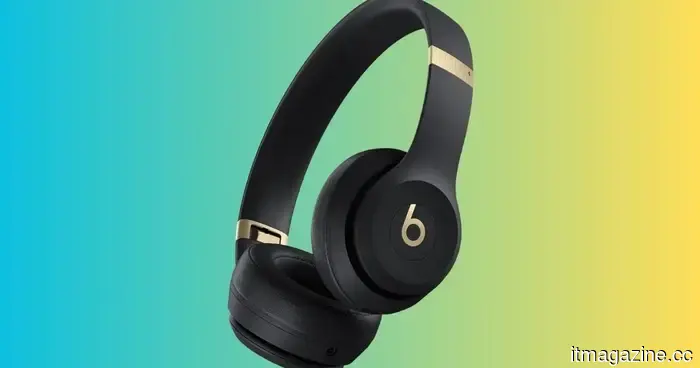 The Beats Solo 4 is discounted by 40%, and it's tough to contest the value of 50 hours of battery life at this price.
The Beats Solo 4 is currently available for $119.99 on Amazon during the Big Spring Sale, which represents a savings of $80 from its original price of $199.95. This is a 40% discount on a pair of on-ear Bluetooth headphones that provide 50 hours of battery life, a lightweight design, and a tuning that is more balanced than any previous Beats model.
The Beats Solo 4 is discounted by 40%, and it's tough to contest the value of 50 hours of battery life at this price.
The Beats Solo 4 is currently available for $119.99 on Amazon during the Big Spring Sale, which represents a savings of $80 from its original price of $199.95. This is a 40% discount on a pair of on-ear Bluetooth headphones that provide 50 hours of battery life, a lightweight design, and a tuning that is more balanced than any previous Beats model.
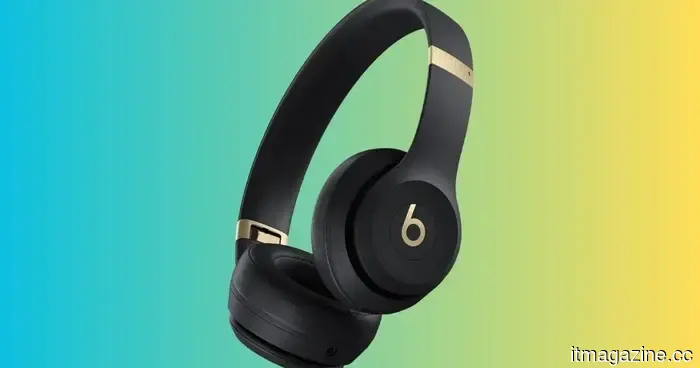 The Beats Solo 4 is available at a 40% discount, and it's difficult to contest the appeal of 50 hours of battery life at this price.
The Beats Solo 4 is currently priced at $119.99 on Amazon as part of the Big Spring Sale, reflecting an $80 discount from its original price of $199.95. This represents a 40% reduction on a pair of on-ear Bluetooth headphones that provide 50 hours of battery life, a lightweight design, and a more balanced tuning than previous Beats models.
The Beats Solo 4 is available at a 40% discount, and it's difficult to contest the appeal of 50 hours of battery life at this price.
The Beats Solo 4 is currently priced at $119.99 on Amazon as part of the Big Spring Sale, reflecting an $80 discount from its original price of $199.95. This represents a 40% reduction on a pair of on-ear Bluetooth headphones that provide 50 hours of battery life, a lightweight design, and a more balanced tuning than previous Beats models.
 Airbnb introduces private car transfers in over 125 cities.
Airbnb has introduced private car transfers to its in-app offerings by teaming up with the UK-based Welcome Pickups in over 125 cities.
Airbnb introduces private car transfers in over 125 cities.
Airbnb has introduced private car transfers to its in-app offerings by teaming up with the UK-based Welcome Pickups in over 125 cities.
 Recent leaks lend credence to speculations regarding a more streamlined Dynamic Island on the iPhone 18.
Leaks of prototypes and accessory images suggest a singular conclusion: Apple is reducing the size of the iPhone 18 Pro's Dynamic Island by approximately one-third.
Recent leaks lend credence to speculations regarding a more streamlined Dynamic Island on the iPhone 18.
Leaks of prototypes and accessory images suggest a singular conclusion: Apple is reducing the size of the iPhone 18 Pro's Dynamic Island by approximately one-third.
 Recent leaks lend credibility to speculations about a more streamlined Dynamic Island on the iPhone 18.
Prototype leaks and accessory images point to one conclusion: Apple is reducing the size of the iPhone 18 Pro's Dynamic Island by approximately one third.
Recent leaks lend credibility to speculations about a more streamlined Dynamic Island on the iPhone 18.
Prototype leaks and accessory images point to one conclusion: Apple is reducing the size of the iPhone 18 Pro's Dynamic Island by approximately one third.
Enkei secures a pre-seed funding round with a valuation of €3 million.
Enkei has secured a pre-seed funding round at a €3M valuation to bring ReCeramix™ to market, a circular architectural surface material composed of over 90% construction waste.