

OpenAI invests in Isara, a startup valued at $650 million that is developing AI agent swarms.
Isara, a startup based in San Francisco that is developing software to synchronize thousands of AI agents for complex analytical tasks, has successfully raised $94 million, achieving a valuation of $650 million, with OpenAI among its investors. Founded just nine months ago by two 23-year-olds, the company currently has no product available in the market.
The funding round was initially disclosed by The Wall Street Journal. Other investors include Amity Ventures, Michael Ovitz (the former chairman of Creative Artists Agency and an early backer of Uber), and billionaire hedge fund manager Stanley Druckenmiller. OpenAI's involvement is particularly noteworthy because one of Isara’s co-founders, Eddie Zhang, previously worked as an AI safety researcher at OpenAI. Zhang left OpenAI in June 2025 to establish Isara alongside Henry Gasztowtt, a computer science student from the University of Oxford. The duo co-authored a paper at ICML 2024, which investigated how AI systems might collaborate to enhance policymaking, serving as the intellectual basis for the company.
Since its inception, Isara has recruited around a dozen additional researchers from organizations such as Google, Meta, and OpenAI.
What Isara is Developing
The fundamental concept is large-scale multi-agent coordination. While most existing AI applications rely on a single model addressing a singular prompt, Isara’s framework enables hundreds or thousands of specialized agents to communicate, delegate tasks, align goals, and generate a collective outcome. The founders portray this as a transition from isolated tools to coordinated teams.
Currently, Isara has demonstrated a system involving about 2,000 agents collaborating to predict gold prices. The primary commercial focus is on investment firms that would invest in predictive modeling software, while biotechnology and geopolitical analysis are seen as secondary markets. The long-term vision, as shared with the Journal, involves training agent swarms to monitor geopolitical changes and anticipate economic trends.
The technical challenges are significant. It is already challenging to get a single AI agent to consistently execute complex tasks. Coordinating thousands of agents to communicate effectively without resulting in cascading errors, conflicting objectives, or compounded hallucinations is a problem that academic research has only begun to address comprehensively. Existing multi-agent frameworks like LangChain, CrewAI, and AutoGen usually manage small groups of agents on relatively structured tasks. Isara’s aim to coordinate thousands for open-ended analytical tasks presents a much higher level of complexity.
The Neolab Trend
Isara exemplifies a trend that The Information has termed “neolabs”—AI startups that emphasize research and are founded by alumni of OpenAI, DeepMind, Anthropic, and Google Brain, operating more like privately funded research entities than traditional companies. Within a month, investors have either invested or discussed investments totaling $2.5 billion across five of these startups. Overall, The Information estimates that more than $10 billion has been invested in the neolab sector, demonstrating a belief that the next major AI advancements will stem from fundamentally different architectures than the large language models currently prevalent in the market.
The trend follows a consistent pattern: a small team of highly credentialed researchers who have published in prestigious conferences secures funding that values their company at hundreds of millions prior to generating revenue. Investors believe that foundational research capability, rather than a specific finished product, is the valuable asset worthy of investment. In a climate where the company Cognition, which developed the AI coding agent Devin, achieved a valuation of $10.2 billion in September 2025 with $73 million in annual recurring revenue, the potential rewards from a genuine breakthrough in multi-agent coordination could be substantial.
However, the inherent uncertainty of foundational research poses significant risks. Many of the models explored by neolabs, such as diffusion models for reasoning, world models, and multi-agent swarms, remain untested beyond controlled scenarios. There is a significant gap between demonstrating a coordinated effort of 2,000 agents to forecast gold prices and establishing a production system that investment firms can depend on for actual capital allocation decisions—a gap that could encompass a $94 million funding round.
The OpenAI Factor
OpenAI’s investment raises a recurring question in the AI sector: why is a cutting-edge lab supporting a startup founded by a former employee that is tackling problems related to its own research agenda? The simplest explanation is strategic optionality. If multi-agent coordination becomes a vital capability, OpenAI wishes to be familiar with the approaches being developed outside its own organization. A $94 million investment at a $650 million valuation represents inexpensive insurance in light of OpenAI’s massive scale. The company is currently raising capital at a $300 billion valuation and is committed to creating artificial general intelligence. A research investment in agent swarms aligns well with that objective.
There is also a talent consideration. The most valuable resource in the AI field is researchers who understand how to leverage computational power. By investing in Isara, OpenAI retains a relationship with Zhang and his team instead of entirely losing them to competitors. This dynamic
Other articles
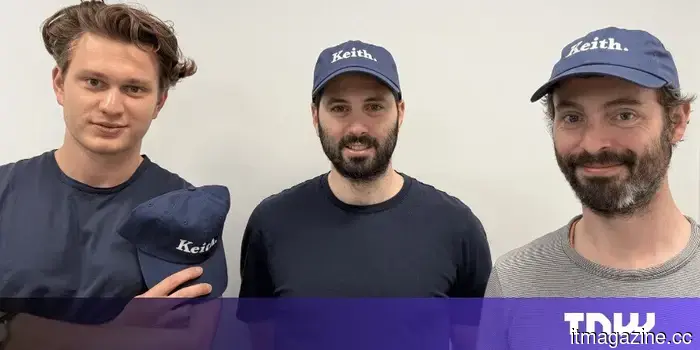 Keith secures £2 million to establish the UK's most automated legal practice.
Keith, established by the founders of the plant-based food brand THIS, has secured £2M in seed funding to create an AI-focused law firm specializing in conveyancing.
Keith secures £2 million to establish the UK's most automated legal practice.
Keith, established by the founders of the plant-based food brand THIS, has secured £2M in seed funding to create an AI-focused law firm specializing in conveyancing.
 Ysios Capital introduces a €100 million fund aimed at developing biotech companies.
Ysios Capital has initiated a €100M fund aimed at creating biotech companies from academic research, with the goal of establishing at least three new companies by 2026.
Ysios Capital introduces a €100 million fund aimed at developing biotech companies.
Ysios Capital has initiated a €100M fund aimed at creating biotech companies from academic research, with the goal of establishing at least three new companies by 2026.
 The LG C5 OLED evo is now priced at $1,399 after a $1,300 discount, and no other option at this price offers comparable picture quality.
The LG C5 swiftly became the leading recommendation for OLEDs in 2025, and it is currently priced at $1,399.99 at Best Buy, which is a $1,300 reduction from its original price of $2,699.99. This nearly half-off deal for a 65-inch OLED evo screen featuring LG’s latest AI picture processing is the sort of discount that makes […]
The LG C5 OLED evo is now priced at $1,399 after a $1,300 discount, and no other option at this price offers comparable picture quality.
The LG C5 swiftly became the leading recommendation for OLEDs in 2025, and it is currently priced at $1,399.99 at Best Buy, which is a $1,300 reduction from its original price of $2,699.99. This nearly half-off deal for a 65-inch OLED evo screen featuring LG’s latest AI picture processing is the sort of discount that makes […]
 Meta’s Ray-Ban smart glasses could soon introduce new models known as Scriber and Blazer.
Meta's upcoming Ray-Ban AI glasses have appeared in FCC filings, indicating the emergence of two new models and potential enhancements in hardware.
Meta’s Ray-Ban smart glasses could soon introduce new models known as Scriber and Blazer.
Meta's upcoming Ray-Ban AI glasses have appeared in FCC filings, indicating the emergence of two new models and potential enhancements in hardware.
 The stress test on the MacBook Neo indicates that Apple could have implemented a straightforward solution to make it operate at lower temperatures.
Recent tests indicate that the MacBook Neo might operate cooler and faster with the addition of a basic copper plate, revealing the constraints of its fanless design.
The stress test on the MacBook Neo indicates that Apple could have implemented a straightforward solution to make it operate at lower temperatures.
Recent tests indicate that the MacBook Neo might operate cooler and faster with the addition of a basic copper plate, revealing the constraints of its fanless design.
 Meta awards executives stock options worth up to $921 million while laying off 700 employees | TNW
Meta granted stock options to six executives linked to a valuation goal of $9 trillion, just hours before laying off 700 employees in Reality Labs, recruitment, and sales.
Meta awards executives stock options worth up to $921 million while laying off 700 employees | TNW
Meta granted stock options to six executives linked to a valuation goal of $9 trillion, just hours before laying off 700 employees in Reality Labs, recruitment, and sales.
OpenAI invests in Isara, a startup valued at $650 million that is developing AI agent swarms.
Isara secured $94 million at a $650 million valuation to develop software that manages thousands of AI agents. OpenAI is one of the investors in the nine-month-old company.