

According to Google, Android web browsing has now surpassed the speed of iPhone browsing.
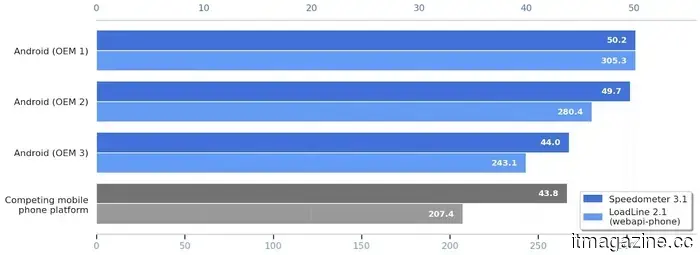
Recent results from Google indicate that web browsing on Android has surpassed the speed of iPhone browsing. According to a recent blog post, Chrome on Android now outperforms Safari on Apple devices in significant browser benchmarks, achieving record scores in commonly used tests.
For users, this translates to faster page loading times, smoother scrolling, and quicker responses when tapping or typing, particularly on newer Android smartphones. Google attributes these improvements to advances in how modern websites render and respond during typical usage.
This represents a change in a competition where Apple has typically had the advantage in mobile browser speed. Google asserts that recent enhancements in both Chrome and Android are yielding noticeable improvements that users can experience.
However, there are still some important distinctions to consider. The report doesn't detail every device comparison, and results from the lab may not always reflect how sites perform across various networks and conditions.
The assertion is supported by benchmark victories.
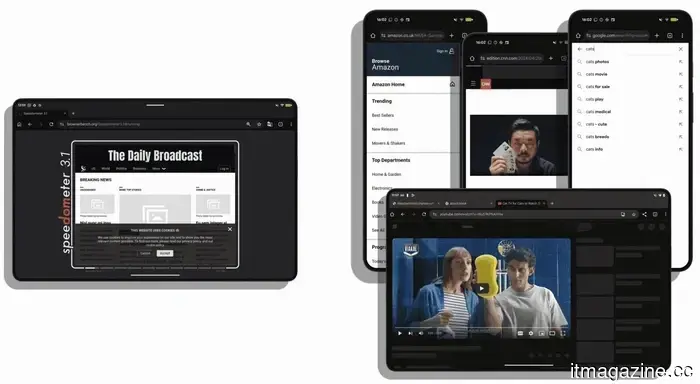
The headline is based on test outcomes. Recent flagship Android devices running Chrome have achieved record scores in Speedometer, a benchmark that simulates common activities such as loading pages, refreshing content, and managing user input.
These improvements arise from a combination of changes. Chrome now executes JavaScript more effectively, controls memory more tightly, and prioritizes resources for what’s currently visible on the screen. Android also contributes, as shared elements like WebView incorporate these enhancements into applications that utilize web content.
This is not the result of a singular breakthrough but rather reflects ongoing adjustments across rendering, scripting, and loading functions that accumulate over time.
Does this impact your everyday browsing?
Statistics have their limits, so the crucial question is how your device performs in practice. Google associates these advancements with shorter load times, smoother navigation through pages, and reduced lag when engaging with websites.
Performance is still influenced by context. Slower internet connections, heavier web pages, or concurrent background activities can slow down performance irrespective of which browser is used. Additionally, some websites are still more finely optimized for Safari on the iPhone, which may affect consistency.
Device variety is also significant. While newer flagship Android phones are achieving these high scores, it is less evident how midrange or older models stack up. If your device isn’t up-to-date, you might find it harder to notice the difference.
What to keep an eye on regarding mobile speed
Google is making browser speed a tangible point of reference, rather than just an upgrade that occurs behind the scenes. If this trend continues, enhanced web performance may become a key marketing feature for Android phones.
Apple's reaction will be notable as well. Safari has historically been finely optimized for iPhone hardware, and any sustained disparity in these tests is likely to drive further optimizations on their part.
For the moment, the main takeaway is practical. Newer Android smartphones are delivering some of the fastest browser performance available according to testing, but these benefits may quickly change as updates are rolled out for both platforms.
Other articles
 SOUS secures €4M to empower culinary entrepreneurs.
SOUS has secured €4 million to enhance its AI platform designed for marketing, discovery, and customer retention tailored to independent restaurants.
SOUS secures €4M to empower culinary entrepreneurs.
SOUS has secured €4 million to enhance its AI platform designed for marketing, discovery, and customer retention tailored to independent restaurants.
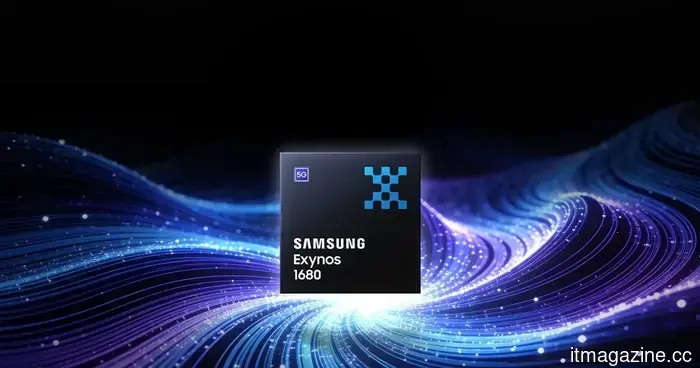 Samsung's latest Exynos 1680 offers enhanced AI and graphics capabilities for mid-range smartphones.
The Exynos 1680 is Samsung's newest mid-range processor, offering improved graphics and quicker on-device AI capabilities compared to the previous Exynos 1580.
Samsung's latest Exynos 1680 offers enhanced AI and graphics capabilities for mid-range smartphones.
The Exynos 1680 is Samsung's newest mid-range processor, offering improved graphics and quicker on-device AI capabilities compared to the previous Exynos 1580.
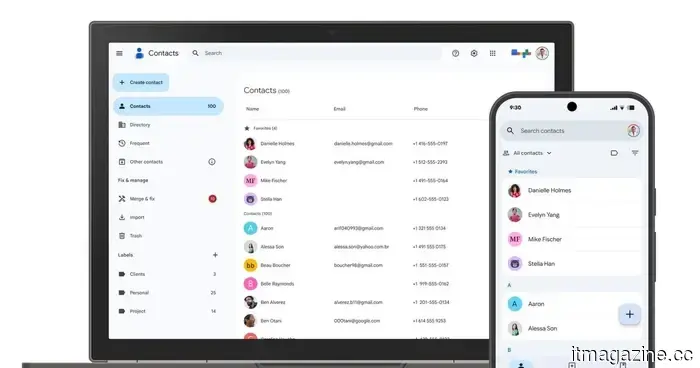 The new Contact Picker on Android 17 prevents applications from gaining access to your complete contact list.
Android 17 is introducing a new Contact Picker that alters how applications interact with your contacts list. Earlier reports indicated this move towards enhanced privacy, and Google is now implementing it. Rather than granting applications complete access to your address book, you will have the option to select specific contacts they can view. Previously, […]
The new Contact Picker on Android 17 prevents applications from gaining access to your complete contact list.
Android 17 is introducing a new Contact Picker that alters how applications interact with your contacts list. Earlier reports indicated this move towards enhanced privacy, and Google is now implementing it. Rather than granting applications complete access to your address book, you will have the option to select specific contacts they can view. Previously, […]
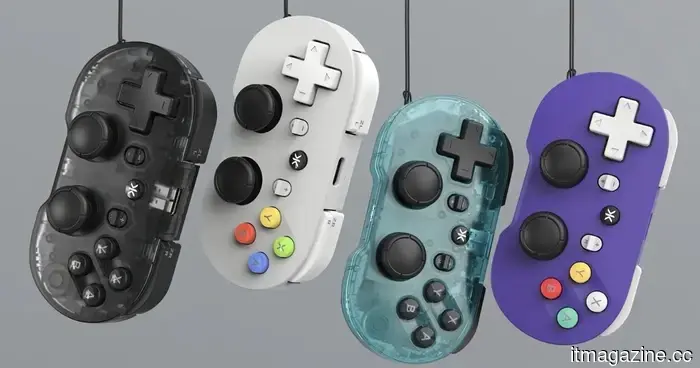 CRKD’s adorable keychain controller enhances gaming experiences with TMR thumbsticks.
The CRKD ATOM+ is a compact Bluetooth controller that features no stick drift, complete modern controls, and compatibility across multiple platforms including Switch, PC, mobile, and beyond.
CRKD’s adorable keychain controller enhances gaming experiences with TMR thumbsticks.
The CRKD ATOM+ is a compact Bluetooth controller that features no stick drift, complete modern controls, and compatibility across multiple platforms including Switch, PC, mobile, and beyond.
 Theia Insights secures $8 million to revolutionize outdated industry classification systems.
Theia Insights, an AI startup based in Cambridge, has secured $8 million in funding to expand its dynamic company classification platform tailored for financial markets, with MiddleGame Ventures leading the investment.
Theia Insights secures $8 million to revolutionize outdated industry classification systems.
Theia Insights, an AI startup based in Cambridge, has secured $8 million in funding to expand its dynamic company classification platform tailored for financial markets, with MiddleGame Ventures leading the investment.
 Sony aims to attach your phone to a DualSense controller, which may transform your gaming experience.
Sony has secured a patent for a system that connects your phone to a PlayStation controller, utilizing its cameras, gyroscope, and touchscreen as an additional input device to enhance the gaming experience.
Sony aims to attach your phone to a DualSense controller, which may transform your gaming experience.
Sony has secured a patent for a system that connects your phone to a PlayStation controller, utilizing its cameras, gyroscope, and touchscreen as an additional input device to enhance the gaming experience.
According to Google, Android web browsing has now surpassed the speed of iPhone browsing.
Android phones might now offer quicker browsing than iPhones, with Google asserting that Chrome has surpassed Safari in essential speed tests. The actual experience can vary based on your device, network, and the websites you use.