

This AI evaluates whether your driving behaviors indicate a risk of accidents.
A new AI model is addressing a crucial question that most drivers fail to consider early enough: What are the chances of an accident occurring even before the engine starts?
This system analyzes driver behavior by collecting data on eye movements, heart rates, and personality traits to identify early warning signs. Instead of waiting for actual driving errors to occur, it uses simulated driving tests to uncover behaviors associated with potential dangers.
Initial findings indicate it can differentiate between safer drivers and those more likely to make serious mistakes. This capability could be particularly beneficial in industries where safety is paramount, such as delivery services and commercial transportation.
How the system evaluates your driving
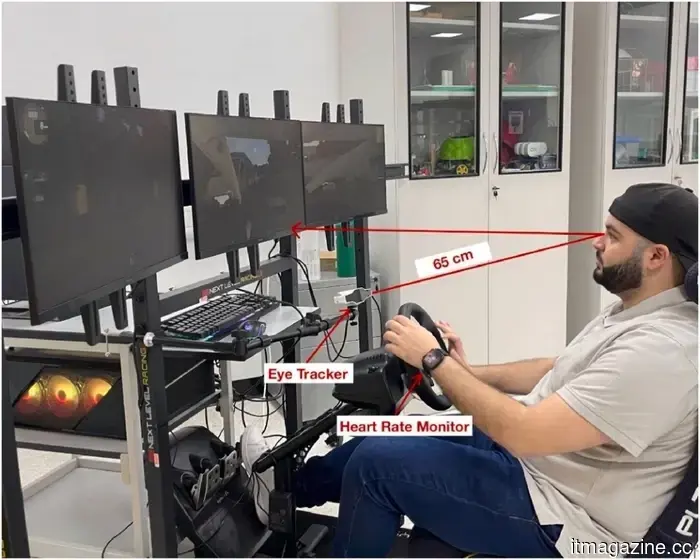
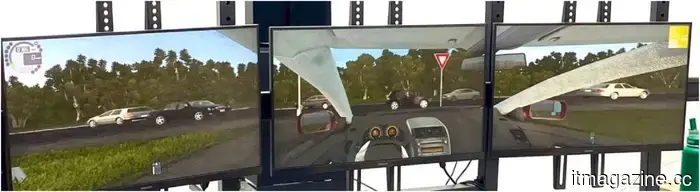
During the evaluation process, participants engage in a controlled virtual driving environment where their attention, reaction times, and stress levels are monitored continuously.
The data acquisition setup illustrates a participant using the driving simulator, with sensors collecting physiological data. Engineering Applications of Artificial Intelligence (2025)
Eye tracking technology reveals where drivers focus their attention and the duration of their concentration, helping to uncover instances of distraction or delayed reactions. Concurrently, heart rate data indicates cognitive stress, influencing decision-making under pressure.
Additionally, the model incorporates personality traits that affect risk tolerance and control. Together, these elements provide a more comprehensive understanding of driver behavior, moving beyond mere error tracking to pinpoint patterns related to a higher likelihood of crashes.
The significance beyond testing
For fleet managers, this application is immediately relevant. Assessing candidates based on behavioral indicators could help minimize accidents, decrease insurance liabilities, and mitigate operational disruptions.
Instead of solely depending on driving records or superficial assessments, companies could evaluate candidates more thoroughly before hiring. This approach shifts safety considerations earlier in the hiring process, particularly for positions where a single mistake could have dire consequences.
There are some complexities to consider. Utilizing biometric and personality data in the hiring process raises issues of privacy and fairness, and the signals derived from simulations may not always translate to real-world experiences.
What’s next for AI driver assessment
The model is still undergoing validation in controlled environments, raising questions about how effectively its findings can be applied to actual roads. Real-world driving involves uncertainties that simulations cannot fully account for.
Future steps will likely involve testing with actual drivers in a broader range of scenarios. This will help determine whether indicators like gaze direction and stress reactions remain constant under varying conditions.
If these outcomes prove consistent, the integration into commercial fleets could happen rapidly, as screening systems are already established. For everyday drivers, any advancements in licensing or insurance practices will rely on regulations and general public acceptance of this level of scrutiny.
The broader transformation is becoming evident. Driving risk may soon be evaluated before you even start the vehicle, potentially revolutionizing how safety is prioritized from the outset. If these predictions are accurate, accidents may shift from appearing random to being seen as preventable.
Other articles
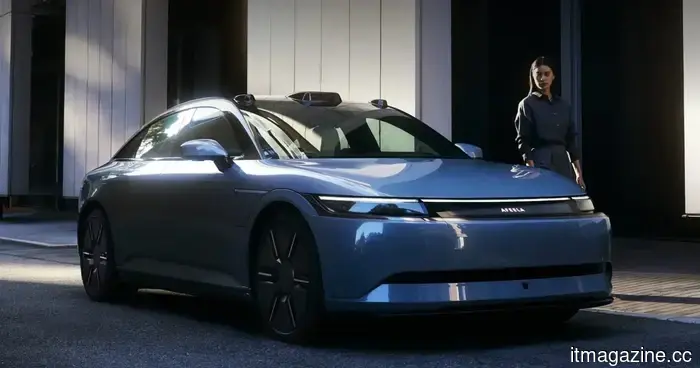 The electric car venture between Sony and Honda, known as the Afeela series, is officially over.
Following years of anticipation and multiple public displays, the Afeela 1 has been discontinued. Sony Honda Mobility has officially shut it down, marking yet another indication that the electric vehicle market is facing a decline.
The electric car venture between Sony and Honda, known as the Afeela series, is officially over.
Following years of anticipation and multiple public displays, the Afeela 1 has been discontinued. Sony Honda Mobility has officially shut it down, marking yet another indication that the electric vehicle market is facing a decline.
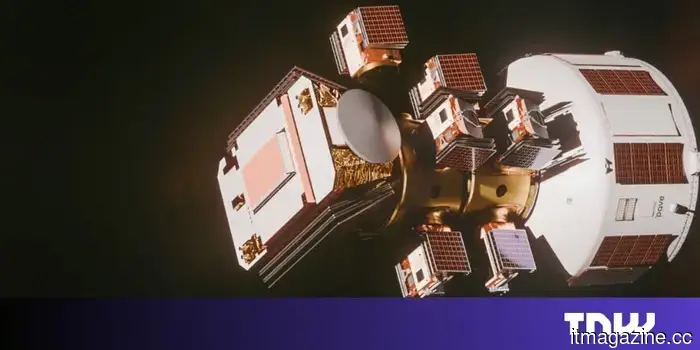 PAVE Space secures $40 million to develop orbital transfer vehicles.
Swiss startup PAVE Space has secured $40 million to develop orbital transfer vehicles capable of relocating satellites to any orbit within 24 hours.
PAVE Space secures $40 million to develop orbital transfer vehicles.
Swiss startup PAVE Space has secured $40 million to develop orbital transfer vehicles capable of relocating satellites to any orbit within 24 hours.
 You’re going to encounter a wave of product suggestions on Instagram and Facebook.
Your Instagram and Facebook feeds are set to become more shoppable, as Meta introduces new affiliate tools that enable creators to tag products directly in their posts and Reels, increasing buying options as you scroll.
You’re going to encounter a wave of product suggestions on Instagram and Facebook.
Your Instagram and Facebook feeds are set to become more shoppable, as Meta introduces new affiliate tools that enable creators to tag products directly in their posts and Reels, increasing buying options as you scroll.
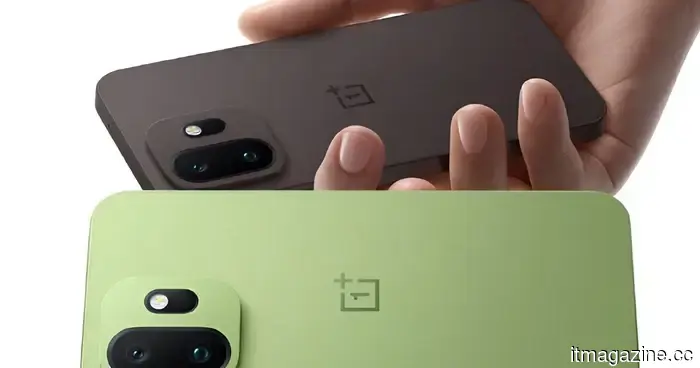 OnePlus' newest compact flagship serves as a disappointing reminder that increases in phone prices are still ongoing.
The OnePlus 15T features an impressive 7,500mAh battery in a sleek flagship design, but its significant price increase mirrors the challenging market conditions of 2026.
OnePlus' newest compact flagship serves as a disappointing reminder that increases in phone prices are still ongoing.
The OnePlus 15T features an impressive 7,500mAh battery in a sleek flagship design, but its significant price increase mirrors the challenging market conditions of 2026.
 You can now explore Shopify stores and make purchases directly within ChatGPT.
OpenAI is enhancing the shopping features of ChatGPT, making it simpler to explore stores powered by Shopify and purchase items with a more adaptable checkout process. This update follows the company's efforts in "agentic commerce," which focuses on better product discovery and simplifying the buying process. Is OpenAI shifting away from Instant Checkout? OpenAI initially launched ChatGPT's […]
You can now explore Shopify stores and make purchases directly within ChatGPT.
OpenAI is enhancing the shopping features of ChatGPT, making it simpler to explore stores powered by Shopify and purchase items with a more adaptable checkout process. This update follows the company's efforts in "agentic commerce," which focuses on better product discovery and simplifying the buying process. Is OpenAI shifting away from Instant Checkout? OpenAI initially launched ChatGPT's […]
 Origin secures $30 million in Series A+ funding.
Origin has secured $30 million in a Series A+ funding round led by Notion Capital to enhance its AI platform, which provides multinationals with insights into their benefits expenditures.
Origin secures $30 million in Series A+ funding.
Origin has secured $30 million in a Series A+ funding round led by Notion Capital to enhance its AI platform, which provides multinationals with insights into their benefits expenditures.
This AI evaluates whether your driving behaviors indicate a risk of accidents.
This AI model evaluates eye tracking, heart rate, and personality characteristics to identify high-risk drivers prior to their driving, which could transform how fleets assess candidates and prioritize safety.