

This AI analyzes your driving behaviors to determine if they indicate a risk of accidents.
A new AI model aims to address a question that most drivers tend to overlook: how likely are you to crash before you even start driving?
This system analyzes driving behavior by gathering data such as eye movements, heart rate, and personality characteristics to identify warning signs early on. Instead of waiting for actual errors to occur, it uses simulated driving tests to highlight behaviors associated with dangerous results.
Initial findings indicate that it can differentiate between safer drivers and those more likely to make serious mistakes. This capability could be particularly beneficial in industries where safety is crucial, such as delivery services and commercial transportation.
How the system evaluates your driving
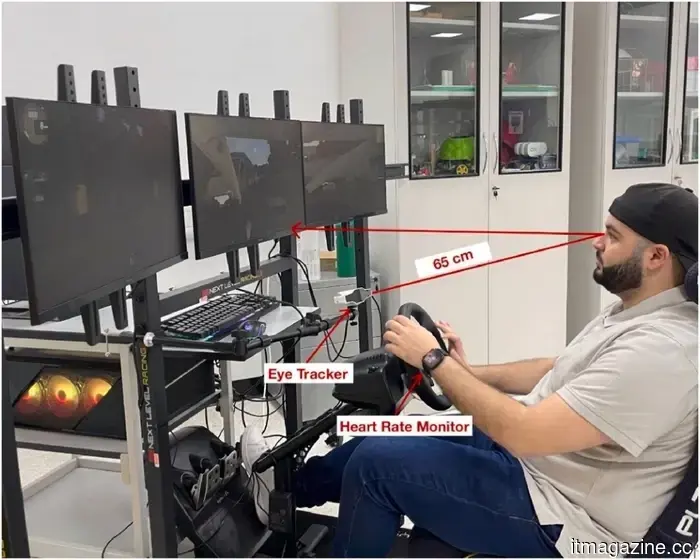
During evaluation, participants engage in a controlled virtual driving environment where their attention, reaction time, and stress levels are continuously monitored.
Data collection setup, showing a participant on the driving simulator and the sensors utilized to gather physiological data. Engineering Applications of Artificial Intelligence (2025)
Eye-tracking technology reveals where drivers concentrate and how long they maintain their focus, which helps identify moments of inattentiveness or delayed reactions. Concurrently, heart rate information indicates cognitive load, influencing decision-making under stress.
The model also incorporates personality traits that affect risk tolerance and control. Together, these elements provide a more nuanced understanding of driving behavior, extending beyond mere mistake tracking to highlight patterns associated with a higher risk of crashes.
Why this is significant beyond testing
For fleet managers, the application is immediate. Evaluating candidates based on behavioral indicators could help minimize accidents, decrease insurance risks, and reduce operational disruptions.
Instead of solely depending on driving histories or basic assessments, companies might select candidates prior to hiring. This proactively enhances safety efforts, particularly for positions where a single mistake can lead to serious consequences.
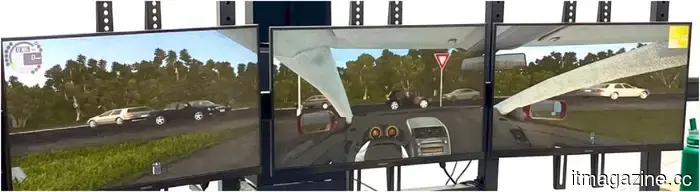
City car driving simulator software driver’s perspective. Engineering Applications of Artificial Intelligence (2025)
However, there are considerations to take into account. Using biometric and personality information during hiring raises concerns about privacy and fairness, and signals derived from simulations might not accurately reflect real-world scenarios.
What lies ahead for AI driver assessment
The model is still undergoing validation in controlled environments, leaving uncertainty about how well the findings translate to actual driving conditions. Real-world driving introduces variables that simulations cannot fully account for.
Future steps will likely involve testing with real drivers across a broader spectrum of environments. This will help determine if indicators like gaze patterns and stress responses remain consistent under varying conditions.
If these results are confirmed, implementation in commercial fleets may occur rapidly since screening systems are already operational. For average drivers, any integration into licensing or insurance processes will hinge on regulations and the public's comfort level with this type of analysis.
The larger transition is already evident. Driving risk may soon be evaluated before the ignition is even turned, potentially transforming how safety is approached from the outset. If this proves accurate, accidents could become less random and increasingly seen as preventable.
Other articles
 Gemini, ChatGPT, and many other AI chatbots share similar thought processes, which negatively impacts human creativity.
AI chatbots might seem creative independently, but recent studies indicate they frequently arrive at similar concepts, prompting worries that dependence on them could subtly limit human creativity.
Gemini, ChatGPT, and many other AI chatbots share similar thought processes, which negatively impacts human creativity.
AI chatbots might seem creative independently, but recent studies indicate they frequently arrive at similar concepts, prompting worries that dependence on them could subtly limit human creativity.
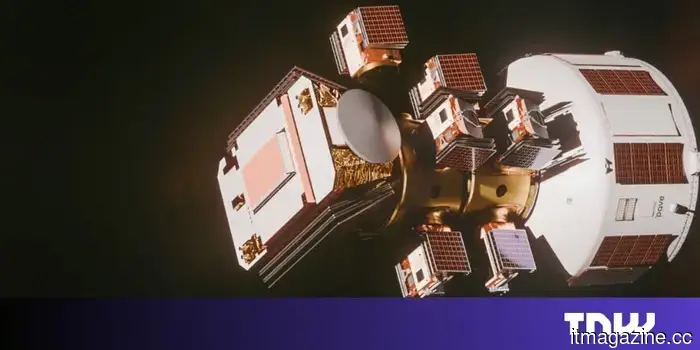 PAVE Space secures $40 million to develop orbital transfer vehicles.
Swiss startup PAVE Space has secured $40 million to develop orbital transfer vehicles capable of relocating satellites to any orbit within 24 hours.
PAVE Space secures $40 million to develop orbital transfer vehicles.
Swiss startup PAVE Space has secured $40 million to develop orbital transfer vehicles capable of relocating satellites to any orbit within 24 hours.
 This AI evaluates whether your driving behaviors indicate a risk of accidents.
This AI model evaluates eye tracking, heart rate, and personality characteristics to identify high-risk drivers prior to their driving, which could transform how fleets assess candidates and prioritize safety.
This AI evaluates whether your driving behaviors indicate a risk of accidents.
This AI model evaluates eye tracking, heart rate, and personality characteristics to identify high-risk drivers prior to their driving, which could transform how fleets assess candidates and prioritize safety.
 PAVE Space secures $40 million to develop orbital transfer vehicles.
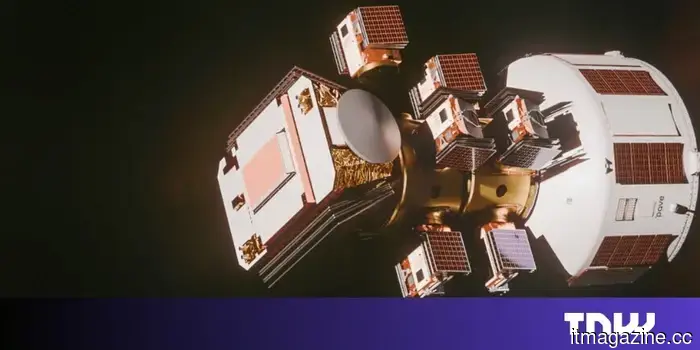
PAVE Space, a startup based in Switzerland, has secured $40 million in funding to develop orbital transfer vehicles capable of relocating satellites to any orbit within a 24-hour timeframe.
PAVE Space secures $40 million to develop orbital transfer vehicles.
PAVE Space, a startup based in Switzerland, has secured $40 million in funding to develop orbital transfer vehicles capable of relocating satellites to any orbit within a 24-hour timeframe.
 Origin secures $30 million in Series A+ funding.
Origin has secured $30 million in a Series A+ funding round led by Notion Capital to enhance its AI platform, which provides multinationals with insights into their benefits expenditures.
Origin secures $30 million in Series A+ funding.
Origin has secured $30 million in a Series A+ funding round led by Notion Capital to enhance its AI platform, which provides multinationals with insights into their benefits expenditures.
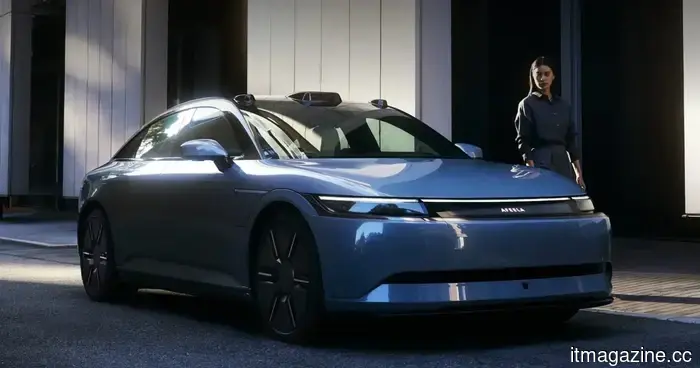 The electric car venture between Sony and Honda, known as the Afeela series, is officially over.
Following years of anticipation and multiple public displays, the Afeela 1 has been discontinued. Sony Honda Mobility has officially shut it down, marking yet another indication that the electric vehicle market is facing a decline.
The electric car venture between Sony and Honda, known as the Afeela series, is officially over.
Following years of anticipation and multiple public displays, the Afeela 1 has been discontinued. Sony Honda Mobility has officially shut it down, marking yet another indication that the electric vehicle market is facing a decline.
This AI analyzes your driving behaviors to determine if they indicate a risk of accidents.
This AI model examines eye tracking, heart rate, and personality characteristics to identify high-risk drivers before they start driving, which could transform the way fleets evaluate candidates and enhance safety measures.