

Pagaya completes $450M auto resecuritization, marking a first in AI-driven lending.
Three years ago, institutional investors made a bold move by acquiring bonds that were backed by auto loans selected through an algorithm. Now, Pagaya Technologies is inviting them to do so once more, using the same loans.
The fintech company, founded in Israel and based in New York, announced on Monday that it has successfully completed a $450 million auto resecuritization transaction, marking the first refinancing deal under its Research-Driven Pagaya Motor (RPM) program. According to a press release, the transaction, labeled RPM 2026-R1, combines receivables that were initially securitized through three prior RPM transactions from 2023 and 2024, repackaging them into new notes for capital-market investors.
This is, without a doubt, a significant achievement. Resecuritization—refinancing pools of loans that have already undergone one round of securitization—is commonplace in prime mortgage markets but is seldom seen in subprime auto lending, and is even less common when the underlying credit assessments are made by a machine-learning model instead of a human underwriter.
The Importance of Resecuritization
This transaction indicates that Pagaya’s AI-selected loan portfolios have performed sufficiently well to draw a second round of institutional investment, as AI startups continue to validate their models in capital markets. Rating agency KBRA, which provided preliminary ratings to six classes of notes totaling around $442 million in mid-March, confirmed that the receivables were originally included in RPM 2023-3, RPM 2023-4, and RPM 2024-1. This deal represents the 59th publicly rated securitization sponsored by Pagaya's structured-products division.
For Pagaya, the resecuritization program offers a new dimension of capital efficiency. Instead of holding seasoned loan pools until maturity or selling them at a discount, the company can recycle capital by refinancing existing portfolios, thus effectively prolonging the useful life of every loan touched by its AI. In light of projections from KBRA and S&P Global that auto ABS performance is expected to decline in 2026, showing that investors are willing to refinance AI-originated securities is a significant signal.
A Year of Unbroken Issuance
The RPM 2026-R1 deal comes amid an aggressive capital-markets initiative. In February, Pagaya commenced 2026 by issuing an $800 million consumer-loan ABS. In March, it concluded RPM 2026-1, a $400 million standard auto securitization that attracted over 20 investors, most of whom had participated previously. The company has also set up a $700 million revolving funding facility secured by personal loans, financed with investment from 26North, and finalized a forward-flow agreement worth up to $500 million with asset manager Castlelake.
Since 2018, Pagaya has executed 83 securitizations, raising over $34 billion in capital to support loans originated through its partner network. Its investor base has now surpassed 150 institutions.
The Financial Figures Behind the Platform
Pagaya reported $1.3 billion in revenue for 2025, which marks a 26 percent year-on-year increase, alongside $371 million in adjusted EBITDA and $81 million in GAAP net income—its fourth consecutive profitable quarter. CEO Gal Krubiner has projected revenue between $1.4 billion and $1.575 billion in 2026 while indicating a strategic withdrawal from higher-risk credit segments in favor of disciplined risk management and controlled volume growth.
This restraint appears to be strategic. Delinquency rates for auto ABS have been rising, especially in the non-prime segment where Pagaya operates. The weighted-average loan-to-value ratios on non-prime originations increased by about five percentage points from 2022 to 2025, even as vehicle values have stabilized. The company seems to be banking on the combination of stricter underwriting and more advanced capital recycling to sustain growth without pursuing riskier borrowers.
Implications for AI-Driven Lending
Pagaya’s resecuritization initiative arrives at a time when the fintech lending sector is facing dual challenges: while there remains strong investor demand for yield, credit performance in consumer auto is deteriorating. The company's ability to refinance seasoned AI-originated portfolios could serve as a model for other algorithm-driven lenders that need to prove their models can withstand full market cycles.
The ongoing question for the structured-finance community is whether the AI advantage is substantive or simply well-promoted. However, with $450 million at stake and a lineup of institutional investors ready to purchase the same loans a second time, Pagaya has certainly secured another opportunity to present its case.

Other articles
 Pagaya completes $450 million auto resecuritization, marking a first in AI-driven lending.
Israeli fintech Pagaya has completed its first auto resecuritization, raising $450 million by refinancing loan portfolios selected by AI, marking a new phase for algorithmic lending.
Pagaya completes $450 million auto resecuritization, marking a first in AI-driven lending.
Israeli fintech Pagaya has completed its first auto resecuritization, raising $450 million by refinancing loan portfolios selected by AI, marking a new phase for algorithmic lending.
 A leak regarding the Oura Ring 5 offers an early glimpse at its most significant updates.
A recent leak regarding the early Oura Ring 5 showcases an enhanced design, a new Deep Rose hue, and upgraded sensors, offering a glimpse of what to anticipate before its anticipated launch in late 2027.
A leak regarding the Oura Ring 5 offers an early glimpse at its most significant updates.
A recent leak regarding the early Oura Ring 5 showcases an enhanced design, a new Deep Rose hue, and upgraded sensors, offering a glimpse of what to anticipate before its anticipated launch in late 2027.
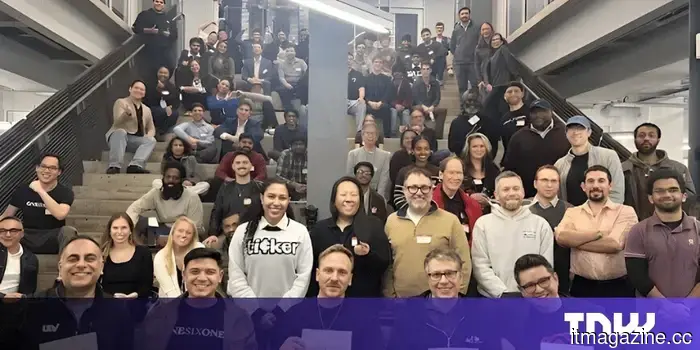 Developer communities, artificial intelligence, and the future of technological leadership.
Developer communities such as Coffee & Code Philadelphia demonstrate how AI, teamwork, and grassroots leadership are transforming contemporary tech ecosystems.
Developer communities, artificial intelligence, and the future of technological leadership.
Developer communities such as Coffee & Code Philadelphia demonstrate how AI, teamwork, and grassroots leadership are transforming contemporary tech ecosystems.
 Zevero completes a second funding round, raising $7 million.
Zevero has secured $7M in funding, raising its total to $14M, as the London-based carbon management platform extends its operations into the Asia-Pacific region and continental Europe.
Zevero completes a second funding round, raising $7 million.
Zevero has secured $7M in funding, raising its total to $14M, as the London-based carbon management platform extends its operations into the Asia-Pacific region and continental Europe.
 The Gemini avatar allows you to be featured in AI-generated content without the need to record yourself.
Google might soon enable users to create a reusable 3D avatar within Gemini, which would allow them to place themselves in AI-generated images and videos without needing to take frequent selfies, indicating a move towards quicker and more uniform content generation.
The Gemini avatar allows you to be featured in AI-generated content without the need to record yourself.
Google might soon enable users to create a reusable 3D avatar within Gemini, which would allow them to place themselves in AI-generated images and videos without needing to take frequent selfies, indicating a move towards quicker and more uniform content generation.
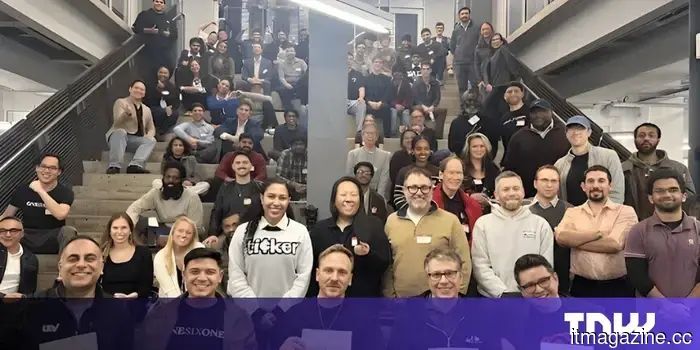 Developer communities, artificial intelligence, and the upcoming landscape of technology leadership.
Developer communities such as Coffee & Code Philadelphia illustrate how AI, teamwork, and grassroots leadership are transforming contemporary tech ecosystems.
Developer communities, artificial intelligence, and the upcoming landscape of technology leadership.
Developer communities such as Coffee & Code Philadelphia illustrate how AI, teamwork, and grassroots leadership are transforming contemporary tech ecosystems.
Pagaya completes $450M auto resecuritization, marking a first in AI-driven lending.
Israeli fintech Pagaya has successfully completed its first auto resecuritization, raising $450 million to refinance loan portfolios selected by AI, marking a new phase in algorithmic lending.