
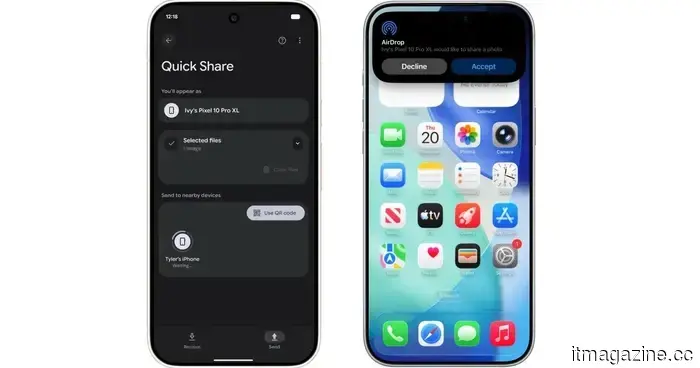
I view the AirDrop support in the Galaxy S26 as a step forward, but I believe it doesn't significantly alter things.
Apple has subtly set apart its iPhones by ensuring seamless and smooth everyday usage. For years, AirDrop served as a prime example of this ease. Transferring files between Apple devices was straightforward, while Android users had to rely on links, apps, USB transfers, or the traditional “just send it via WhatsApp.”
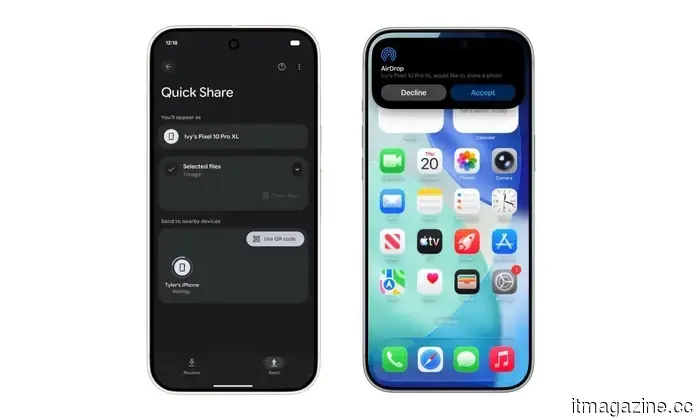
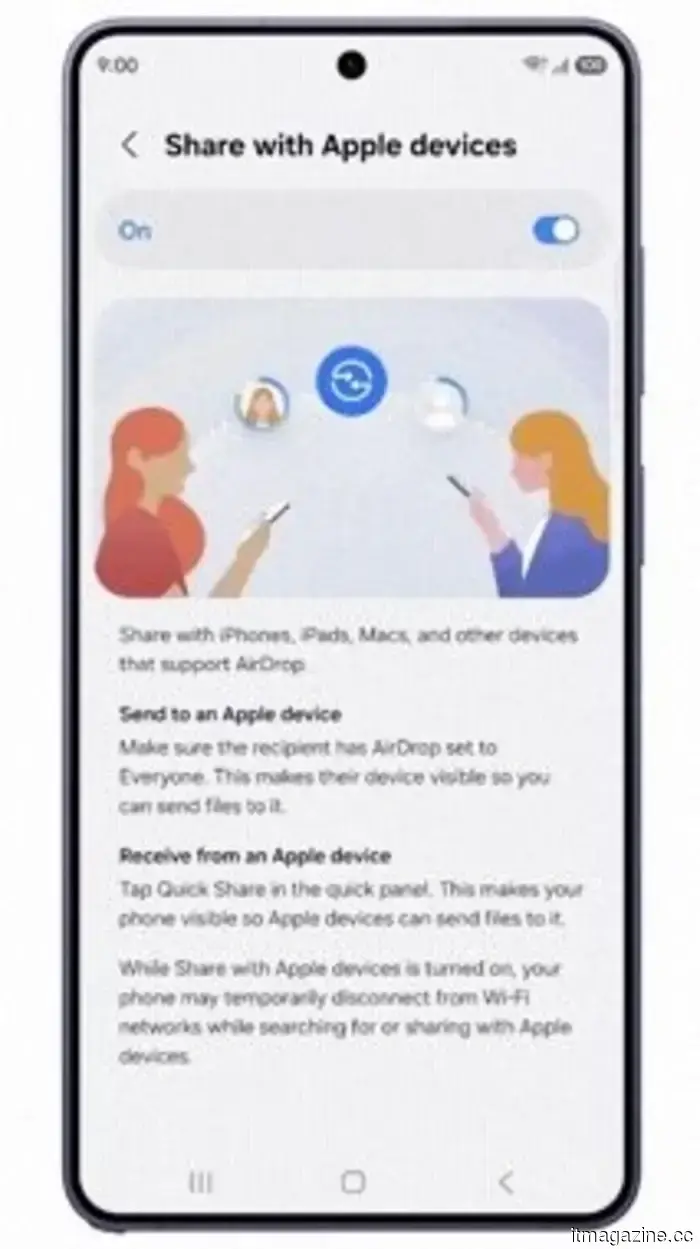
Samsung's introduction of native AirDrop support with Quick Share on the Galaxy S26 is a significant and positive step. It makes sharing across platforms feel more sensible and accessible. This follows the Pixel 10 lineup from Google, which was the first Android series to incorporate native AirDrop functionality.
Thus, Samsung's Galaxy S26 is enhancing the smartphone experience, albeit without dramatically altering it.
Why this won't sway anyone's allegiance
The ability for Galaxy S26 users to share files with iPhones more conveniently benefits everyone involved. It alleviates genuine frustrations and presents Samsung as more practical in the competitive landscape. However, as beneficial as this advancement is, I don't expect it to be a game-changer. No iPhone user would reconsider their loyalty to Apple.
People don't choose Apple solely because of AirDrop; they remain for its comprehensive ecosystem. AirDrop operates alongside iMessage, Apple Watch, Macs, FaceTime, familiarity with apps, and years of established habits. Essentially, file sharing is merely one component of a much larger structure. While Samsung is addressing one specific annoyance, the strength of Apple's foundation remains intact.
Samsung isn't leading a revolution; it's joining one.
The narrative extends beyond Samsung. The more intriguing aspect is the gradual alignment among Android brands. Google led the way with the Pixel 10 series, and now Samsung is following with the Galaxy S26. This trend indicates that cross-platform compatibility is becoming less of a rarity and more of a standard.
Even other manufacturers are approaching cross-compatibility in their own methods. Xiaomi has launched an official Interconnectivity app available on iPhone, iPad, and Mac, facilitating file transfers, data synchronization, and screen sharing with compatible Xiaomi devices. This represents a clearer cross-ecosystem strategy than many Android brands attempted in the past. Similarly, Oppo is implementing O+ Connect, which allows rapid file transfer between Apple devices and Oppo, OnePlus, and Realme smartphones. It also provides synchronization for calls, messages, and notifications from iPhone.
Oppo pushes the envelope even further on the Mac front, offering file sharing and remote Mac control. The trend is evident: Android brands are no longer focusing solely on outperforming Apple regarding specifications; they are endeavoring to make Apple's ecosystem benefits appear less exclusive.
Not enough to shift the balance
My perspective on the Galaxy S26 receiving AirDrop support is straightforward: I appreciate it. This feature was long overdue and introduces changes that enhance the smartphone experience in a small but significant way. However, I believe such features are often overhyped due to their simplicity and ease of demonstration. While they make for excellent promotional material, they seldom lead to shifts in brand loyalty.
The majority of consumers are not switching ecosystems merely because file transfers have become simpler. They change platforms for reasons related to camera quality, pricing, status, habitual preferences, wearable compatibility, and because their entire digital existence leans toward one ecosystem. So while there are minor improvements and reductions in frustration, this is just a step forward. AirDrop compatibility feels more like a quality-of-life enhancement rather than the beginning of a significant exodus from Apple. It isn't revolutionizing the landscape, and most Apple users are unlikely to notice a difference.

Other articles
 My life became a subscription nightmare, but I eliminated the unwanted charges with these methods.
There was once a period when subscriptions seemed like an exciting new trend. Those days were marked by (digital) tranquility. A smooth payment option on trendy apps offered endless access (for the month). You subscribed to Netflix, and perhaps Spotify, and that was typically it. Today, it’s all about streaming services, cloud storage, fitness applications, editing tools, AI chatbots, […]
My life became a subscription nightmare, but I eliminated the unwanted charges with these methods.
There was once a period when subscriptions seemed like an exciting new trend. Those days were marked by (digital) tranquility. A smooth payment option on trendy apps offered endless access (for the month). You subscribed to Netflix, and perhaps Spotify, and that was typically it. Today, it’s all about streaming services, cloud storage, fitness applications, editing tools, AI chatbots, […]
 Halter secures $220 million at a $2 billion valuation to expand its virtual fencing technology.
New Zealand agtech startup Halter has completed a $220 million Series E funding round, led by Founders Fund, which has placed the virtual fencing company’s valuation at $2 billion following the sale of one million GPS cattle collars.
Halter secures $220 million at a $2 billion valuation to expand its virtual fencing technology.
New Zealand agtech startup Halter has completed a $220 million Series E funding round, led by Founders Fund, which has placed the virtual fencing company’s valuation at $2 billion following the sale of one million GPS cattle collars.
 Domino's launches enhanced AI tracking and real-time activities to improve order transparency.
Your iPhone will display real-time pizza updates without the need to open the app.
Domino's launches enhanced AI tracking and real-time activities to improve order transparency.
Your iPhone will display real-time pizza updates without the need to open the app.
 iOS 26.4 has arrived, featuring Playlist Playground, new emoji, and a fix for Family Sharing issues.
iOS 26.4 may not change the game, but it subtly addresses issues that have needed attention for a long time — and it also introduces an AI playlist creator that is truly enjoyable to use.
iOS 26.4 has arrived, featuring Playlist Playground, new emoji, and a fix for Family Sharing issues.
iOS 26.4 may not change the game, but it subtly addresses issues that have needed attention for a long time — and it also introduces an AI playlist creator that is truly enjoyable to use.
 OpenAI unveils open-source tools focused on teen safety for AI developers.
OpenAI introduced safety guidelines focused on prompts for developers creating AI applications intended for teenagers, addressing issues such as violence, self-harm, and age-restricted material.
OpenAI unveils open-source tools focused on teen safety for AI developers.
OpenAI introduced safety guidelines focused on prompts for developers creating AI applications intended for teenagers, addressing issues such as violence, self-harm, and age-restricted material.
 Nvidia's CEO Jensen Huang claims that we have reached AGI. But what exactly does that mean?
Jensen Huang's assertion that AGI is already present has sparked renewed discussion, as experts continue to be split on what truly constitutes human-level artificial intelligence.
Nvidia's CEO Jensen Huang claims that we have reached AGI. But what exactly does that mean?
Jensen Huang's assertion that AGI is already present has sparked renewed discussion, as experts continue to be split on what truly constitutes human-level artificial intelligence.
I view the AirDrop support in the Galaxy S26 as a step forward, but I believe it doesn't significantly alter things.
Samsung's inclusion of AirDrop support in the Galaxy S26 is the type of enhancement that users will immediately value, though it’s not something that typically drives phone purchases.