

The co-founder of Super Micro has been accused of smuggling servers into China.
The indictment of Super Micro’s co-founder reveals not only a $2.5 billion conspiracy but also a system that was never designed to prevent one. In a rented warehouse in Southeast Asia, a man was using a hair dryer on a server box—not to dry it, but to loosen the adhesive on a serial-number sticker, allowing it to be removed and placed on another machine that had never been powered on, booted, or intended to reach its stated destination.
The authentic servers, which held Nvidia's most advanced AI accelerator chips, had already been packaged into unmarked boxes and sent to China. The counterfeit machine, adorned with borrowed labels, awaited inspection by auditors. This scene, reconstructed from surveillance footage referenced in a federal indictment unsealed on March 19, 2026, clearly illustrates how America’s semiconductor export controls function in reality—not just in theory. The answer, it turns out, involves a hair dryer.
The indictment implicates three individuals: Yih-Shyan ‘Wally’ Liaw, 71, co-founder, board member, and Senior Vice President of Business Development at Super Micro Computer; Ruei-Tsang ‘Steven’ Chang, 53, general manager of the company’s Taiwan office; and Ting-Wei ‘Willy’ Sun, 44, described by prosecutors as a ‘fixer.’ They allegedly coordinated the diversion of approximately $2.5 billion worth of servers, many assembled in the United States and incorporating Nvidia GPUs, to clients in China via a front company in Southeast Asia between 2024 and 2025. During a single six-week period in the spring of 2025, at least $510 million worth of hardware was shipped. Liaw and Sun were detained, while Chang, a Taiwanese national, remains at large.
The charges include conspiracy to violate the Export Controls Reform Act, conspiracy to smuggle U.S. goods, and conspiracy to defraud the government—offenses that collectively carry a maximum sentence of 30 years in prison. Super Micro, the publicly traded company based in San Jose that manufactures the hardware at the center of the scheme, has not been named as a defendant. It has placed Liaw and Chang on administrative leave and severed its ties with Sun, stating that it has been cooperating with investigators and has maintained a ‘robust compliance program.’
That phrase deserves some reflection. According to the indictment, the defendants and their co-conspirators communicated via encrypted messaging apps to coordinate server orders, determine shipping locations in China, and, crucially, conceal their scheme from the company’s compliance team. When an internal audit was scheduled, they set up thousands of non-operational server replicas in a warehouse rented by the front company. When a U.S. Department of Commerce inspector arrived for an inspection, they employed the same props, using heat guns to swap labels and serial numbers beforehand.
The indictment indicates that the inspector did not see the actual servers because they had already been sent to China. An internal auditor, expected to be present at a separate inspection, was allegedly ‘offsite, entertaining himself at the front company’s expense.’
The loophole was never a secret. The transshipment route through Southeast Asia is well-known, documented, and frequently highlighted as a flaw in the export control system—something U.S. trade analysts, think tanks, and the Department of Commerce have warned about for years. Countries like Malaysia, Singapore, Vietnam, and Thailand have historically, as noted by analysts at the East Asia Forum earlier this month, ‘lacked the enforcement infrastructure or political will to rigorously monitor re-exports.’
Between April and July 2025, Vietnamese authorities intercepted over 2,000 shipments falsely labeled ‘Made in Vietnam’ but traced back to Chinese factories, as analyzed by The Diplomat. Malaysian tech hubs in Penang and Johor were flagged for similar rerouting practices. The Chinese AI lab DeepSeek, which gained attention following its January 2025 model release, was accused by Tom’s Hardware of creating ‘ghost’ data centers in Southeast Asia to pass audits before forwarding the GPUs. A Financial Times investigation estimated that China acquired around $1 billion in advanced AI processors in the three months following the most recent tightening of U.S. export controls.
Thus, the pattern is not an anomaly; it is structural. The controls are primarily enforced at the point of sale and first shipment, relying almost entirely on the buyer's declared end use and the downstream compliance of each intermediary in the supply chain. When the temptation to misrepresent is measured in hundreds of millions of dollars, the honor system shows its limitations.
Super Micro’s involvement in this case is, at the very least, unsurprising. The company has a regulatory history that would stand out on its own but suggests deeper systemic issues when viewed cumulatively. In 2018, it was temporarily delisted from Nasdaq for failing to submit financial statements. In 2020, it faced a $17.5 million fine from the Securities
Other articles
 Hisense begins pre-orders for the XR10, offering a $1,700 discount along with a complimentary HT Saturn.
The XR10 Triple Laser Projector from Hisense is now open for pre-orders. If you place your order before April 24, you'll save $1,700 and receive a complimentary HT Saturn soundbar valued at $1,299.
Hisense begins pre-orders for the XR10, offering a $1,700 discount along with a complimentary HT Saturn.
The XR10 Triple Laser Projector from Hisense is now open for pre-orders. If you place your order before April 24, you'll save $1,700 and receive a complimentary HT Saturn soundbar valued at $1,299.
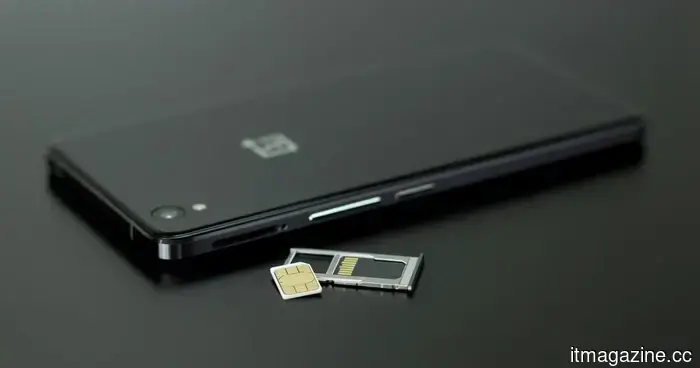 Google is eliminating the inconvenience of recalling SIM codes on Android 17.
Android 17 has the potential to simplify the process of recalling SIM PINs by automatically inputting them once you unlock your device, while continuing to safeguard your SIM on different phones.
Google is eliminating the inconvenience of recalling SIM codes on Android 17.
Android 17 has the potential to simplify the process of recalling SIM PINs by automatically inputting them once you unlock your device, while continuing to safeguard your SIM on different phones.
 This luxurious leather Apple Watch charging kit from Hermès is more expensive than a MacBook Pro.
Hermès' latest collection of leather Apple Watch chargers takes luxury to new heights, featuring a premium model priced higher than a top-of-the-line MacBook Pro.
This luxurious leather Apple Watch charging kit from Hermès is more expensive than a MacBook Pro.
Hermès' latest collection of leather Apple Watch chargers takes luxury to new heights, featuring a premium model priced higher than a top-of-the-line MacBook Pro.
 Diving into the deep end of my NCAA Pool with AI.
ChatGPT performed 50,000 simulations of the tournament, considering efficiency ratings, coaching styles, and past upsets — and then posed a question that no bracket sheet has ever asked: would you prefer to be correct, or would you rather make money?
Diving into the deep end of my NCAA Pool with AI.
ChatGPT performed 50,000 simulations of the tournament, considering efficiency ratings, coaching styles, and past upsets — and then posed a question that no bracket sheet has ever asked: would you prefer to be correct, or would you rather make money?
 The Xiaomi SU7 EV outshines Tesla with its impressive style and substance.
Xiaomi has introduced the next-generation SU7 in three versions, with the starting price set at RMB 219,900. Here’s what has changed and why this upgrade is more significant than you might think.
The Xiaomi SU7 EV outshines Tesla with its impressive style and substance.
Xiaomi has introduced the next-generation SU7 in three versions, with the starting price set at RMB 219,900. Here’s what has changed and why this upgrade is more significant than you might think.
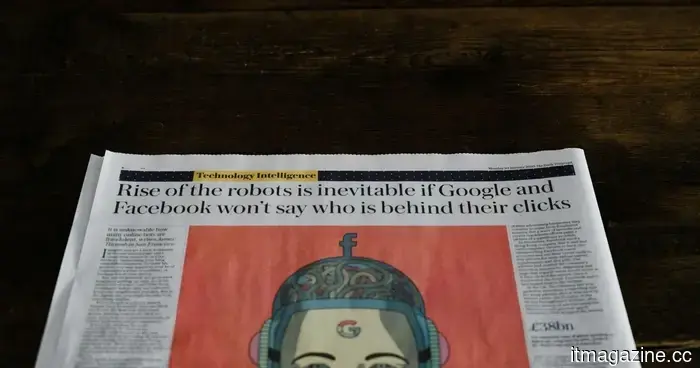 Google tests AI-generated headlines in its search results.
Google is experimenting with AI-generated headlines in Search, substituting titles created by publishers with rephrased alternatives, which has prompted worries regarding accuracy, transparency, and the manner in which news is shown to users.
Google tests AI-generated headlines in its search results.
Google is experimenting with AI-generated headlines in Search, substituting titles created by publishers with rephrased alternatives, which has prompted worries regarding accuracy, transparency, and the manner in which news is shown to users.
The co-founder of Super Micro has been accused of smuggling servers into China.
The indictment of Super Micro goes beyond just three individuals and $2.5 billion in illegally transported servers. It concerns an export control system that was never designed to withstand such issues.