
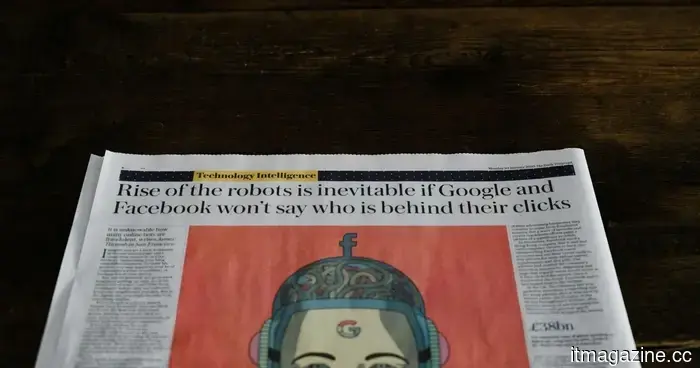
Google tests AI-generated headlines in its search results.
Google is again exploring how artificial intelligence can change user interactions with information online, this time focusing on a fundamental aspect of search: headlines. The company has begun testing the replacement of original news headlines in Search with those generated by AI, raising concerns among publishers and prompting questions regarding accuracy and editorial authority.
AI begins rewriting the web's "10 Blue Links"
In a recent trial, Google has begun showing AI-created headlines instead of the original titles written by publishers in its standard search results. This represents a significant departure from previous practices where Google would typically truncate or modify headlines for clarity.
Reports suggest that these rewritten headlines can sometimes alter the meaning or tone of the original article. In certain instances, nuanced or critical headlines have been condensed into vague or misleading phrases, which could lead users to form incorrect impressions of the content before they click on it.
Google characterizes this feature as a "small and narrow experiment," aimed at enhancing the relevance of search results to user queries and boosting engagement. However, the company has not revealed the extent of the testing.
Why this raises concerns for publishers
Headlines are an essential component of journalism, meticulously crafted to accurately reflect a story while drawing in readers. By substituting them with AI-generated alternatives, Google essentially assumes control over how articles are presented to users.
Publishers are concerned that this could weaken their editorial voice and credibility. If an AI-generated headline misrepresents a story, readers might attribute the blame to the publication rather than Google, potentially eroding trust.
There are also transparency concerns
At present, there is little to no indication when a headline has been modified by AI, making it challenging for users to differentiate between original and machine-generated content.
This development follows previous experiments in Google Discover, where AI-generated summaries and headlines faced backlash for inaccuracies and misleading language. For average users, this change could subtly impact how information is consumed. Headlines are crucial in shaping first impressions, and even minor shifts in wording can affect the interpretation of a story.
If AI-generated headlines prioritize engagement over accuracy, users may end up clicking on content that doesn't fully align with their expectations. This could result in them missing vital context or nuances present in the original headline.
On the other hand, Google argues that AI can help make headlines more relevant to search queries, potentially enhancing discoverability and simplifying user searches.
What comes next
While the current rollout is limited, this experiment may indicate a larger transition in how Google incorporates AI into Search. The company has a history of implementing features as small tests before rolling them out as comprehensive products.
Publishers and industry watchers will likely advocate for clearer labeling, increased transparency, and possibly opt-out options if this feature expands further. Additionally, regulators may closely examine how AI-generated content is presented, especially regarding news distribution and public information.
For now, the experiment serves as a "canary in the coal mine" – a warning of how AI could increasingly influence not only what users encounter online but also how that information is framed and understood.


Other articles
 WordPress.com allows AI agents to create, publish, and oversee your website.
Automattic has introduced writing functionalities to the MCP integration of WordPress.com, enabling AI agents such as Claude and ChatGPT to generate posts, create pages, handle comments, and reorganize content, all through a conversational interface.
WordPress.com allows AI agents to create, publish, and oversee your website.
Automattic has introduced writing functionalities to the MCP integration of WordPress.com, enabling AI agents such as Claude and ChatGPT to generate posts, create pages, handle comments, and reorganize content, all through a conversational interface.
 The Xiaomi SU7 EV outshines Tesla with its impressive style and substance.
Xiaomi has introduced the next-generation SU7 in three variations, beginning at RMB 219,900. Here’s what’s different and why it represents a larger improvement than you might anticipate.
The Xiaomi SU7 EV outshines Tesla with its impressive style and substance.
Xiaomi has introduced the next-generation SU7 in three variations, beginning at RMB 219,900. Here’s what’s different and why it represents a larger improvement than you might anticipate.
 Amazon is making another attempt in the smartphone market, and you can likely surmise what it entails.
Amazon is developing a new smartphone under the codename "Transformer." This AI-driven device is created to keep you linked to Alexa, Prime, and all things Amazon.
Amazon is making another attempt in the smartphone market, and you can likely surmise what it entails.
Amazon is developing a new smartphone under the codename "Transformer." This AI-driven device is created to keep you linked to Alexa, Prime, and all things Amazon.
 Notion's AI Meeting Notes can now operate in the background.
Notion's AI Meeting Notes now operate in the background, allowing users to switch between apps or lock their screens while the transcription proceeds without disruption.
Notion's AI Meeting Notes can now operate in the background.
Notion's AI Meeting Notes now operate in the background, allowing users to switch between apps or lock their screens while the transcription proceeds without disruption.
 EU regulations are steering Nintendo towards a design for the Switch 2 that includes a replaceable battery.
Nintendo is said to be working on a Switch 2 revision that will be more repair-friendly.
EU regulations are steering Nintendo towards a design for the Switch 2 that includes a replaceable battery.
Nintendo is said to be working on a Switch 2 revision that will be more repair-friendly.
 The Android Canary update introduces significant modifications, though nothing is assured.
Android Canary 2603 brings exciting features such as app lock and bubbles, although there is no assurance that they will be included in the final release. Here’s what the newest experimental build indicates about the future of Android and what to keep an eye on moving forward.
The Android Canary update introduces significant modifications, though nothing is assured.
Android Canary 2603 brings exciting features such as app lock and bubbles, although there is no assurance that they will be included in the final release. Here’s what the newest experimental build indicates about the future of Android and what to keep an eye on moving forward.
Google tests AI-generated headlines in its search results.
Google is experimenting with AI-generated headlines in Search, substituting titles created by publishers with rephrased alternatives, which has prompted worries regarding accuracy, transparency, and the manner in which news is shown to users.