

YouTube surpasses Hollywood studios, but it will present you with 30-second unskippable TV advertisements.
Recent data indicates that the platform generated $40.4 billion in 2025, surpassing Disney, NBCU, Paramount, and WBD.
The 30-second unskippable advertisements before your favorite creator's videos are accumulating significant revenue. According to new estimates from media research firm MoffettNathanson, YouTube earned $40.4 billion in advertising revenue last year, exceeding the combined $37.8 billion ad total from four major Hollywood players: Disney, NBCUniversal, Paramount Skydance, and Warner Bros. Discovery.
These figures signify a major change from 2024, when YouTube's $36.1 billion still fell behind that same group of traditional media companies, which collectively garnered $41.8 billion. When you include Fox, legacy television still outperformed YouTube with $44.8 billion, but the trend is clear.
Advertising revenue isn't the only important statistic.
YouTube's advantage goes beyond financials. In January, it accounted for 12.5 percent of U.S. television viewership, according to Nielsen data, surpassing the combined streaming totals from Disney, NBCU, Paramount, and Warner Bros. Discovery. Netflix, the closest paid competitor, had an 8.8 percent share.
The subscription segment tells a similar story. YouTube generated nearly $22 billion from its paid services in 2025, which includes YouTube TV, the live TV streaming service, in addition to ad-free subscriptions like YouTube Premium and YouTube Music. The NFL Sunday Ticket for football fans also contributed to this total. Google aims to further enhance subscription growth this year with slimmer bundles for YouTube TV, including a sports-centric option.
Implications for your remote control
These statistics indicate a pivotal change in viewing habits. YouTube is no longer just a competitor to traditional television; it has essentially become traditional television for a large segment of viewers, albeit with different financial models and no scheduled broadcasts. Those unskippable ads that viewers tolerate support a system that now generates more revenue than the long-established companies that have defined television for years.
Google retains about half of its advertising earnings, with creators receiving a 55 percent share from ads on standard videos. This arrangement fuels an endless stream of content that keeps users engaged, creating a self-sustaining cycle that legacy media cannot replicate. More viewers attract more creators, leading to more audience engagement and increased advertising revenue.
What’s next in the streaming competition
The divide between YouTube and Hollywood is likely to continue expanding. MoffettNathanson anticipates steady growth in advertising for the platform, and the subscription model still has potential for further growth. The smaller bundles that Google is testing could entice more cord-cutters into YouTube’s paid offerings without needing a comprehensive cable equivalent.
For viewers, the conclusion is clear. The financial models that deliver free videos with ads or paid subscriptions without them are here to stay. YouTube possesses the scale and momentum to set the terms. The next challenge will be whether it can sustain ad growth while accelerating subscription revenue. If MoffettNathanson's outlook proves accurate, the platform that began with simple home videos will soon possess greater financial strength than virtually all but a select few tech giants.
Paulo Vargas is an English major turned reporter turned technical writer, with a career that has always circled back to…
AI is bringing Val Kilmer back to the upcoming film “As Deep as the Grave.”
The film has unveiled its first look at Val Kilmer’s character, Father Fintan.
The application of generative AI in Hollywood has already initiated discussions about creativity and legacy. Currently, the indie film "As Deep as the Grave" is gaining attention for its use of artificial intelligence to bring Val Kilmer back to the screen. Kilmer was cast by writer-director Coerte Voorhees years before his passing in 2025, with the role tailored specifically for him. Voorhees shared with Variety, “He was the actor I wanted for this role. It was designed around him, drawing from his Native American heritage and his affection for the Southwest.”
Longtime fans will recall the time when Sony Xperia featured in the storyline.
The new trailer for Spider-Man: Brand New Day has generated buzz, but not solely about the narrative. This time, it's Peter Parker’s choice of smartphone that’s subtly capturing attention. In a fleeting moment, Spidey is seen using what appears to be a Samsung Galaxy Z Flip, a high-end foldable device that certainly doesn’t suggest “rent overdue.”
The first trailer for Spider-Man: Brand New Day has finally arrived, hinting at Peter Parker’s greatest challenge yet.
Set four years after the events of No Way Home, the storyline follows superhero Spider-Man (Tom Holland) as he combats crime in a world that has forgotten Peter Parker existed. This marks Spider-Man's fourth solo film in the Marvel Cinematic Universe, and the trailer has already revealed numerous exciting details about Brand







Other articles
 NASA releases breathtaking images of Mars to mark the 20th anniversary of its orbiter.
NASA sent the Mars Reconnaissance Orbiter into space in August 2005, and it established orbit around the red planet on March 10 of the following year, where it remains operational. The information transmitted back to Earth by the MRO has provided an unparalleled view of Mars and has assisted scientists over the years in learning more about […]
NASA releases breathtaking images of Mars to mark the 20th anniversary of its orbiter.
NASA sent the Mars Reconnaissance Orbiter into space in August 2005, and it established orbit around the red planet on March 10 of the following year, where it remains operational. The information transmitted back to Earth by the MRO has provided an unparalleled view of Mars and has assisted scientists over the years in learning more about […]
 The DJI Power 2000 is priced at $799, positioning it as one of the best value power stations available at the moment.
Portable power stations have seen a surge in popularity recently, yet many of the intriguing options are either too small to be truly functional or priced excessively high. The DJI Power 2000 stands out in a different league: it features a capacity of 2048Wh with LFP technology, offers a continuous output of 3000W, and can recharge from 0 to 80% in just 55 minutes, [...]
The DJI Power 2000 is priced at $799, positioning it as one of the best value power stations available at the moment.
Portable power stations have seen a surge in popularity recently, yet many of the intriguing options are either too small to be truly functional or priced excessively high. The DJI Power 2000 stands out in a different league: it features a capacity of 2048Wh with LFP technology, offers a continuous output of 3000W, and can recharge from 0 to 80% in just 55 minutes, [...]
 YouTube surpasses Hollywood studios, but it will display 30-second unskippable television advertisements.
In 2025, YouTube's advertising revenue reached $40.4 billion, exceeding the combined total of Disney, NBCU, Paramount, and WBD. This shift alters the definition of "TV" for audiences who are unable to avoid those non-skippable ads.
YouTube surpasses Hollywood studios, but it will display 30-second unskippable television advertisements.
In 2025, YouTube's advertising revenue reached $40.4 billion, exceeding the combined total of Disney, NBCU, Paramount, and WBD. This shift alters the definition of "TV" for audiences who are unable to avoid those non-skippable ads.
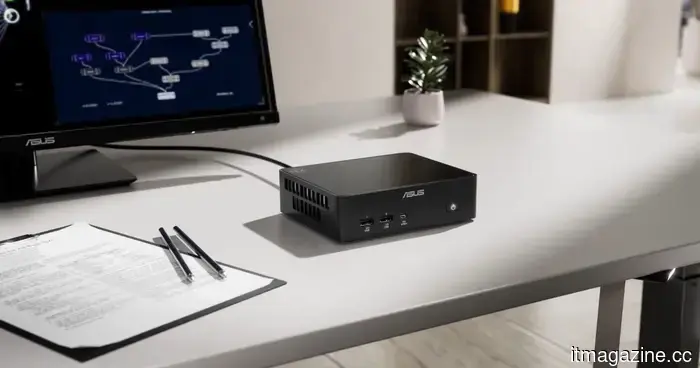 You can now finally acquire the ASUS NUC 16 Pro mini PC, although it is a mid-range version.
The Asus NUC 16 Pro mini PC, featuring Intel Panther Lake processors and supporting up to 128GB of RAM, is starting to be available for purchase online.
You can now finally acquire the ASUS NUC 16 Pro mini PC, although it is a mid-range version.
The Asus NUC 16 Pro mini PC, featuring Intel Panther Lake processors and supporting up to 128GB of RAM, is starting to be available for purchase online.
 Recognizing the Security Benefits of Major Crypto Exchanges Like OKX
With the global rise in cryptocurrency adoption, the importance of security for crypto exchanges such as OKX has become more critical. For both seasoned users and newcomers in the digital asset space, identifying a secure exchange platform is a primary concern. While each user may have their own favored platform, identifying the safest choice depends on established security criteria. Understanding Previous Threats to Exchange [...]
Recognizing the Security Benefits of Major Crypto Exchanges Like OKX
With the global rise in cryptocurrency adoption, the importance of security for crypto exchanges such as OKX has become more critical. For both seasoned users and newcomers in the digital asset space, identifying a secure exchange platform is a primary concern. While each user may have their own favored platform, identifying the safest choice depends on established security criteria. Understanding Previous Threats to Exchange [...]
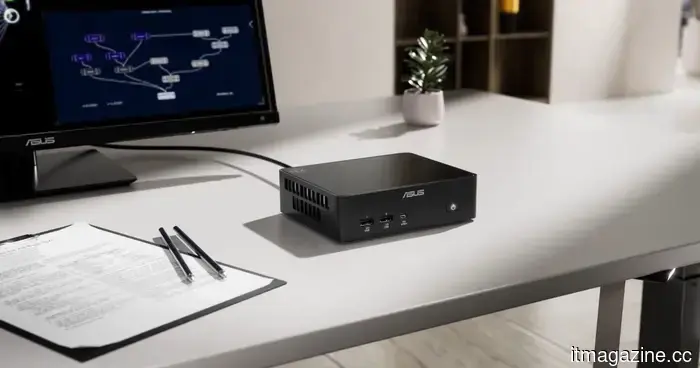 You can now purchase the ASUS NUC 16 Pro mini PC, although it is a mid-range model.
The Asus NUC 16 Pro mini PC, featuring Intel Panther Lake processors and supporting up to 128GB of RAM, has started to show up for sale on the internet.
You can now purchase the ASUS NUC 16 Pro mini PC, although it is a mid-range model.
The Asus NUC 16 Pro mini PC, featuring Intel Panther Lake processors and supporting up to 128GB of RAM, has started to show up for sale on the internet.
YouTube surpasses Hollywood studios, but it will present you with 30-second unskippable TV advertisements.
In 2025, YouTube's advertising revenue reached $40.4 billion, exceeding the combined totals of Disney, NBCU, Paramount, and WBD. This transition alters the definition of "TV" for viewers who are unable to bypass those unskippable ads.