
Cease communication with AI and allow them to converse among themselves: The A2A protocol.
Have you ever requested Alexa to remind you to send a WhatsApp message at a specific time, only to wonder, "Why can't Alexa just send the message for me?" Or experienced the frustration of using a trip planning app, only to find yourself hopping between your calendar, booking site, and bank account, rather than having your AI assistant handle everything? This gap between AI automation and human action is precisely what the agent-to-agent (A2A) protocol seeks to bridge.
With AI agents introduced, communication appeared to be the next evolutionary step. But now that machine and human communication is established, what's next? In an effort to create a multi-agent ecosystem that connects various data systems and applications, Google unveiled the A2A protocol last year in partnership with over 50 tech collaborators. This open standard allows AI agents to communicate, securely exchange information, collaborate, and operate across agent applications and complex enterprise workflows, regardless of their underlying technology.
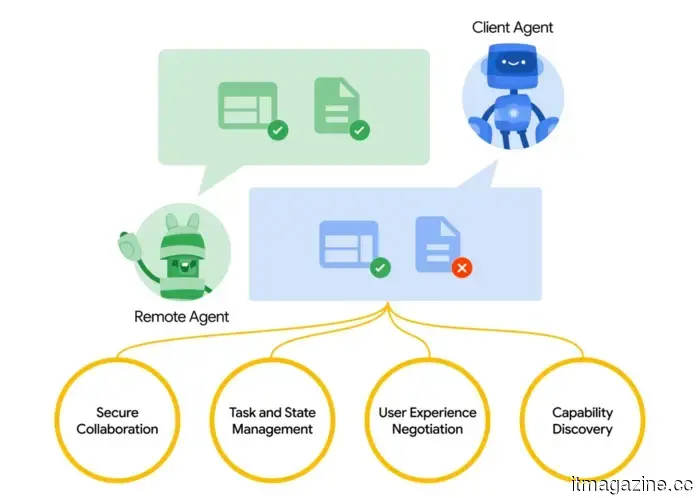
From prompting to orchestration: Here's how A2A functions. A2A is based on five principles that reflect natural capabilities. It allows agents to collaborate in their inherent modality without the need for an intermediary tool, thus preserving their individual capabilities and independence. Built on existing standards, it simplifies integration with current IT stacks and incorporates OpenAPI’s authentication schemes to ensure secure collaboration. It also offers real-time feedback and asynchronous notifications for long-running operations. Furthermore, it supports various modalities like text, audio, and video streaming.
A2A acts as a facilitator between a "client" agent and a "remote" agent. The client agent requests and communicates tasks, while the remote agent is responsible for executing those tasks, searching for optimal solutions or inputs. This procedure consists of several stages and crucial components: Upon receiving a task request from a human or another AI agent, the client agent assesses available remote agents through agent cards, which are structured profiles that outline identity, capabilities, service endpoints, and authentication needs. The client agent then selects the most suitable agent and authenticates according to the security scheme indicated in the agent card.
Subsequently, communication is established to fulfill the task. The task is defined by the protocol and has a lifecycle; it can require immediate action or, in the case of long-running operations, the agents communicate to stay aligned until completion. The outcome of a task results in an artifact. Agents exchange context, replies, artifacts, or user instructions with one another. Every message comprises various parts, featuring specified content, such as a generated image, enabling agents to negotiate the correct format based on the user’s UI capabilities. Specifications and possible errors are documented for those eager to learn more.
This protocol enhances Anthropic’s Model Context Protocol (MCP) for developing robust agent applications, as MCP facilitates agent-to-tool communication, enhancing comprehension and processing of abstract APIs used as tools. Meanwhile, the A2A protocol allows agents to discover each other’s capabilities, fostering the development of agent systems.
Why is A2A a game-changer? The A2A protocol is designed to address the interoperability gap between specialized AI agents with a focus on enterprise-scale adoption. Rather than viewing agents as isolated tools, as MCP does, A2A promotes a shared environment where agents interact as entities while retaining their unique abilities for high-quality outcomes.
It reimagines execution by facilitating customizable and secure collaboration among opaque agents, protecting data privacy and intellectual property inherently. As the number of agents and interactions increases, A2A confronts scalability directly, enabling smooth integration and the formation of intricate AI ecosystems within enterprise systems, utilizing established standards like HTTPS and JSON-RPC to prevent the need to reinvent fundamental technologies and existing web standards for authentication, authorization, security, privacy, tracing, and monitoring.
A2A has potential applications across numerous industries, like customer service, supply chain management, human resources, healthcare, research, education, creative sectors, public services, financial services, IT operations, and consulting. By fostering collaboration among agents across various applications and organizations, it supports advanced data analysis and task automation, ranging from background checks and inventory management to improved fraud detection and highly personalized customer solutions.
The difficulties we can't overlook Despite its potential, A2A faces challenges. Like many distributed systems, a primary concern is security. The continuous communication between agents raises security threats across multiple layers, affecting identity, messaging, context propagation, and system management. This issue underscores the necessity for intrinsic identity, integrity, and sequencing guarantees for A2A, while also posing a challenge to incorporate these features without compromising its lightweight design and interoperability.
A second limitation arises at the architectural level, especially in AI communication on an enterprise scale. A2A predominantly relies on HTTPS and high-performance Remote Procedure Call (RPC) for direct point-to-point communication. While effective on a smaller scale, this approach can evolve into a complex and unsustainable risk in large-scale enterprise settings. Single alterations, overlaps, failures, or misrouted messages can trigger cascading effects, posing potential operational risks
Другие статьи
 YouTube Music can now create a personalized playlist based on your thoughts.
All you require is clear thinking or a specific mood, and YouTube Music will convert your ideas into a personalized playlist.
YouTube Music can now create a personalized playlist based on your thoughts.
All you require is clear thinking or a specific mood, and YouTube Music will convert your ideas into a personalized playlist.
 The upcoming Renaissance: The reason why creativity is the key asset in the era of AI.
AI is taking over routine tasks, but human creativity is emerging as the key currency of our time, driving innovation, significance, and the future of work.
The upcoming Renaissance: The reason why creativity is the key asset in the era of AI.
AI is taking over routine tasks, but human creativity is emerging as the key currency of our time, driving innovation, significance, and the future of work.
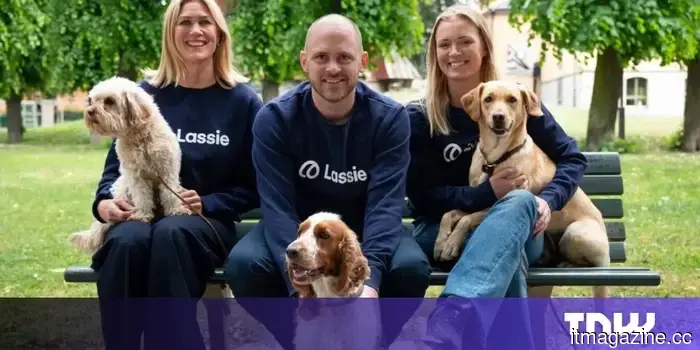 Swedish pet insurtech Lassie secures $75M in Series C funding following its achievement of $100M in annual recurring revenue (ARR).
Swedish pet insurtech Lassie has secured $75 million in a Series C funding round to support the further growth of its AI-powered preventive care platform.
Swedish pet insurtech Lassie secures $75M in Series C funding following its achievement of $100M in annual recurring revenue (ARR).
Swedish pet insurtech Lassie has secured $75 million in a Series C funding round to support the further growth of its AI-powered preventive care platform.
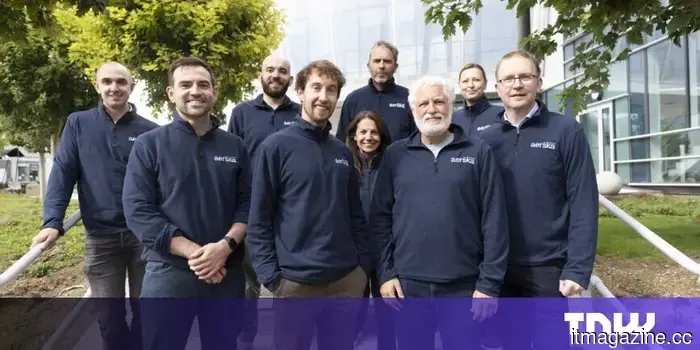 Aerska secures $39 million to assist RNA medications in penetrating the brain.
The Irish biotech company Aerska has secured $39 million to develop RNA therapies aimed at the brain, focusing on the genetic origins of Alzheimer's and Parkinson's diseases.
Aerska secures $39 million to assist RNA medications in penetrating the brain.
The Irish biotech company Aerska has secured $39 million to develop RNA therapies aimed at the brain, focusing on the genetic origins of Alzheimer's and Parkinson's diseases.
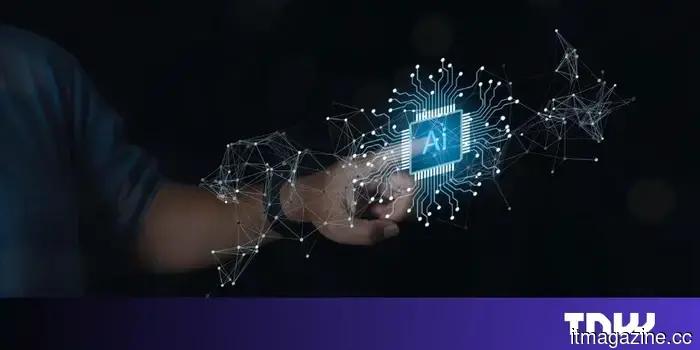 Cease communication with AI and allow them to converse among themselves: The A2A protocol.
How the A2A protocol enables AI agents to communicate, collaborate, and operate independently across applications and systems? An article for AI enthusiasts.
Cease communication with AI and allow them to converse among themselves: The A2A protocol.
How the A2A protocol enables AI agents to communicate, collaborate, and operate independently across applications and systems? An article for AI enthusiasts.
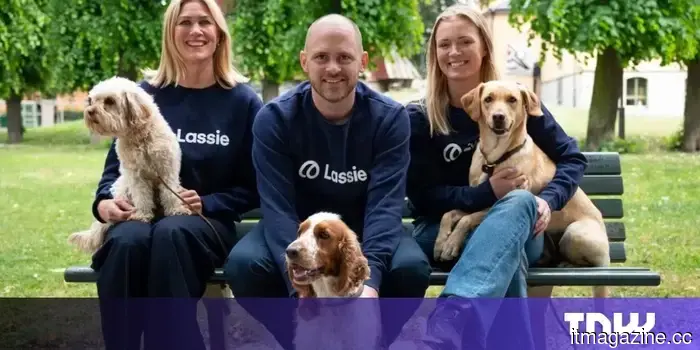 Swedish pet insurtech company Lassie secures $75 million in Series C funding following its achievement of $100 million in annual recurring revenue (ARR).
Swedish pet insurtech Lassie has secured $75 million in a Series C funding round to support the expansion of its AI-based preventive care platform.
Swedish pet insurtech company Lassie secures $75 million in Series C funding following its achievement of $100 million in annual recurring revenue (ARR).
Swedish pet insurtech Lassie has secured $75 million in a Series C funding round to support the expansion of its AI-based preventive care platform.
Cease communication with AI and allow them to converse among themselves: The A2A protocol.
How the A2A protocol enables AI agents to communicate, collaborate, and operate independently across various applications and systems? An article aimed at AI enthusiasts.