

LMArena secures $150 million with a valuation of $1.7 billion to reshape AI evaluation.
The AI industry has become skilled at self-assessment. Benchmarks are improving, model scores are increasing, and each new release comes with a set of metrics intended to indicate progress. Yet, somewhere between development and real-world application, something is amiss.
Which model is truly more user-friendly?
Whose responses would people trust?
Which system would you confidently present to customers, employees, or the public?
This gap is where LMArena has subtly established its business, leading to a recent $150 million investment at a $1.7 billion valuation during its Series A funding round. The primary investors included Felicis and UC Investments, with significant participation from major venture firms such as Andreessen Horowitz, Kleiner Perkins, Lightspeed, The House Fund, and Laude Ventures.
Not just another benchmark
For many years, benchmarks served as the currency of AI credibility, measuring accuracy, logical reasoning, and standardized datasets. These methods were effective until they weren't. As models became larger and more alike, advancements in benchmarks became minimal. Furthermore, models started to optimize for the benchmarks themselves rather than real-life applications. Traditional evaluations struggled to reflect AI's behavior in complex, unpredictable human interactions.
Simultaneously, AI systems transitioned from controlled environments into daily operations—such as drafting emails, coding, enhancing customer support, aiding research, and providing professional advice. The inquiry shifted from “Can this model perform the task?” to “Can we trust it when it does?”
This presents a different challenge in measurement.
LMArena’s solution was both straightforward and groundbreaking: cease evaluating models in isolation. Users on its platform submit a prompt and receive two anonymized responses—free from branding or model identifiers—allowing them to choose the preferred response or reject both.
One vote. One comparison. Repeated millions of times.
The outcome is not a definitive "best" model but a dynamic indication of human preference, reflecting their reactions to tone, clarity, verbosity, and practical relevance. When the prompt is complex or unpredictable, this indication shifts. It highlights aspects that benchmarks often overlook.
Real preference, not just accuracy
LMArena focuses not on whether a model yields a factually correct answer, but on whether humans favor it when it does. This subtle but significant distinction is increasingly referenced by developers and labs prior to product launches and decisions. Major models from OpenAI, Google, and Anthropic undergo regular assessment on this platform.
Without conventional marketing strategies, LMArena has become a reflective tool for the industry.
Why investors are now paying attention
The recent $150 million investment round signifies more than just confidence in LMArena's product; it indicates that AI evaluation is becoming a foundational element of the industry. As the number of models proliferates, enterprise clients now grapple with a new dilemma: not how to acquire AI, but which AI to rely on. Vendor assertions and traditional benchmarks often fail to guarantee real-world dependability. Moreover, internal evaluations can be costly and slow.
A neutral, third-party signal is emerging as an essential intermediary between model creators and users. This is the niche in which LMArena operates. In September 2025, it introduced AI Evaluations, a paid service transforming its crowdsourced comparison tool into a product accessible to enterprises and research institutions. LMArena reported that this service achieved an annualized run rate of approximately $30 million shortly after its launch.
For regulators and policymakers, a human-centered signal of this nature is also important. Oversight frameworks need evidence based on actual use, not idealized situations.
Criticism and competition
LMArena’s methodology isn't without controversy. Platforms that depend on public voting and crowdsourced signals can reflect only the preferences of engaged users, which may not address the demands of certain professional fields. Competitors, such as Scale AI’s SEAL Showdown, have emerged, aiming to provide more nuanced, representative model rankings across different languages, regions, and professional contexts.
Academic research also indicates that leaderboards based on voting may be vulnerable to manipulation if proper safeguards are lacking, and such systems could favor more visually appealing responses over technically accurate ones unless rigorous quality control is upheld.
These discussions underscore that no single evaluation approach can capture every aspect of model behavior but also highlight the need for more profound, human-centered signals beyond traditional benchmarks.
Trust doesn't develop on its own
There's a prevailing assumption in AI that trust will develop inherently as models advance. The belief is that improved reasoning will lead to superior outcomes. This perspective treats alignment as a purely technical issue that can be addressed with technical solutions.
LMArena challenges this notion. Trust, in practical situations, is influenced by social and contextual factors. It is cultivated through experience rather than assertions. It’s shaped through feedback loops that persist even as scale increases. By empowering users instead of companies to determine effectiveness, LMArena introduces necessary friction in a field that often seeks rapid progress. It encourages a pause to consider: “Is this genuinely better, or
Other articles
 Your headphones have just been equipped with two cameras; introducing Project Motoko.
Razer Project Motoko is a concept headset featured at CES 2026, equipped with two cameras at eye level and multi-microphone audio, designed for hands-free point-of-view recording and computer vision applications. A Developer Kit is expected to be released in the second quarter of 2026.
Your headphones have just been equipped with two cameras; introducing Project Motoko.
Razer Project Motoko is a concept headset featured at CES 2026, equipped with two cameras at eye level and multi-microphone audio, designed for hands-free point-of-view recording and computer vision applications. A Developer Kit is expected to be released in the second quarter of 2026.
 Motorola's new Signature delivers flagship performance in a sleek design.
Motorola has introduced a new sleek flagship named the Signature at CES, though it may not be released in the US.
Motorola's new Signature delivers flagship performance in a sleek design.
Motorola has introduced a new sleek flagship named the Signature at CES, though it may not be released in the US.
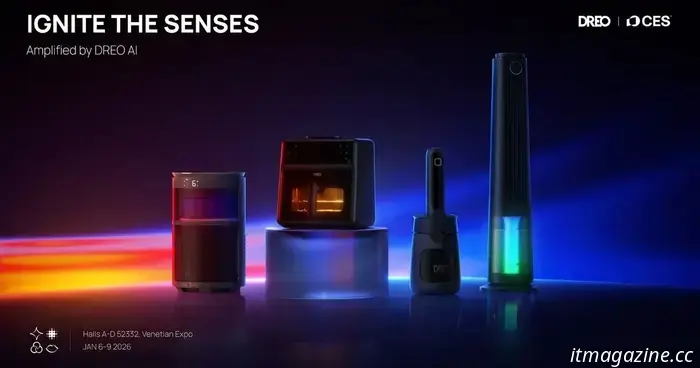 Explore DREO's CES 2026 booth and discover their revamped misting fans.
DREO's innovative TurboCool technology transforms misting fans, and CES 2026 showcases three fans that feature this advancement.
Explore DREO's CES 2026 booth and discover their revamped misting fans.
DREO's innovative TurboCool technology transforms misting fans, and CES 2026 showcases three fans that feature this advancement.
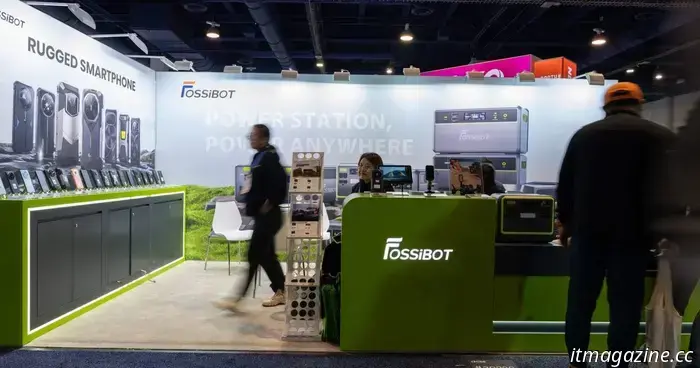 FOSSiBOT's durable technology demonstrates the integration of strength, sight, and movement.
FOSSiBOT’s newest range highlights how resilience is evolving into standard infrastructure rather than just specialized equipment, featuring blackout-ready power and phones capable of seeing in the dark.
FOSSiBOT's durable technology demonstrates the integration of strength, sight, and movement.
FOSSiBOT’s newest range highlights how resilience is evolving into standard infrastructure rather than just specialized equipment, featuring blackout-ready power and phones capable of seeing in the dark.
 Acer's Swift 16 AI touchpad might render your tablet unnecessary.
Acer's Swift 16 AI features a prominently sized haptic touchpad and supports the MPP 2.5 stylus for drawing and making edits. Here are the key details to consider before the pricing and configurations are announced.
Acer's Swift 16 AI touchpad might render your tablet unnecessary.
Acer's Swift 16 AI features a prominently sized haptic touchpad and supports the MPP 2.5 stylus for drawing and making edits. Here are the key details to consider before the pricing and configurations are announced.
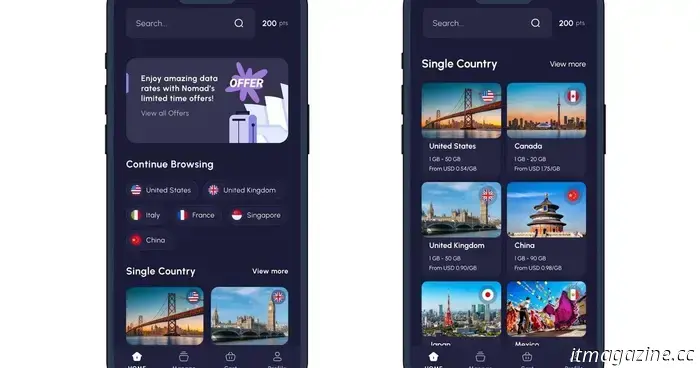 Nomad’s eSIM solutions eliminate one source of stress from your vacation planning.
Planning a holiday soon? Ensure you have access to data while overseas by getting a Nomad eSIM.
Nomad’s eSIM solutions eliminate one source of stress from your vacation planning.
Planning a holiday soon? Ensure you have access to data while overseas by getting a Nomad eSIM.
LMArena secures $150 million with a valuation of $1.7 billion to reshape AI evaluation.
The AI evaluation platform LMArena has raised $150 million, achieving a valuation of $1.7 billion as it broadens its comparisons of human-driven models. Discover more in our article!