
These eSIM AR glasses encourage you to forget your phone.
A CES 2026 prototype integrates eSIM and 4G directly into the frames to allow you to stay connected without needing a phone.
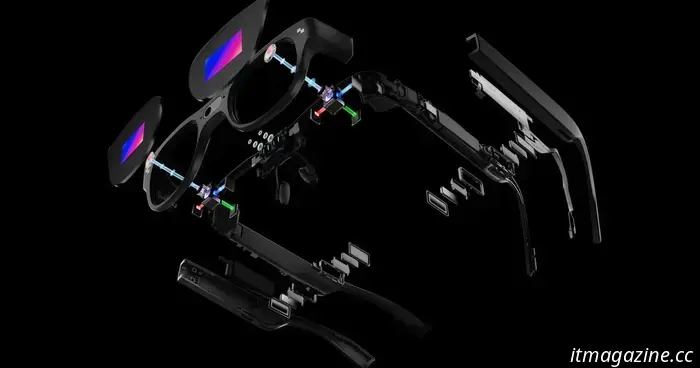
RayNeo is introducing a familiar smartphone concept in a different format. At CES 2026 in Las Vegas, it presented the RayNeo X3 Pro Project eSIM, a consumer AR glasses idea that incorporates an eSIM with 4G connectivity.
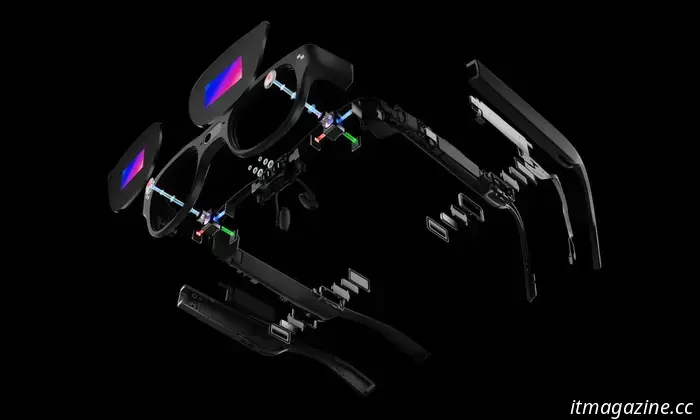
The premise is that standalone AR glasses should not require a nearby phone for basic connected functions. RayNeo claims the frames include a display, a camera, and cellular connectivity, enabling you to make calls and access data while engaging in activities such as running or driving, without carrying your phone. This product is definitely expected to be on holiday wish lists next year.
The built-in cellular capability is key
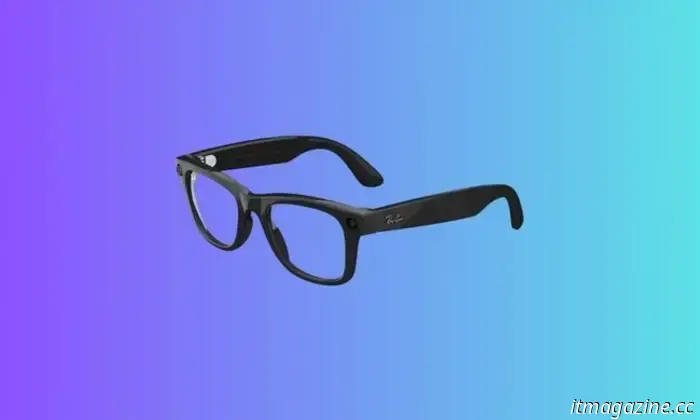
Unlike many smart glasses, such as the Ray-Ban Meta, which depend on a phone for connectivity despite the wearable tech being functional, RayNeo aims to change this dynamic by embedding the connection directly in the glasses.
In its announcement, the company highlights direct calling as the strongest evidence that the concept can operate independently. It also suggests that having constant data connectivity can enable additional everyday functions, such as streaming music, real-time translation in 14 languages, and instant cloud backup for photos and videos immediately after taking them.
The significance of carrier involvement
If major telecommunications providers start taking smart glasses seriously, it increases the likelihood that this category will become available in places where people already purchase connected devices.
RayNeo also positions carriers as technical collaborators, emphasizing areas like eSIM management, support for next-generation networks, and content partnerships that could transition the glasses from a mere demonstration to an integral part of daily life.
Key points to observe at CES 2026
Since this remains a concept, subsequent inquiries will concern practical elements. Factors such as battery life, heat management, comfort, camera performance, and real-world cellular capabilities will determine if using the glasses without a phone is feasible outside of a showcase.
RayNeo has yet to disclose pricing, a launch timeline, or details on eSIM activation support. If CES serves as its introduction, specific information on how consumers can purchase and connect the glasses will be the most convincing evidence.
Paulo Vargas is an English major who transitioned into reporting and technical writing, returning repeatedly to technology topics.
Ray-Ban Meta Wayfarer price reduction: now available for $224, saving you $75.
You can save $75 on Ray-Ban Meta Wayfarers, smart glasses that resemble regular sunglasses. The version with clear lenses is now priced at $224.25 (originally $299.00), providing a significant discount. This sale represents a great opportunity if you're interested in capturing hands-free photos, creating quick videos, or enjoying audio without the need for earbuds, making it an enticing option in the premium category.
My ten tech predictions for 2026
The year 2026 may bring a significant turning point for AI, alter our view of wearables, and spur advancements in electric vehicles.
The year 2025 proved noteworthy in several respects, but it wasn’t all smooth sailing for the average tech enthusiast. Apple revisited its engineering labs and provided us with a glimpse of its innovative prowess, though its slow progress in the AI competition compared to Google became increasingly apparent. Electric vehicles continued to advance, especially in China, while demand in Western markets began to wane. Meta introduced a new generation of smart glasses that display images in front of your eyes while maintaining the classic Ray-Ban style, and smaller brands like TCL’s RayNeo also made noteworthy strides.
Apple seeks AR glasses that are tailored to fit you, rather than the opposite.
A forward hinge and a fixed optics housing are designed to maintain image geometry while enhancing comfort.
Apple faces a practical challenge with AR glasses that must be resolved for them to feel ordinary: adjusting the fit can affect image alignment. According to Patently Apple, a new patent details a structure for smart glasses aimed at keeping essential display components precisely aligned, even as the arms adjust like typical eyewear.
The patent describes a rigid electronics housing near the display frame that can accommodate elements such as projectors, waveguides, speakers, processors, and batteries while ensuring a consistent distance and angle is maintained between the projector and the transparent display window. Essentially, this design keeps the optics stable, which should help maintain consistent visuals.



Other articles
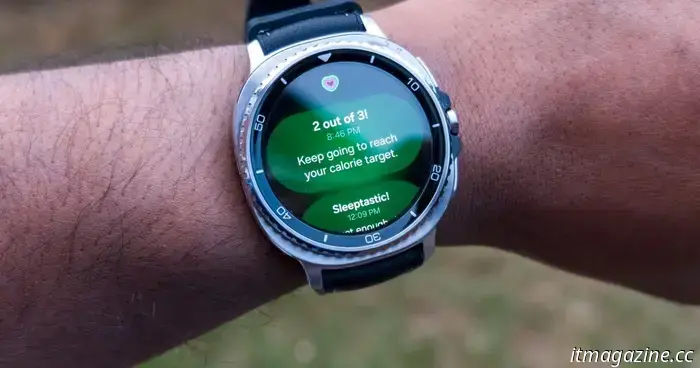 Samsung's Galaxy Watch and Ring will soon be able to detect early indications of dementia.
Samsung claims that its forthcoming AI-driven "Brain Health" features may detect minor changes in speech, activity, and movement that could indicate the onset of cognitive decline.
Samsung's Galaxy Watch and Ring will soon be able to detect early indications of dementia.
Samsung claims that its forthcoming AI-driven "Brain Health" features may detect minor changes in speech, activity, and movement that could indicate the onset of cognitive decline.
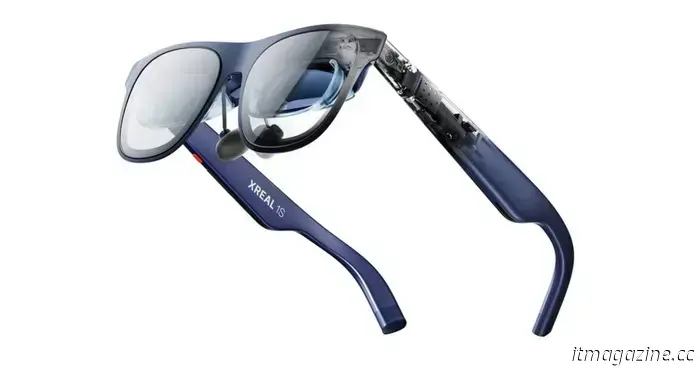 Xreal's newest affordable AR glasses provide clearer visuals at a lower cost.
Xreal's latest entry-level AR glasses feature significant improvements compared to the previous year's model, all while reducing the price by $50.
Xreal's newest affordable AR glasses provide clearer visuals at a lower cost.
Xreal's latest entry-level AR glasses feature significant improvements compared to the previous year's model, all while reducing the price by $50.
 Haven't purchased Baseus tech before? Check out some of the exciting new products launching in 2026.
Here’s a preview of the Baseus power banks, security cameras, and headphones set to launch in early 2026.
Haven't purchased Baseus tech before? Check out some of the exciting new products launching in 2026.
Here’s a preview of the Baseus power banks, security cameras, and headphones set to launch in early 2026.
 Save $500 on a 4K laser UST projector designed for a tidy living room arrangement.
If you've considered a "big screen at home" configuration but prefer not to attach a projector to the ceiling or trail wires across the room, this type of discount makes an ultra short-throw model seem feasible. The Epson Lifestudio Grand 4K PRO-UHD ultra short throw smart laser projector […]
Save $500 on a 4K laser UST projector designed for a tidy living room arrangement.
If you've considered a "big screen at home" configuration but prefer not to attach a projector to the ceiling or trail wires across the room, this type of discount makes an ultra short-throw model seem feasible. The Epson Lifestudio Grand 4K PRO-UHD ultra short throw smart laser projector […]
 All the events that took place during LG Electronics' CES 2026 "World Premiere."
CES 2026 Read and view our full coverage of CES here Updated just under 31 minutes ago We’ve been covering LG Electronics’ CES 2026 press conference, termed a ‘world premiere’ – primarily to showcase Cloid, LG’s home robot representing its vision for the future. […]
All the events that took place during LG Electronics' CES 2026 "World Premiere."
CES 2026 Read and view our full coverage of CES here Updated just under 31 minutes ago We’ve been covering LG Electronics’ CES 2026 press conference, termed a ‘world premiere’ – primarily to showcase Cloid, LG’s home robot representing its vision for the future. […]
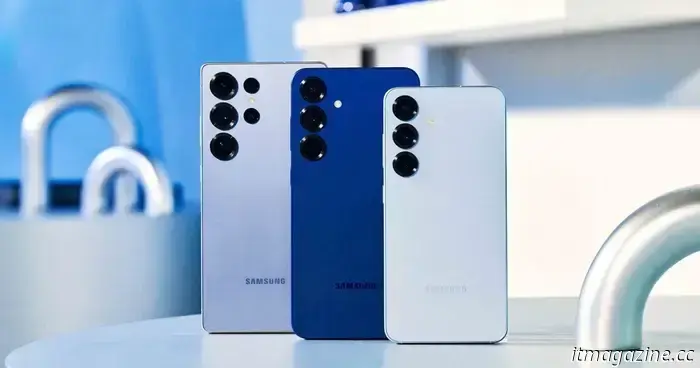 You could avoid a higher price for the Galaxy S26... if you're in the United States.
If you're considering an upgrade to the Galaxy S26 in the US, you may want to appreciate the timing, tariffs, and Samsung's market strategy, as prices could have been significantly higher.
You could avoid a higher price for the Galaxy S26... if you're in the United States.
If you're considering an upgrade to the Galaxy S26 in the US, you may want to appreciate the timing, tariffs, and Samsung's market strategy, as prices could have been significantly higher.
These eSIM AR glasses encourage you to forget your phone.
RayNeo is presenting a concept that incorporates eSIM and 4G technology into AR glasses. The aim is to provide independent connectivity for making calls, streaming, translating, and instant cloud synchronization, without relying on a smartphone.