
Five stars, no trust.
Five stars once held significant value. While people still check reviews before purchasing software, their trust in these reviews has diminished. This issue isn't solely about fake reviews or blatant scams, as those are easily recognized. The more troubling problem is that the review economy has drifted away from its initial intent.
User reviews started as genuine guidance for buyers but have transformed into strategic tools for companies. If you browse any app store or e-commerce platform, every product seems to be "top-rated" and showered with accolades. When everything boasts a rating of 4.8/5, those stars begin to lose their significance.
Consumers are not easily deceived; in fact, the percentage of people who trust online reviews as much as personal recommendations fell from nearly 80% in 2020 to just 42% in 2025. We entertain the praising remarks but have become adept at reading the underlying messages.
It's clear why trust has diminished. Companies have realized that favorable reviews boost sales and have turned the review system into a numbers game. High ratings are not just evidence of social approval anymore; they are a tactic for growth. In essence, more stars equate to more revenue, and thus, businesses are relentlessly pursuing ratings as if their existence depends on it—because, in a way, it does.
Manipulating the system
Behind the curtain, numerous companies actively manage their review scores. A common strategy involves timing requests appropriately. For example, some businesses send out a Net Promoter Score (NPS) survey to gauge customer sentiment with the question, “How likely are you to recommend us?” If you give a 9 or 10 (considered a promoter), you're immediately encouraged to leave a public review. Conversely, if your score is mediocre or low, the form simply thanks you without mentioning the review.
Only the most satisfied customers receive the gentle nudge to "Share your experience!" This practice is widespread and is known as "review gating." It essentially filters who gets invited to leave a review based on initial feedback. Although platforms officially disapprove of this (Google explicitly prohibits “selectively soliciting positive reviews”), it remains a favorite tactic among growth hackers.
Another method is outright incentivization. Perhaps you’ve received an email offering a discount, gift card, or free month of service in exchange for writing a review. This is often couched as a thank-you for your effort, for instance, “Share your honest feedback and get 10% off your next purchase!” but the intention is clear.
In a market flooded with inauthentic praise, regulators have intervened to remind everyone that trust is not a commodity that can be bought. Companies also know how to suppress negative feedback. Unhappy customer comments are often discreetly redirected to support teams or private channels, where they can either be resolved or contained away from the public eye. Consequently, this creates a distorted reality, a polished facade of five-star ratings that hides any sign of discontent. It serves as a powerful sales tool but is detrimental to the truth.
Algorithms favor stars (and profits)
Why go to such lengths to polish ratings? Because the platforms themselves incentivize it. The algorithms that manage product sorting and highlighting do not seek to reveal the most honest reviews; they aim to increase engagement and sales conversions.
High ratings and a wealth of reviews increase the likelihood that people will click “Buy Now.” This leads to more conversions for sellers and more profits for the marketplace. Therefore, the algorithm favors any factor that enhances the platform’s revenue metrics.
An abundance of five-star reviews isn't merely for ego; it’s bait for algorithms. Products with an average of 4.7 stars and numerous reviews typically rank higher in search results and recommendation lists. They perform better, and consequently, the system promotes them more. Increased visibility results in higher sales, reinforcing their strong ranking. It’s a self-propagating cycle driven by positive feedback. If a vendor can manipulate their way into that favorable loop through perfectly timed prompts or acquired praise, the platform’s code will gladly amplify their visibility.
Authenticity does not guarantee a top rank; performance does. The motivation is clear: maintain positivity and abundance. In the review economy, both volume and sentiment reign supreme.
Furthermore, some marketplaces have blurred the distinction between genuinely high-rated listings and paid promotions. It is well-known that many platforms provide sponsored placements or pay-to-play schemes, including “featured” spots, ads disguised as top recommendations, or vendor subscriptions that subtly enhance visibility.
Money speaks, even if it drowns out authentic customer feedback. (To be fair, a few platforms still refrain from monetizing their review rankings or compromising their star systems, but these are exceptions rather than the norm).
How buyers adapt
Consumers are not passive in this facade. We have developed a knack for detecting overblown claims. Modern buyers understand the dynamics at play and are adjusting their behaviors to navigate the flawed review landscape.
First, trust is shifting towards private networks and off
Другие статьи
 Apple хочет, чтобы очки дополненной реальности подходили вам, а не наоборот.
Недавно выданный Apple патент на AR‑очки направлен на поддержание выравнивания оптики во время подгонки. Жёсткий передний корпус и передняя петля призваны предотвратить смещение изображения, не жертвуя комфортом.
Apple хочет, чтобы очки дополненной реальности подходили вам, а не наоборот.
Недавно выданный Apple патент на AR‑очки направлен на поддержание выравнивания оптики во время подгонки. Жёсткий передний корпус и передняя петля призваны предотвратить смещение изображения, не жертвуя комфортом.
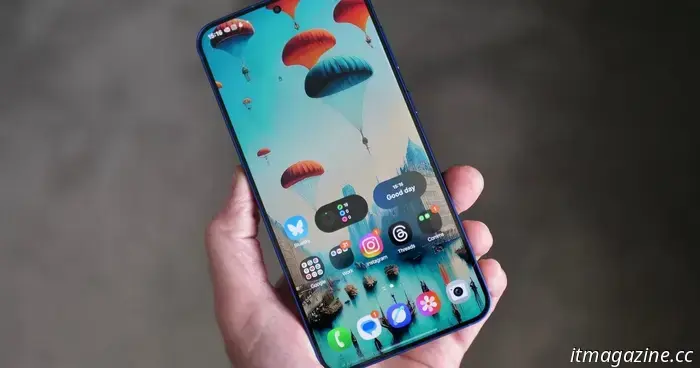 Третья бета-версия One UI 8.5 может появиться на вашем Galaxy S25 на следующей неделе.
Новая утечка указывает на то, что Samsung может выпустить третью бета-версию One UI 8.5 для серии Galaxy S25 уже на следующей неделе.
Третья бета-версия One UI 8.5 может появиться на вашем Galaxy S25 на следующей неделе.
Новая утечка указывает на то, что Samsung может выпустить третью бета-версию One UI 8.5 для серии Galaxy S25 уже на следующей неделе.
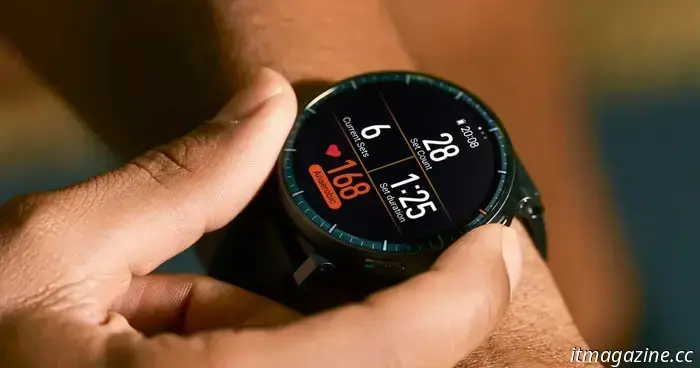 Эти новые спортивные умные часы отслеживают ваш уровень энергии в режиме реального времени и работают до 25 дней.
Amazfit Active Max добавляет BioCharge — оценку энергии и готовности в реальном времени, которая меняется в зависимости от тренировок, стресса и активности. Он также обещает до 25 дней автономной работы за $169.
Эти новые спортивные умные часы отслеживают ваш уровень энергии в режиме реального времени и работают до 25 дней.
Amazfit Active Max добавляет BioCharge — оценку энергии и готовности в реальном времени, которая меняется в зависимости от тренировок, стресса и активности. Он также обещает до 25 дней автономной работы за $169.
 Обзор LG C5 OLED: великолепный телевизор в подходящей обстановке
Он не такой яркий и не такой дешёвый, как MiniLED‑дисплеи, которые всё больше доминируют на рынке, но LG C5 держится особняком в этот конкурентный год в сегменте телевизоров.
Обзор LG C5 OLED: великолепный телевизор в подходящей обстановке
Он не такой яркий и не такой дешёвый, как MiniLED‑дисплеи, которые всё больше доминируют на рынке, но LG C5 держится особняком в этот конкурентный год в сегменте телевизоров.
 OMEN 15 от HP возвращается на CES 2026 — стоит ли ждать?
HP OMEN 15 2026 может вернуться на CES с чипами Panther Lake или Ryzen AI, видеокартой вплоть до RTX 5070 и 3K OLED с частотой 120 Гц. Вот когда стоит подождать.
OMEN 15 от HP возвращается на CES 2026 — стоит ли ждать?
HP OMEN 15 2026 может вернуться на CES с чипами Panther Lake или Ryzen AI, видеокартой вплоть до RTX 5070 и 3K OLED с частотой 120 Гц. Вот когда стоит подождать.
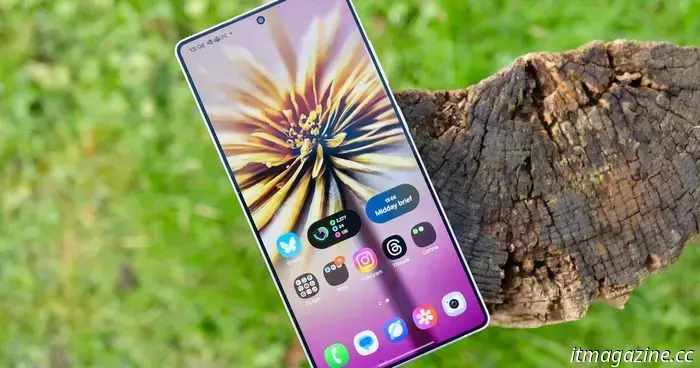 Вот как функция Privacy Display в Galaxy S26 Ultra может защитить ваш экран от посторонних глаз
Обновлённое приложение «Советы» от Samsung пролило свет на то, как может работать предстоящая функция Privacy Display в Galaxy S26 Ultra.
Вот как функция Privacy Display в Galaxy S26 Ultra может защитить ваш экран от посторонних глаз
Обновлённое приложение «Советы» от Samsung пролило свет на то, как может работать предстоящая функция Privacy Display в Galaxy S26 Ultra.
Five stars, no trust.
Five stars used to carry significant weight. While people continue to check reviews prior to purchasing software, their trust in these reviews has diminished. This isn’t solely about fake reviews or blatant scams, as those are relatively straightforward to identify. The underlying issue is more complex.