
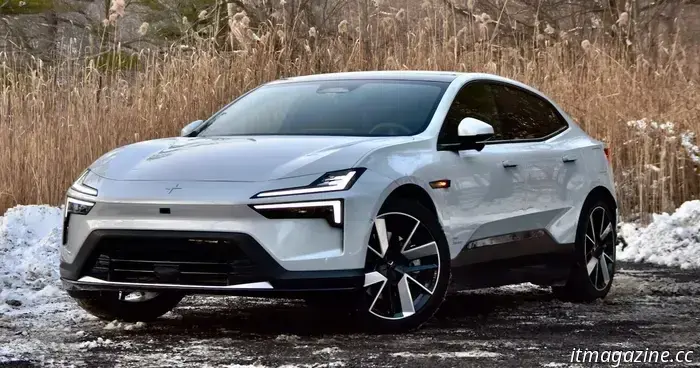
The Polestar 4 is bold in its uniqueness, but perhaps not unique enough.
The era of electric vehicles (EVs) is now prominent across the automotive sector, largely shaped by new entrants. The Tesla Model S captured the public's attention in a way that the Nissan Leaf did not, influencing the industry's direction. Although Volvo aims to electrify its own vehicle range, it established an EV subsidiary, Polestar, to embody some of that innovative spirit associated with startups.
The 2026 Polestar 4 marks a significant milestone in the brand's development. It is the first model from Polestar that stands apart from anything Volvo offers. However, while being different solely for originality may endear it to car enthusiasts, Polestar needs to provide more in a saturated market that includes numerous dedicated brands to appeal to tech-oriented buyers. Essentially, the 4 must excel.
This model stands out from a troubled EV brand.
Polestar has an interesting history. It began as an independent firm focused on racing and producing performance parts for Volvos. The Swedish automaker was impressed with Polestar’s efforts and acquired the company, intending to establish it as a performance division, similar to BMW M or Mercedes-AMG. When EVs gained popularity, the Polestar name was transformed into a standalone EV brand, combining the benefits of Volvo and its parent company Geely while operating with a startup mentality akin to Tesla, Lucid, or Rivian.
It took a while for Polestar to assert its autonomy. The Polestar 1 plug-in hybrid coupe and the all-electric Polestar 2 hatch were based on Volvo's concept designs. Although the Polestar 3 electric SUV adopted some new design elements, it still shares the Scalable Product Architecture (SPA2) with the Volvo EX90, essentially making it a sportier two-row version of the Volvo.
The Polestar 4 does the most to carve out a unique identity for the brand in the U.S. market. Its appearance diverges completely from Volvo’s look and is constructed on Geely's Sustainable Experience Architecture (SEA). Most components are sourced from China, with final assembly occurring at a Renault facility in South Korea. This approach was designed to navigate U.S. trade policies unfavorable to vehicles manufactured in China, but it was overshadowed by the new tariffs imposed by the Trump Administration on Korean-made cars.
It defies easy classification.
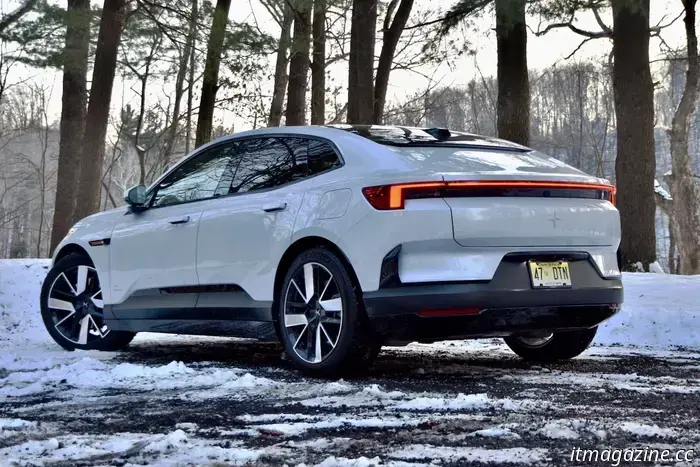
Just as Polestar is a blend of a traditional automaker and a startup, the Polestar 4 doesn’t conform to conventional automotive categories. It is marketed as an SUV coupe, but its sleek shape and lowered stance resemble more of a stylish hatchback. Measuring 190.5 inches in length and 84.2 inches in width, it is about two inches longer than the Porsche Macan Electric and similarly wide, yet it stands only 60.8 inches tall—about three inches lower than the Porsche.
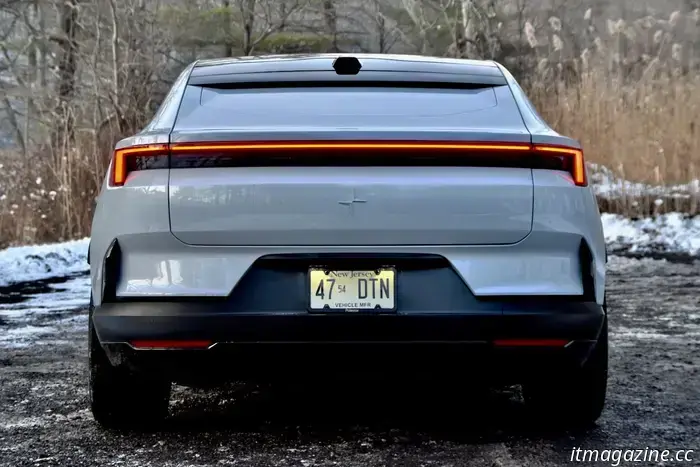
These unconventional dimensions are complemented by an unexpected design choice: the Polestar 4 lacks a rear window. Polestar argues that the absence of a window enhances rear-seat headroom, and the digital rearview mirror (a feature already found in many other vehicles) allows for improved visibility without obstruction from roof pillars or passengers' heads. Passengers enjoy not only ample headroom but also significant legroom, thanks to optional reclining rear seats (part of the Plus Pack) and an extended wheelbase, creating an experience akin to sitting in a luxury sedan rather than a typical SUV.
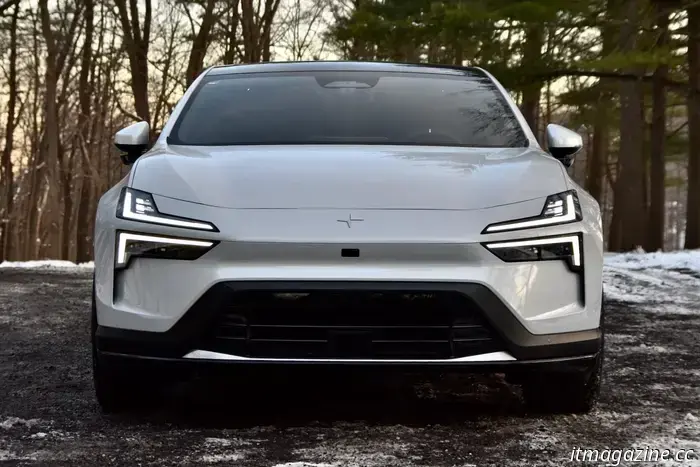
It's unfortunate that Polestar couldn't capitalize aesthetically on the absence of a rear window. To the outside observer, there is merely a blank panel in place of where the window would be. In contrast, the front showcases a distinctive beak-like design with headlights that appear to resemble phasers aimed at an adversarial spacecraft. The frowning lower front bumper and black plastic on the lower body sides serve to obscure the 4’s robust midsection.
It highlights the drawbacks of high-tech minimalism.
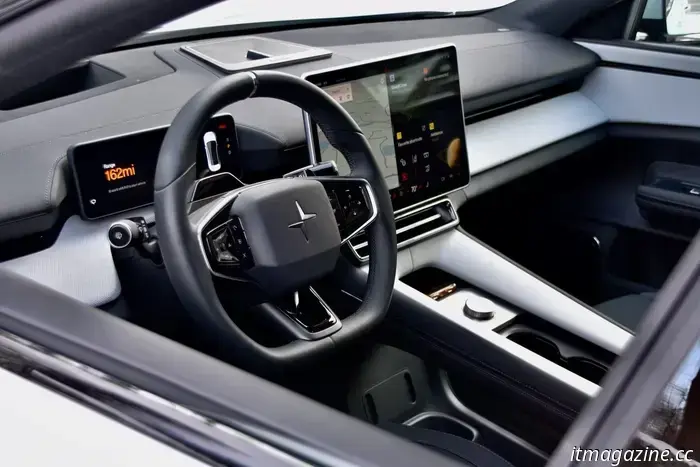
The interior strongly reflects Polestar’s Swedish design philosophy, showcasing a stunningly minimalist aesthetic, though it prioritizes form over functionality. The concave door panels adorned with glimmering lights and the sleek center console look like they belong in an upscale living space. Polestar also incorporates sustainable materials, such as yarn upholstery made from 89% recycled PET plastic waste or polyester-like MicroTech (with Nappa leather available).
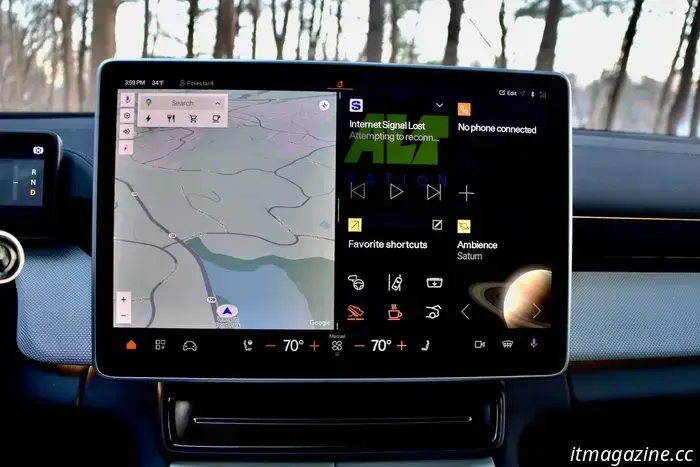
This minimalism is achievable due to the lack of physical controls. There's no traditional start/stop button; unlocking the car and taking a seat activates the vehicle, while simply getting up deactivates it. Although there is a large volume knob and a few seat-adjustment knobs, adjustments for the steering wheel, mirrors, and air vents are managed through the standard 15.4-inch touchscreen. This is paired with a 10.2-inch digital instrument cluster, and a 14.7-inch head-up display along with a 5.7-inch rear-seat screen can be added through the optional Plus Pack.
The 4 utilizes the same Android-based infotainment system that is
Other articles
 Here’s how LG’s soon-to-be-released robot might simplify your home life.
LG is set to introduce its CLOiD home robot at CES 2026, emphasizing its commitment to smart home automation and a future in which robots alleviate everyday household tasks.
Here’s how LG’s soon-to-be-released robot might simplify your home life.
LG is set to introduce its CLOiD home robot at CES 2026, emphasizing its commitment to smart home automation and a future in which robots alleviate everyday household tasks.
 I disliked wearing my Apple Watch while I slept, but recent scientific findings have shifted my perspective in two ways.
A recent study has discovered a connection between bedtime discipline and two significant health issues. Interestingly, my Apple Watch has been automatically tracking this information for several months.
I disliked wearing my Apple Watch while I slept, but recent scientific findings have shifted my perspective in two ways.
A recent study has discovered a connection between bedtime discipline and two significant health issues. Interestingly, my Apple Watch has been automatically tracking this information for several months.
 Microsoft is experimenting with optimizing the File Explorer search feature to decrease RAM consumption in Windows 11.
A recent Windows 11 Insider update enhances File Explorer's search functionality by eliminating unnecessary indexing tasks, which leads to quicker searches, reduced memory consumption, and a streamlined context menu.
Microsoft is experimenting with optimizing the File Explorer search feature to decrease RAM consumption in Windows 11.
A recent Windows 11 Insider update enhances File Explorer's search functionality by eliminating unnecessary indexing tasks, which leads to quicker searches, reduced memory consumption, and a streamlined context menu.
 5 major announcements to anticipate at CES 2026
Here are our top five selections for the new announcements and reveals anticipated at CES 2026.
5 major announcements to anticipate at CES 2026
Here are our top five selections for the new announcements and reveals anticipated at CES 2026.
The Polestar 4 is bold in its uniqueness, but perhaps not unique enough.
QuickCharge: This Week in EV This article is part of our ongoing series, QuickCharge: This Week in EV, updated less than a day ago. The contemporary electric vehicle era has arrived in the automotive sector, predominantly marked by emerging brands. The Tesla Model S has captured the public's fascination in a way that the Nissan Leaf did not, […]