
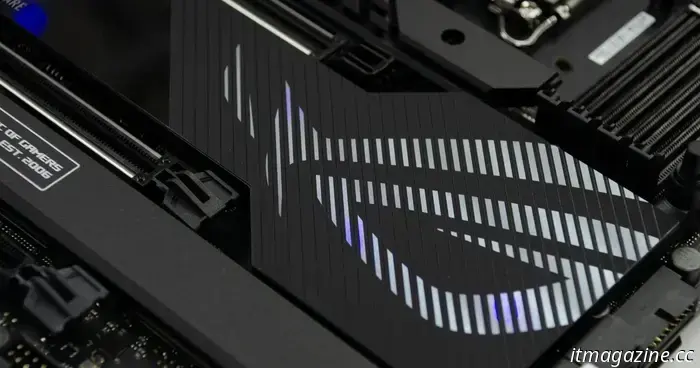
Asus may develop its own RAM since other companies are preoccupied.
Asus is evaluating its options as memory suppliers focus on AI data centers
Asus may be considering drastic steps to address the global memory shortage, which is driving up laptop prices. Although the company has officially stated it has no intentions of starting its own RAM production line, rumors suggest that the Taiwanese firm might contemplate manufacturing its own DRAM as soon as 2026. The aim is to reduce dependence on the three major memory suppliers.
The main issue stems from a significant shift in the priorities of the world's leading memory manufacturers – Samsung, Micron, and SK Hynix. Their current focus is on the highly profitable AI data centers, resulting in a decrease in the production of DDR4 and DDR5 modules for personal computers. The combination of low supply and ongoing demand has led to soaring prices.
For a company like Asus, this situation is problematic.
Alongside brands like Dell and Framework, Asus is preparing to increase laptop prices to offset these additional expenses. The challenge is that since memory suppliers are prioritizing their large enterprise clients, even a prominent company like Asus has limited negotiating power to secure better deals.
According to a report from the Persian IT outlet Sakhtafzarmag, referenced by Wccftech, Asus might be considering the establishment of its own DRAM factories by 2026. If this occurs, it would represent a significant change for the company. Typically, Asus designs and assembles hardware, but it has always depended on external sources for critical components like memory.
The stakes are undoubtedly high.
Asus is involved in a range of products – from premium ROG gaming laptops to graphics cards and motherboards. Each of these items requires RAM or VRAM, and continued increases in costs could be detrimental.
Naturally, there's considerable skepticism surrounding this potential move. Producing DRAM is not only highly costly but also technically challenging, with current established players having a substantial head start. Even if Asus were to open a factory, they might still need to source basic modules from competitors, which wouldn't significantly alleviate price pressures in the short term.
Alternatively, Asus might seek new partnerships. A Chinese company named CMXT has recently gained attention by showcasing its own LPDDR5X and DDR5 products, which could pose some competition to the industry giants. However, CMXT is facing challenges of its own with limited production capacity and U.S. trade restrictions.
For anyone in the market for a new laptop, the outlook is not encouraging. Increased prices seem inevitable, with SK Hynix even warning that this memory supply shortage could extend until 2028. Whether Asus chooses to manufacture its own chips or continues to pass costs onto consumers, the next couple of years are likely to be tumultuous for the PC market.
Moinak Pal has been active in the technology sector, reporting on consumer-focused technology and automotive advancements.
Before investing in robot butlers, it’s important to understand what creators of humanoid robots are admitting.
Leaders in the startup space say that today’s humanoids are suited for narrow tasks in warehouses rather than home assistance. While humanoid robot startups are experiencing substantial funding, the narrative is similar: human-shaped machines will soon be integrated into factories and eventually our homes. However, a report from the Wall Street Journal reveals a more cautious perspective within the industry; even those creating these robots recognize that expectations may be running ahead of practical capabilities.
Executives and engineers assert that current humanoid robots are still too unpredictable for the complex, multi-step tasks people envision at home, even if they excel at simpler tasks in controlled environments. The objective is not merely to create any humanoid, but one capable of performing useful work. Agility Robotics, a humanoid robot company, has hundreds of Digit robots deployed with clients like Amazon and auto-parts manufacturer Schaeffler, where they assist in moving items within a warehouse.
These shopping tips will enhance your after Christmas sales experience.
Once the last of the mince pies are finished and the wrapping paper is being cleared away, consider the gadgets, clothing, and snacks that may not have found a new home this festive season. The post-Christmas sales kick off immediately after the holiday and provide an opportunity to purchase various items at discounted prices.
Though not as eagerly anticipated as Black Friday or Prime Day, the sales following Christmas still present great chances for bargains, whether it's for an item you didn't receive as a gift or leftover stock of the year's popular products. Now is the perfect time to grab the phone you've been yearning for, discover an affordable GPU for an enjoyable gaming experience in 2026, or buy that television you’ve been holding back on.
I examined the image generation capabilities of ChatGPT alongside Nano Banana, and only one produced useful stock photos.
I have a personal interest in posing the same question to two different chatbots to see which one yields the best results. Much like a professor quizzing students (which I occasionally do as a volunteer), I assess whether the bot generates hallucinations and fabricates



Other articles
 I used to believe the iPad was unbeatable, but the $399 OnePlus Pad Go 2 changed my perspective.
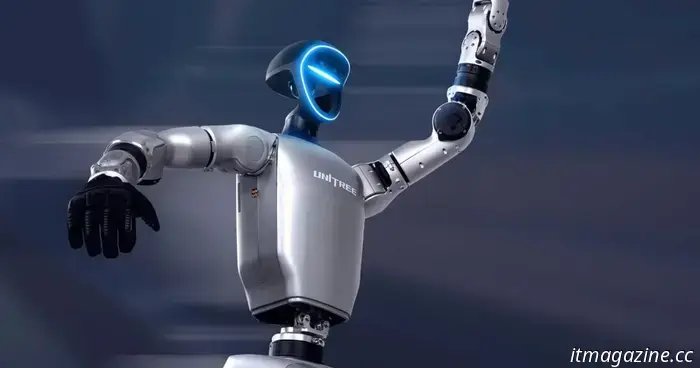 A humanoid robot teleoperator accidentally kicks itself in a painful spot.
Humanoid robots have made significant progress lately, and there are high expectations for these sophisticated machines in the upcoming year. Training humanoid robots can occur in several ways. For instance, Unitree's G1 robot undergoes training in part through teleoperation, where a human operator uses a motion-capture suit or controllers to […]
A humanoid robot teleoperator accidentally kicks itself in a painful spot.
Humanoid robots have made significant progress lately, and there are high expectations for these sophisticated machines in the upcoming year. Training humanoid robots can occur in several ways. For instance, Unitree's G1 robot undergoes training in part through teleoperation, where a human operator uses a motion-capture suit or controllers to […]
 You inquired: What are the top TV recommendations for frequent daily use, and are all-in-one soundbars a wise choice?
In this episode of You Asked, we discuss the value of all-in-one soundbars, identify which TVs are suitable for frequent daily use, and explore strategies for creating accessible TV setups for individuals with visual impairments.
You inquired: What are the top TV recommendations for frequent daily use, and are all-in-one soundbars a wise choice?
In this episode of You Asked, we discuss the value of all-in-one soundbars, identify which TVs are suitable for frequent daily use, and explore strategies for creating accessible TV setups for individuals with visual impairments.
 How to utilize your fitness tracker to achieve your best fitness in 2026.
We will guide you through five key tips to help you maximize the use of a fitness tracker and enhance your health.
How to utilize your fitness tracker to achieve your best fitness in 2026.
We will guide you through five key tips to help you maximize the use of a fitness tracker and enhance your health.
 The GPU I’m most looking forward to in 2026 isn't from AMD or Nvidia.
Each year, the GPU market appears to adhere to a recognizable pattern. Nvidia remains at the forefront in the high-end segment, AMD reacts when possible, and the most notable news is often centered around flagship performance. For the majority of consumers, this still translates to a choice between the same two companies—even as the dynamics clearly […]
The GPU I’m most looking forward to in 2026 isn't from AMD or Nvidia.
Each year, the GPU market appears to adhere to a recognizable pattern. Nvidia remains at the forefront in the high-end segment, AMD reacts when possible, and the most notable news is often centered around flagship performance. For the majority of consumers, this still translates to a choice between the same two companies—even as the dynamics clearly […]
 I have been covering games for several years – here are the most significant events that took place in 2026.
From GTA 6 to the latest Steam Machines, here’s everything to look forward to in 2026.
I have been covering games for several years – here are the most significant events that took place in 2026.
From GTA 6 to the latest Steam Machines, here’s everything to look forward to in 2026.
Asus may develop its own RAM since other companies are preoccupied.
Due to a worldwide memory shortage, Asus might explore DRAM manufacturing or seek alternative suppliers to mitigate price increases as costs for DDR4 and DDR5 continue to climb.