

Meta's upcoming MR glasses are not set to be released until 2027, so for the time being, continue to squint at the world around you.
Meta's next-generation mixed reality glasses have been postponed to 2027 as the company refines its hardware strategy.
For those eagerly anticipating Meta's response to the Apple Vision Pro, there is disappointing news. The tech giant has officially delayed the launch of its next-gen mixed reality glasses, code-named Phoenix, rescheduling it from late 2026 to the first half of 2027.
Internal communications suggest that Phoenix is set to be Meta's closest competitor to Apple's headset so far. However, leaders at Reality Labs have opted for additional time to perfect the product rather than hastily releasing something flawed.
What Prompted Meta to Delay Phoenix
In a message to the team, Reality Labs Vice President Maher Saba confirmed the revised timeline, indicating that the extra months are necessary to ensure quality and stability. Other executives, including Gabriel Aul and Ryan Cairns, straightforwardly noted that the previous timetable was overly ambitious, and adhering to it would have led to a subpar product with unresolved user experience issues. They seek "breathing room" to refine the finer details.
Phoenix is shaping up to be a significant piece of technology. Its design resembles goggles and connects to an external computing puck. There was considerable internal discussion about removing the puck, but engineers opted to retain it to keep the device lightweight and minimize heat on the user's head.
This delay is also being driven by Mark Zuckerberg's direction, pushing the division to prioritize quality and sustainability rather than simply expediting releases. Saba cautioned teams against using this extra time to add new features, emphasizing that the focus should be on enhancing the existing framework.
Why This Is Important and What to Expect Next
This situation highlights the challenges involved in developing advanced mixed reality technology. With Apple's Vision Pro establishing an exceptionally high standard, Meta recognizes that it cannot launch a product that is merely "acceptable"; it must be outstanding.
It also reflects the financial pressures currently affecting Meta. Reports suggest that Reality Labs is facing budget cuts of up to 30%, signaling the end of unrestricted spending on the metaverse. The focus now must be on making these products practical and sustainable.
For consumers, this means waiting longer for Meta's flagship offering. Apple will have additional time to solidify its lead, and Meta's product lineup over the next year or two may appear to be more gradual advancements rather than significant innovations.
Looking ahead: Phoenix is now slated for an early 2027 release. However, 2026 will not be void of developments, as Meta is preparing a "limited edition" wearable known as Malibu 2. Additionally, initial efforts are underway for a next-gen Quest headset that promises substantial enhancements for gamers.
Meta is also intensifying its focus on AI hardware, having recently acquired Limitless, a startup that specializes in AI-powered pendants. With the new glasses, an updated Quest, and these AI wearables, Meta is clearly aiming to create a future that is more realistic and sustainable than its earlier vision of the metaverse.






Other articles
 Intel’s Core Ultra X9 388H competes favorably with AMD’s top-performing models in recent benchmark leaks.
Initial leaks indicate that Intel's Core Ultra X9 388H competes with AMD's leading mobile CPUs, showcasing notable improvements in both single-core and multi-core performance, enhanced efficiency, and a robust integrated GPU.
Intel’s Core Ultra X9 388H competes favorably with AMD’s top-performing models in recent benchmark leaks.
Initial leaks indicate that Intel's Core Ultra X9 388H competes with AMD's leading mobile CPUs, showcasing notable improvements in both single-core and multi-core performance, enhanced efficiency, and a robust integrated GPU.
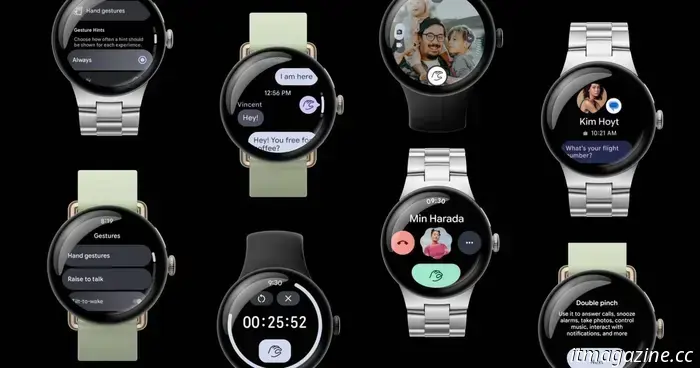 Your Pixel Watch 4 will be receiving two additional gestures to enhance one-handed usability.
The December 2025 update for the Pixel Watch 4 introduces two new gestures aimed at making one-handed operation easier.
Your Pixel Watch 4 will be receiving two additional gestures to enhance one-handed usability.
The December 2025 update for the Pixel Watch 4 introduces two new gestures aimed at making one-handed operation easier.
 Google Photos has simplified the process of editing multi-clip videos and making highlight reels.
Google Photos has received a significant upgrade on both Android and iOS, featuring a revamped video editor and additional tools to assist you in creating refined highlight reels.
Google Photos has simplified the process of editing multi-clip videos and making highlight reels.
Google Photos has received a significant upgrade on both Android and iOS, featuring a revamped video editor and additional tools to assist you in creating refined highlight reels.
 T-Mobile Fiber Home Internet offers speed, reliability, and ease of use.
Modern households require internet that can support 4K streaming, remote work, competitive gaming, and all of our connected devices. Traditional broadband often struggles to provide the necessary reliability, which is where T-Mobile Fiber Home Internet excels. Utilizing cutting-edge fiber-optic technology, T-Mobile Fiber is engineered to meet the needs of both today and the future. Get […]
T-Mobile Fiber Home Internet offers speed, reliability, and ease of use.
Modern households require internet that can support 4K streaming, remote work, competitive gaming, and all of our connected devices. Traditional broadband often struggles to provide the necessary reliability, which is where T-Mobile Fiber Home Internet excels. Utilizing cutting-edge fiber-optic technology, T-Mobile Fiber is engineered to meet the needs of both today and the future. Get […]
 The AI arms race: Exploring the unseen conflict between hackers and protectors.
Artificial intelligence has transformed into both an offensive weapon and a defensive shield in the current cyber warfare arena. With the emergence of self-learning malware and adaptive firewalls, AI is altering the dynamics between attackers and defenders. What was previously a struggle of code has morphed into a covert arms race of algorithms, where every millisecond can determine the outcome for entire systems. [...]
The AI arms race: Exploring the unseen conflict between hackers and protectors.
Artificial intelligence has transformed into both an offensive weapon and a defensive shield in the current cyber warfare arena. With the emergence of self-learning malware and adaptive firewalls, AI is altering the dynamics between attackers and defenders. What was previously a struggle of code has morphed into a covert arms race of algorithms, where every millisecond can determine the outcome for entire systems. [...]
 McDonald’s withdraws its AI-created Christmas advertisement following criticism.
In light of the criticism surrounding Coca-Cola's AI-generated Christmas advertisement last month, one might anticipate that other major corporations would exercise more caution in launching their own AI-driven campaigns. However, that has not been the case. McDonald’s Netherlands opted to utilize generative AI tools to create its own holiday commercial. Yet, the response from the public was not favorable...
McDonald’s withdraws its AI-created Christmas advertisement following criticism.
In light of the criticism surrounding Coca-Cola's AI-generated Christmas advertisement last month, one might anticipate that other major corporations would exercise more caution in launching their own AI-driven campaigns. However, that has not been the case. McDonald’s Netherlands opted to utilize generative AI tools to create its own holiday commercial. Yet, the response from the public was not favorable...
Meta's upcoming MR glasses are not set to be released until 2027, so for the time being, continue to squint at the world around you.
Meta has postponed the launch of its Phoenix MR glasses to 2027, allowing teams additional time to enhance quality and stabilize the experience in response to budget changes and a shifting metaverse strategy.