
AI Video: The creator's initial journey into the digital future.
For years, discussions and debates surrounding AI video generation have been largely focused on achieving cinematic-level perfection—essentially making the output appear as authentic as a Hollywood film. Each technological advancement has brought creators closer to this ideal: improved lighting, more realistic faces, and believable physics.
While this effort has been remarkable, many creators are coming to the realization that even the most impressive results don't necessarily render their tools useful. The final hurdle to achieving genuinely realistic AI video lies in how much control a real person has over it.
The Issue with AI
The challenge in concentrating solely on hyper-realistic AI video is that it overlooks a fundamental issue users encounter regularly: AI clips that behave unpredictably, are difficult to modify, and can easily break with even slight changes to prompts. It's true that AI can create a stunning four-second cinematic moment, but it's unlikely that one can depend on AI to consistently generate ten (or even a hundred) scenes.
Most full-length films need around 40-60 scenes to narrate a story, and these scenes must maintain a level of cohesion. Characters need to have consistent appearances, dialogue should be coherent, and the physics and reality must be grounded and recognizable.
In this regard, many AI tools fall short. They have difficulties maintaining continuity, managing interactions between multiple characters, and ensuring logical storytelling. For users of this technology, whether for a social media advertisement or an educational video, consistency and reliability hold greater value than a quick, aesthetically pleasing video that captures a mood without offering a coherent narrative.
Reempowering Creators
What both professionals and casual users seek is the ability to shape their narratives. They need tools that function predictably and allow for incremental adjustments, enabling them to construct a complete story frame by frame and scene by scene, rather than relying on a machine to generate random content.
Currently, the technology is evolving. Rather than depending on a single, all-knowing AI, many platforms are transitioning toward layered or modular systems, like SkyReels, which provide specialized AI components capable of coordinating tasks such as timing, scene sequencing, and even dialogue, which is often absent. Some companies are also investigating the concept of a “continuous canvas”: an integrated workspace where writing, staging, styling, and editing occur in a single environment, eliminating the need to toggle between different applications.
The New Hybrid Approach for AI Video
Modern style engines have significantly advanced. They are reinterpreting motion, light, and objects so that the results not only appear impressive but also maintain their structural integrity. This enhancement allows creators to unify the aesthetic of their project throughout an entire film or series, making stylization a crucial tool for the narrative community rather than merely an afterthought.
Additionally, this increased sophistication is steering AI toward better narrative capabilities. For example, AI-generated “digital humans” are not just becoming more lifelike; they are also developing systems that allow for more fluid conversations and are beginning to synchronize camera movements for enhanced cinematic effects. Consequently, the future of AI video creation may resemble a controllable and sophisticated animation studio rather than a basic text-to-video generator.
The aim for the next generation of AI videos is to become more reliable, customizable, and designed for disassembly and reassembly. While photorealism will always be a valuable feature, the true significance of AI will be determined by its integration with mechanisms that enable creators to adjust, refine, and perfect their work. The industry may ultimately adopt a hybrid model that combines AI-generated content with precise tools, reinstating the creator's control over the final narrative.

Other articles
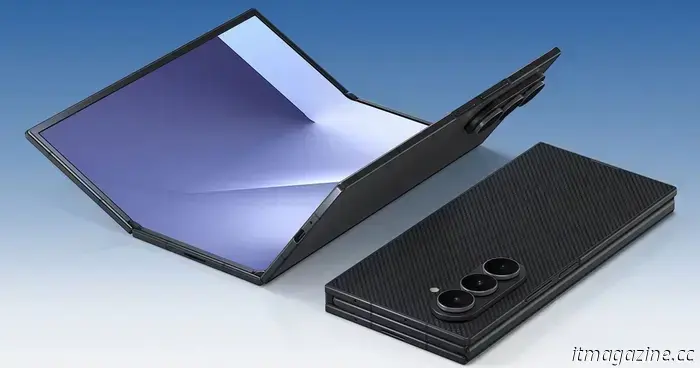 The Samsung Galaxy Z TriFold is impressive, but I'm more excited about the future it suggests.
The Galaxy Z TriFold is an impressive display of engineering, and the software and hardware advancements it introduces give a glimpse into the future of foldable smartphones, computing devices, and the Android ecosystem as a whole.
The Samsung Galaxy Z TriFold is impressive, but I'm more excited about the future it suggests.
The Galaxy Z TriFold is an impressive display of engineering, and the software and hardware advancements it introduces give a glimpse into the future of foldable smartphones, computing devices, and the Android ecosystem as a whole.
 NASA travels to Death Valley to experiment with new drone technology intended for Mars.
After arriving on Mars with the Perseverance rover in early 2021, NASA's Ingenuity helicopter was a remarkable success, surpassing expectations with an incredible 72 flights over the Martian terrain. However, three years after making history as the first aircraft to accomplish powered, controlled flight on a different planet, Ingenuity experienced damage to […]
NASA travels to Death Valley to experiment with new drone technology intended for Mars.
After arriving on Mars with the Perseverance rover in early 2021, NASA's Ingenuity helicopter was a remarkable success, surpassing expectations with an incredible 72 flights over the Martian terrain. However, three years after making history as the first aircraft to accomplish powered, controlled flight on a different planet, Ingenuity experienced damage to […]
 Your Google Discover feed is undergoing an AI transformation, whether it’s an improvement or not.
Google is testing the replacement of actual news headlines in Discover with AI-generated rewrites. Although the company refers to it as a “small test,” initial examples display misleading and sensational phrasing that may alter your news consumption habits.
Your Google Discover feed is undergoing an AI transformation, whether it’s an improvement or not.
Google is testing the replacement of actual news headlines in Discover with AI-generated rewrites. Although the company refers to it as a “small test,” initial examples display misleading and sensational phrasing that may alter your news consumption habits.
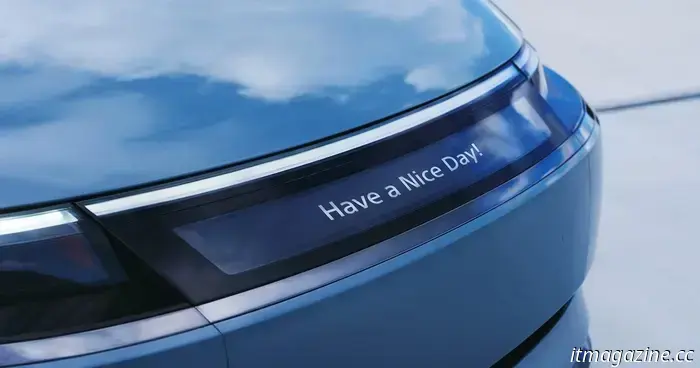 I'm not anticipating significant automotive announcements at CES 2026, but that's precisely what you should hope for.
The arrival of a new year is imminent, which marks the beginning of the countdown to CES 2026. CES is a crucial period for technology news, including innovations in the automotive sector. As car manufacturers have aimed to present themselves more like technology firms and incorporate additional software-driven features into their vehicles, CES [...]
I'm not anticipating significant automotive announcements at CES 2026, but that's precisely what you should hope for.
The arrival of a new year is imminent, which marks the beginning of the countdown to CES 2026. CES is a crucial period for technology news, including innovations in the automotive sector. As car manufacturers have aimed to present themselves more like technology firms and incorporate additional software-driven features into their vehicles, CES [...]
 Your upcoming PC upgrade might soon become more challenging and expensive following this important update from Crucial.
Crucial, a trusted brand for budget-friendly RAM and SSD upgrades for countless PC users, is being discontinued by Micron. As enterprise and AI memory markets thrive, consumers might soon lose one of their most reliable upgrade alternatives.
Your upcoming PC upgrade might soon become more challenging and expensive following this important update from Crucial.
Crucial, a trusted brand for budget-friendly RAM and SSD upgrades for countless PC users, is being discontinued by Micron. As enterprise and AI memory markets thrive, consumers might soon lose one of their most reliable upgrade alternatives.
 China attempted to replicate the landing of SpaceX's Falcon 9, but here's what occurred.
For the past ten years, SpaceX has successfully landed the first stage of its Falcon 9 rocket. This achievement enables the company to reuse a single booster for several missions, which significantly reduces launch expenses and enhances launch frequency. Only a handful of other companies have genuinely attempted to replicate SpaceX’s accomplishment with a first-stage booster.
China attempted to replicate the landing of SpaceX's Falcon 9, but here's what occurred.
For the past ten years, SpaceX has successfully landed the first stage of its Falcon 9 rocket. This achievement enables the company to reuse a single booster for several missions, which significantly reduces launch expenses and enhances launch frequency. Only a handful of other companies have genuinely attempted to replicate SpaceX’s accomplishment with a first-stage booster.
AI Video: The creator's initial journey into the digital future.
For many years, discussions and debates surrounding AI video generation have primarily focused on achieving cinematic-level perfection. This means striving to make the results appear as realistic as a Hollywood film. Each technical advancement has moved creators closer to this objective: enhanced lighting, more realistic facial features, and improved physics [...]