
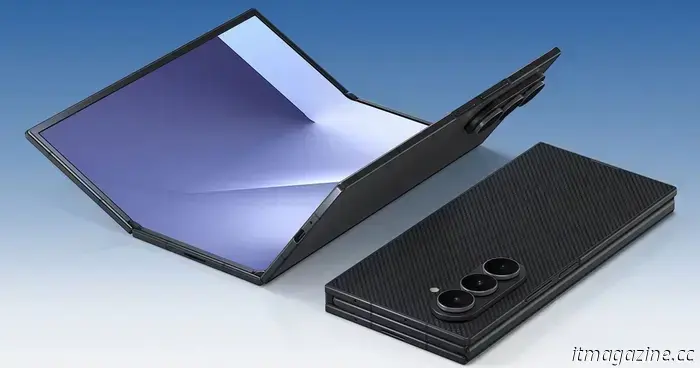
The Samsung Galaxy Z TriFold is impressive, but I'm more excited about the future it suggests.
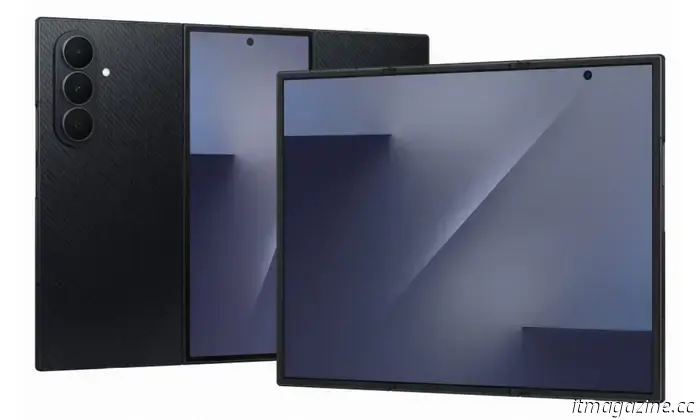
Samsung has recently provided a demonstration of what the future may hold, assuming you’re willing to pay a considerably high price. The new Galaxy Z TriFold expands on the foldable phone concept by incorporating an additional fold, transforming the device into a genuine tablet.
It’s remarkable to witness such a device coming to fruition, at least on a global scale. While Huawei has previously introduced the dual-folding Mate XT models, those devices feature exposed screen edges, run a non-Android interface, and remain largely unavailable in Western markets, including the US.
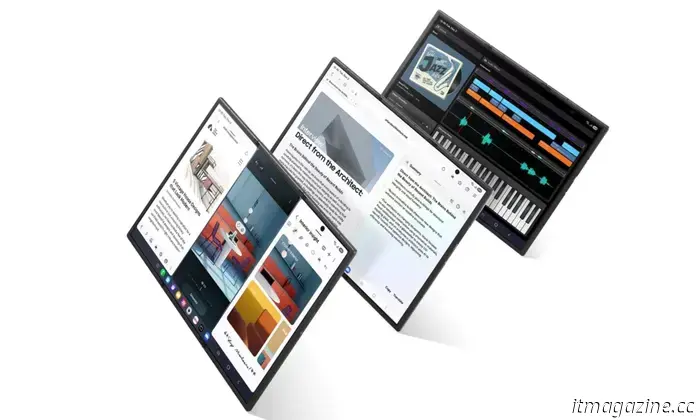
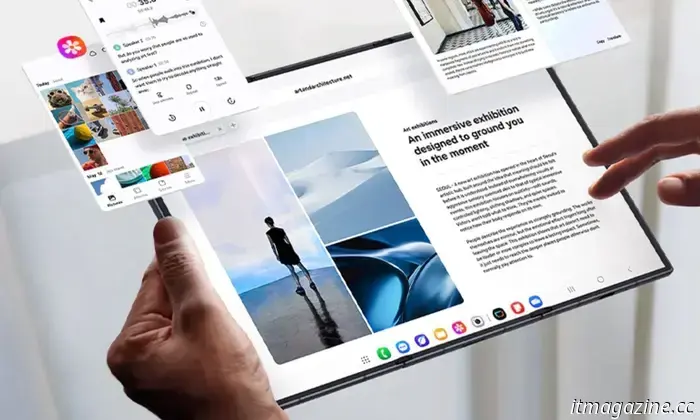
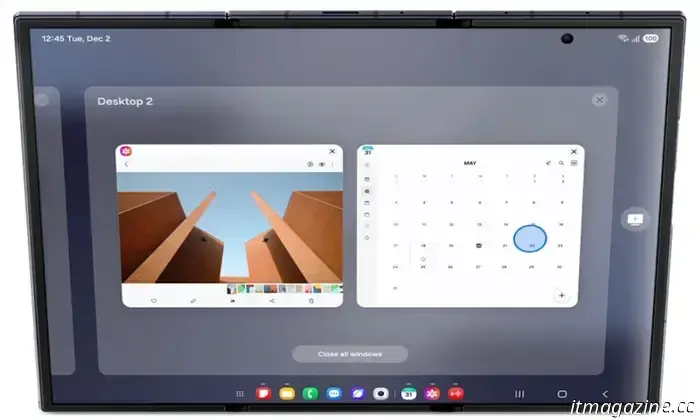
Samsung approached the engineering of this device differently, addressing some key usability issues found in dual-folding devices, and most importantly, offering a preview of what the Android computing experience might become.
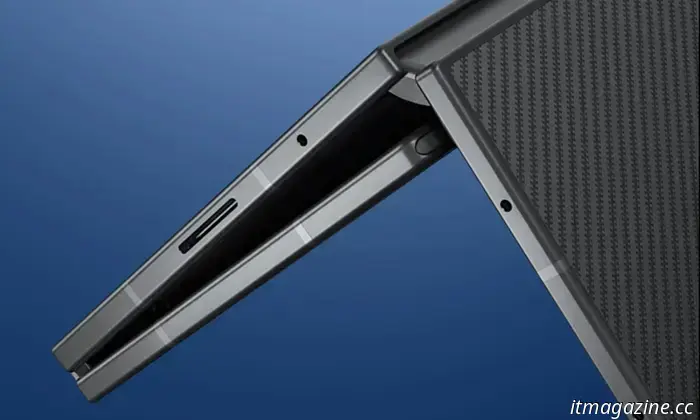
This first-generation device measures a thickness of 12.9 mm, comparable to holding two standard phones stacked like a triple-decker sandwich. Additionally, at a weight of 309 grams, it’s not particularly kind to your hands or pockets—both figuratively and literally.
I anticipated a price that would make it instantly unaffordable for many. In Korea, the device is priced at about $2,400, nearly the same as the 1TB storage variant of the Galaxy Z Fold 7. Nonetheless, it’s an incredibly exciting device for various reasons.
A glimpse into the future, with a twist
A few weeks ago, Google announced that it is transitioning away from ChromeOS in favor of a new foundation built on Android. “We’re constructing the ChromeOS experience based on Android underlying technology,” stated a senior Google executive at that time. Recently, there were rumors that the new OS might be named AluminumOS.
Furthermore, the company confirmed its efforts in developing Android-based PCs, with Qualcomm as a key partner for the initiative. Lenovo inadvertently revealed that it could be among the initial users. This Android-based OS for PCs will primarily focus on smooth phone-PC connectivity and software-level familiarity, similar to the relationship between iPadOS and macOS.
The Galaxy Z TriFold serves as an intriguing foretaste of that hybrid future. Consider the silicon specifications: Qualcomm’s Snapdragon X series processors for Windows-on-Arm laptops share the same foundational Oryon core and Adreno GPU architecture as the Snapdragon 8 series chips for mobile devices.
Given the history of ChromeOS devices operating mainly on low-end processors to keep costs down, it's clear that high-performance silicon—such as the Snapdragon 8 Elite processor in the Galaxy Z TriFold—would be capable of supporting Aluminum OS.
Another perspective is that the Galaxy Z TriFold signifies that replacing ChromeOS with an Android-based alternative (or merely shifting its foundations) may be feasible across more form factors than just standard laptops.
This could also include ultra-thin and portable devices, additional tablets, and, of course, exceptionally slim foldable devices. For instance, take note of the Huawei Matebook Fold, which features a HarmonyOS desktop experience built on the same Kirin processor family as Huawei’s smartphones, which is, by the way, a variant of HarmonyOS.
I'm uncertain whether dual-booting will be on the horizon, but the Galaxy Z TriFold likely offers a preview of the various (and exciting) form factors that Google’s upcoming OS could technically accommodate.
Setting the stage for new hardware innovations
Now, while I may come off as an outdated adult reminiscing about the early 2000s, I must express this sentiment: smartphones have become dull in the touchscreen era. The bold experiments from companies like Nokia and LG are long gone. Foldables, despite their fragility and costly upkeep, have reintroduced some much-needed excitement.
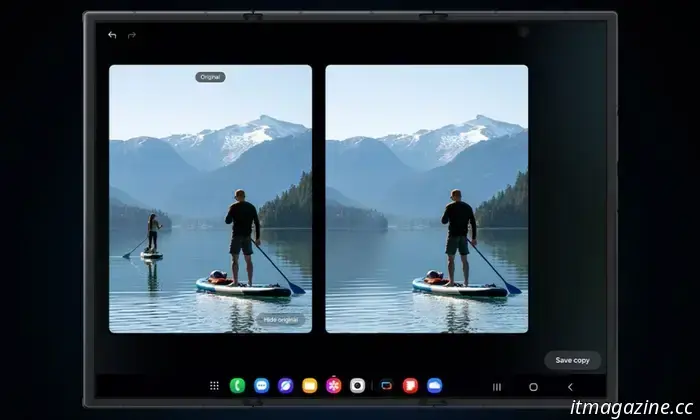
And to clarify, foldables are far from being a gimmick. I spent several weeks exclusively using the Galaxy Z Flip 7’s squarish cover screen while enjoying its clamshell style. The Galaxy Z Fold 7 represents an entirely different productivity powerhouse, and once you become accustomed to the ease of split-screen multitasking on the inner display or the Flex mode where it sits on a table like a laptop, reverting to traditional forms becomes challenging.
The Galaxy Z TriFold, however, advances the concept further, with a sharper emphasis on hardware innovations. Ultimately, these will filter down to enhance your average foldable phone in the future. Let’s begin with the display.
Samsung claims it has implemented a “reinforced overcoat” on the inner panel to improve shock absorption. The flexible display and the underlying hinge system are the most delicate parts of any foldable device, and it’s encouraging to see Samsung pushing engineering boundaries in a meaningful way.
Regarding the hinge, it features a dual-rail design that reduces thickness while the titanium housing enhances resistance to wear and tear from extended use. Additionally, there is a ceramic-glass fiber-reinforced polymer back panel to minimize the risk of cracks.
At its thinnest point, the device measures just 3.9mm, making it the slimmest phone of its kind on the market

Other articles
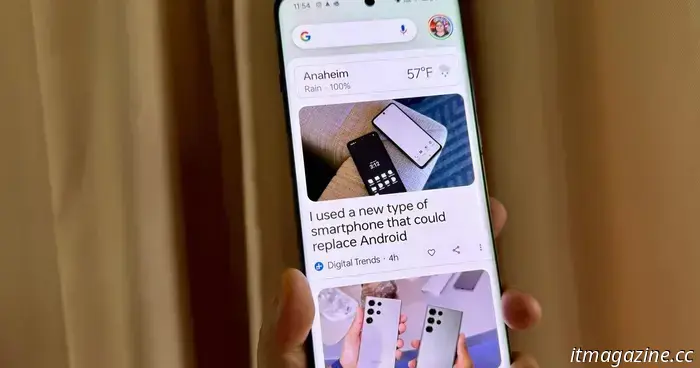 Your Google Discover feed is undergoing an AI transformation, whether it’s an improvement or not.
Google is testing the replacement of actual news headlines in Discover with AI-generated rewrites. Although the company refers to it as a “small test,” initial examples display misleading and sensational phrasing that may alter your news consumption habits.
Your Google Discover feed is undergoing an AI transformation, whether it’s an improvement or not.
Google is testing the replacement of actual news headlines in Discover with AI-generated rewrites. Although the company refers to it as a “small test,” initial examples display misleading and sensational phrasing that may alter your news consumption habits.
 China attempted to replicate the landing of SpaceX's Falcon 9, but here's what occurred.
For the past ten years, SpaceX has successfully landed the first stage of its Falcon 9 rocket. This achievement enables the company to reuse a single booster for several missions, which significantly reduces launch expenses and enhances launch frequency. Only a handful of other companies have genuinely attempted to replicate SpaceX’s accomplishment with a first-stage booster.
China attempted to replicate the landing of SpaceX's Falcon 9, but here's what occurred.
For the past ten years, SpaceX has successfully landed the first stage of its Falcon 9 rocket. This achievement enables the company to reuse a single booster for several missions, which significantly reduces launch expenses and enhances launch frequency. Only a handful of other companies have genuinely attempted to replicate SpaceX’s accomplishment with a first-stage booster.
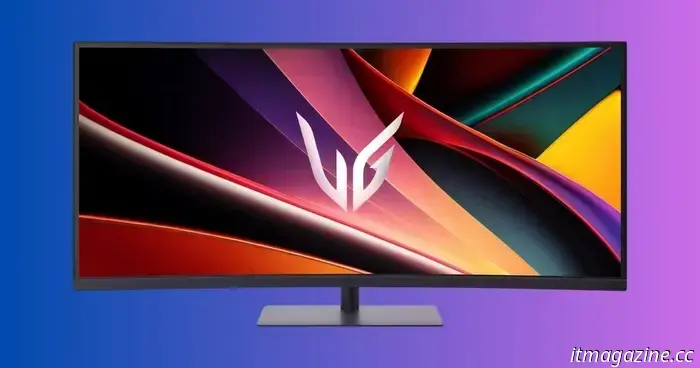 The 34-Inch 240Hz Ultrawide Gaming Monitor from LG is now available for $359.99 on Amazon.
The 34-Inch 240Hz Ultrawide Gaming Monitor from LG is now available for $359.99 on Amazon.
The 34-Inch 240Hz Ultrawide Gaming Monitor from LG is now available for $359.99 on Amazon.
 The recent price reduction of the RTX 5060 Ti is now reasonable for budget gaming PCs.
When the RTX 5060 Ti was first released, its performance was decent, but its price was not. You were spending nearly upper midrange amounts for what was primarily an effective 1080p and entry-level 1440p GPU. At its initial list price of $469.99, it was difficult to endorse it over slightly pricier cards that offered better performance.
The recent price reduction of the RTX 5060 Ti is now reasonable for budget gaming PCs.
When the RTX 5060 Ti was first released, its performance was decent, but its price was not. You were spending nearly upper midrange amounts for what was primarily an effective 1080p and entry-level 1440p GPU. At its initial list price of $469.99, it was difficult to endorse it over slightly pricier cards that offered better performance.
 NASA travels to Death Valley to experiment with new drone technology intended for Mars.
After arriving on Mars with the Perseverance rover in early 2021, NASA's Ingenuity helicopter was a remarkable success, surpassing expectations with an incredible 72 flights over the Martian terrain. However, three years after making history as the first aircraft to accomplish powered, controlled flight on a different planet, Ingenuity experienced damage to […]
NASA travels to Death Valley to experiment with new drone technology intended for Mars.
After arriving on Mars with the Perseverance rover in early 2021, NASA's Ingenuity helicopter was a remarkable success, surpassing expectations with an incredible 72 flights over the Martian terrain. However, three years after making history as the first aircraft to accomplish powered, controlled flight on a different planet, Ingenuity experienced damage to […]
 You might soon be able to inquire with ChatGPT about how healthy your week actually was.
Embedded code in the ChatGPT iOS application suggests that a connector for the Health app is on the way, allowing the AI-driven chat to gain comprehensive insights into your activity, sleep, and fitness information.
You might soon be able to inquire with ChatGPT about how healthy your week actually was.
Embedded code in the ChatGPT iOS application suggests that a connector for the Health app is on the way, allowing the AI-driven chat to gain comprehensive insights into your activity, sleep, and fitness information.
The Samsung Galaxy Z TriFold is impressive, but I'm more excited about the future it suggests.
The Galaxy Z TriFold is an impressive display of engineering, and the software and hardware advancements it introduces give a glimpse into the future of foldable smartphones, computing devices, and the Android ecosystem as a whole.