
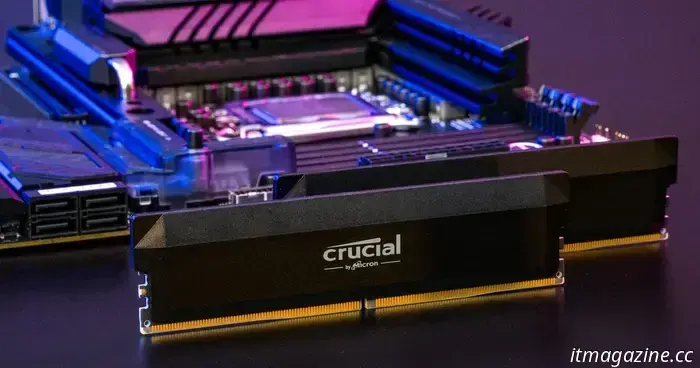
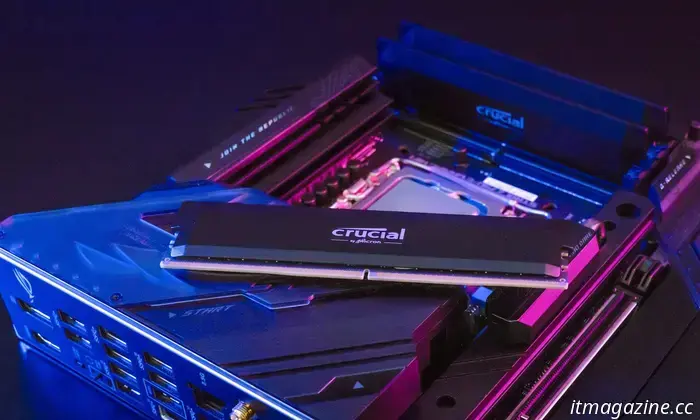
Your upcoming PC upgrade might soon become more challenging and expensive following this important update from Crucial.
Micron is withdrawing from the Crucial consumer business, which is more significant for everyday PC users than it might initially appear.
What’s going on? If you thought the recent surge in RAM and SSD prices couldn’t get any worse, we have some concerning news. Micron has officially declared its exit from the Crucial consumer business, signaling the end of a well-known name in PC memory and storage for average users. This means Micron will stop selling RAM and SSDs to consumers under the Crucial brand, while still manufacturing memory for enterprise, data centers, and AI clients. For PC users, this change is less about corporate strategy and more about losing a trusted, familiar upgrade option.
Micron has confirmed it is phasing out Crucial’s consumer SSD and RAM lines, focusing entirely on AI, enterprise, and hyperscale customers.
For many years, Crucial has served as Micron’s direct-to-consumer brand for affordable and compatible storage and memory enhancements.
Current Crucial products will remain available in stores until stock is depleted, with no new consumer models in the pipeline.
Micron attributes this decision to the increasing demand for AI memory, which has become more lucrative than consumer components.
Why this matters: Crucial has long been more than just another PC parts brand. It represented a reliable, hassle-free option for upgrading laptops, desktops, and gaming systems. If you ever utilized its compatibility checker and confidently purchased RAM or an SSD that “just worked,” you experienced the consumer-friendly ecosystem that is now diminishing. Its departure will significantly impact the everyday upgrade experience, especially for those who prefer not to take chances with parts.
Additionally, Crucial quietly contributed to maintaining price integrity. By selling Micron’s memory directly to consumers, it often established pricing benchmarks that pressured premium brands like Samsung and Western Digital. With Crucial stepping back, there are fewer prominent companies concentrating on budget and mid-range consumers. While alternative budget-friendly brands exist, the trust established by Crucial was its greatest asset. This loss of reliability may turn future upgrades into a more uncertain and complicated process for casual users.
Why should you be concerned? With Crucial's closure, one of the easiest and most beginner-friendly upgrade options is disappearing. Future consumers may rely more on lesser-known third-party brands or pay a premium for the remaining well-known names. Coupled with the current pressures on RAM and SSD prices due to AI-driven shortages, Crucial’s exit means the consumer market loses a stabilizing influence. While this doesn’t guarantee immediate price hikes, it does heighten the potential for upgrades to become pricier, harder to locate, or filled with confusing model options. Moreover, for small PC builders, students, remote workers, or anyone looking to extend the life of an older system, Crucial’s absence makes upgrades slightly more complex and intimidating.
What’s next? In the short term, Crucial products will still be available in stores until existing inventory is sold, so if you were considering a RAM or SSD upgrade, now would be a good time to act. PC buyers can expect fewer “plug-and-play” upgrade choices and a need for more careful shopping, particularly if memory shortages persist and consumer-focused brands continue to diminish. In the meantime, it is anticipated that the consumer market will increasingly lean towards brands like Samsung, Kingston, and Western Digital.



Other articles
 AI Video: The creator's initial journey into the digital future.
For many years, discussions and debates surrounding AI video generation have primarily focused on achieving cinematic-level perfection. This means striving to make the results appear as realistic as a Hollywood film. Each technical advancement has moved creators closer to this objective: enhanced lighting, more realistic facial features, and improved physics [...]
AI Video: The creator's initial journey into the digital future.
For many years, discussions and debates surrounding AI video generation have primarily focused on achieving cinematic-level perfection. This means striving to make the results appear as realistic as a Hollywood film. Each technical advancement has moved creators closer to this objective: enhanced lighting, more realistic facial features, and improved physics [...]
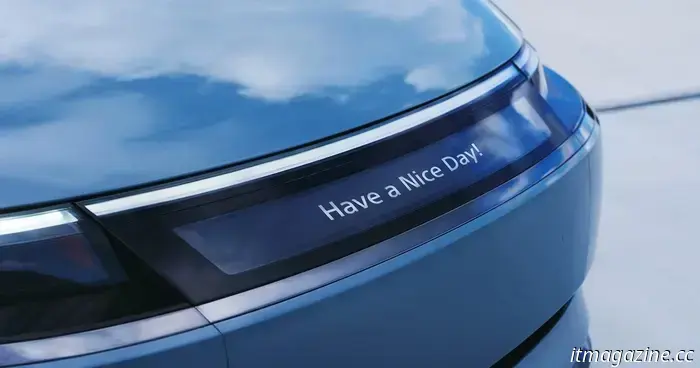 I'm not anticipating significant automotive announcements at CES 2026, but that's precisely what you should hope for.
The arrival of a new year is imminent, which marks the beginning of the countdown to CES 2026. CES is a crucial period for technology news, including innovations in the automotive sector. As car manufacturers have aimed to present themselves more like technology firms and incorporate additional software-driven features into their vehicles, CES [...]
I'm not anticipating significant automotive announcements at CES 2026, but that's precisely what you should hope for.
The arrival of a new year is imminent, which marks the beginning of the countdown to CES 2026. CES is a crucial period for technology news, including innovations in the automotive sector. As car manufacturers have aimed to present themselves more like technology firms and incorporate additional software-driven features into their vehicles, CES [...]
 The recent price reduction of the RTX 5060 Ti is now reasonable for budget gaming PCs.
When the RTX 5060 Ti was first released, its performance was decent, but its price was not. You were spending nearly upper midrange amounts for what was primarily an effective 1080p and entry-level 1440p GPU. At its initial list price of $469.99, it was difficult to endorse it over slightly pricier cards that offered better performance.
The recent price reduction of the RTX 5060 Ti is now reasonable for budget gaming PCs.
When the RTX 5060 Ti was first released, its performance was decent, but its price was not. You were spending nearly upper midrange amounts for what was primarily an effective 1080p and entry-level 1440p GPU. At its initial list price of $469.99, it was difficult to endorse it over slightly pricier cards that offered better performance.
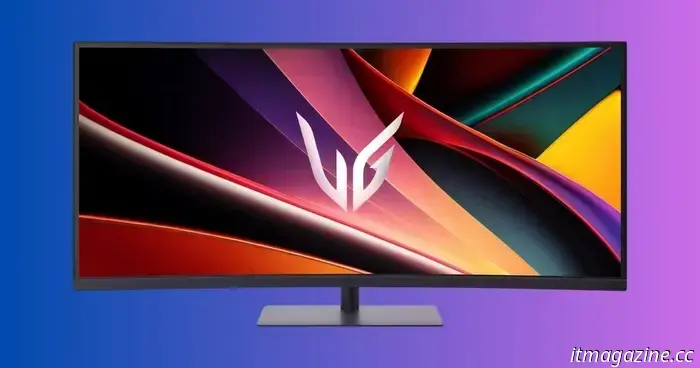 The 34-Inch 240Hz Ultrawide Gaming Monitor from LG is now available for $359.99 on Amazon.
The 34-Inch 240Hz Ultrawide Gaming Monitor from LG is now available for $359.99 on Amazon.
The 34-Inch 240Hz Ultrawide Gaming Monitor from LG is now available for $359.99 on Amazon.
 NASA travels to Death Valley to experiment with new drone technology intended for Mars.
After arriving on Mars with the Perseverance rover in early 2021, NASA's Ingenuity helicopter was a remarkable success, surpassing expectations with an incredible 72 flights over the Martian terrain. However, three years after making history as the first aircraft to accomplish powered, controlled flight on a different planet, Ingenuity experienced damage to […]
NASA travels to Death Valley to experiment with new drone technology intended for Mars.
After arriving on Mars with the Perseverance rover in early 2021, NASA's Ingenuity helicopter was a remarkable success, surpassing expectations with an incredible 72 flights over the Martian terrain. However, three years after making history as the first aircraft to accomplish powered, controlled flight on a different planet, Ingenuity experienced damage to […]
 Your Google Discover feed is undergoing an AI transformation, whether it’s an improvement or not.
Google is testing the replacement of actual news headlines in Discover with AI-generated rewrites. Although the company refers to it as a “small test,” initial examples display misleading and sensational phrasing that may alter your news consumption habits.
Your Google Discover feed is undergoing an AI transformation, whether it’s an improvement or not.
Google is testing the replacement of actual news headlines in Discover with AI-generated rewrites. Although the company refers to it as a “small test,” initial examples display misleading and sensational phrasing that may alter your news consumption habits.
Your upcoming PC upgrade might soon become more challenging and expensive following this important update from Crucial.
Crucial, a trusted brand for budget-friendly RAM and SSD upgrades for countless PC users, is being discontinued by Micron. As enterprise and AI memory markets thrive, consumers might soon lose one of their most reliable upgrade alternatives.