

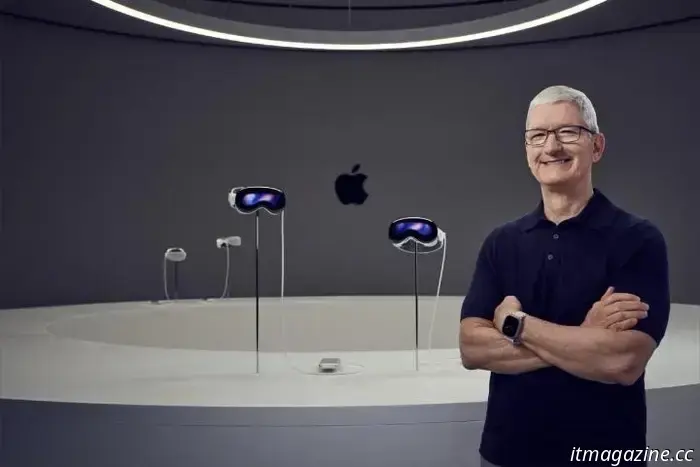
Apple's Vision Pro will feature the M5 chip, but that isn't the primary requirement for the device.
We haven't yet experienced the complete launch of Apple's M4 chip series — the M4 Ultra has not yet been revealed — but we've now learned that the M5 chip is currently in production. This suggests it could debut in Macs either late this year or early next year.
For those who are waiting to purchase a new MacBook Pro, this could mean that 2026 is the year to make the investment. Apple is expected to completely redesign its flagship laptop for next year's release, and if this aligns with a powerful new M5 chip, that would be advantageous.
There is also speculation about the M5 chip being used in the Vision Pro headset. However, the situation is a bit more complex. On the surface, it appears promising. The M5 is likely to provide enhanced performance and improved efficiency, which could result in better battery life for the Vision Pro.
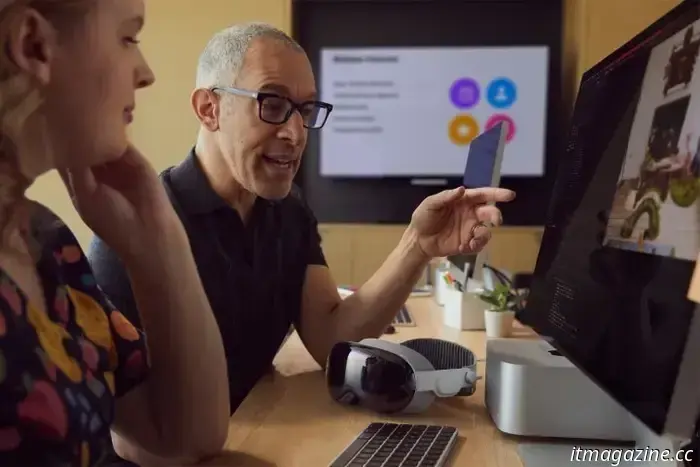
One possibility with the introduction of the M5 in the mixed-reality headset is the integration of Apple Intelligence, the company's AI system. Although the M2 in the current Vision Pro can handle AI (as it does in Macs), it struggles in the Vision Pro due to the extensive processing demands.
From Apple's standpoint, adding artificial intelligence to the Vision Pro is logical as they aim to establish a presence in the AI market. Yet, it raises the question of whether this development is truly beneficial for current and potential Vision Pro users, and I'm uncertain.
The Wrong Priority?
I recently mentioned that the Vision Pro needs one crucial element to revive itself: a more affordable model. At $3,500, the existing Vision Pro is beyond the financial capability of most consumers, which impacts its sales. In fact, I would argue that a powerful chip and Apple Intelligence weren't on my list of essential updates.
So, why is Apple focusing on a new chip rather than a budget-friendly model? New design iterations require time to develop, particularly if Apple was not initially planning to release one but felt compelled to respond due to disappointing Vision Pro sales.
But do AI and a more powerful chip really address the headset's needs? It is already one of the most powerful and feature-rich virtual reality headsets available, which contributes to its high price. Introducing a brand-new chip will not make the Vision Pro any more affordable, and that is something that urgently needs to change.
Additionally, Apple Intelligence is still quite limited at this stage. While it has some useful applications, it must be significantly improved by the time it launches in the Vision Pro to have a substantial impact (or to encourage buyers to make a purchase).
I can understand how AI might assist Vision Pro users in navigating a new interface and unfamiliar operations (such as asking Siri for help if something is difficult to locate), but it will be irrelevant if the headset remains too costly for most consumers.
Looking Ahead
I anticipate that this M5 update aims to maintain the relevance of the Vision Pro while Apple develops a more affordable alternative, which we know is in the works. However, the inclusion of the M5 merely underscores how much of a complete rethinking the Vision Pro requires. Simple chip upgrades and the addition of artificial intelligence won't suffice.
I am hopeful that this kind of major redesign is what Apple intends. There is no need to completely abandon the current Vision Pro — it can continue to serve as a model for enthusiasts and those who have no budget constraints. For those users, the M5 chip will be a valuable upgrade.
However, I believe most other users would prefer to forgo the M5 chip if it meant that Apple could reduce the price and launch a more affordable headset. It's unfortunate that this budget-friendly model might not arrive until 2028. Until that time, Apple will need to rely on upgrades like the M5 to keep customers content.
Other articles
 Apple is anticipated to reveal the iPhone SE 4 "in the near future."
A new report suggests that Apple will reveal the latest version of its budget SE phone next week.
Apple is anticipated to reveal the iPhone SE 4 "in the near future."
A new report suggests that Apple will reveal the latest version of its budget SE phone next week.
 A new benchmark for a MediaTek Chromebook has emerged, showcasing remarkable speed.
The MediaTek MT8196 chip has appeared on the Geekbench benchmark, indicating that it may be among the most potent Chromebook processors of the year.
A new benchmark for a MediaTek Chromebook has emerged, showcasing remarkable speed.
The MediaTek MT8196 chip has appeared on the Geekbench benchmark, indicating that it may be among the most potent Chromebook processors of the year.
 An explanation of the 2025 Super Bowl Squares: What is their functionality?
What exactly are Super Bowl squares? How can you join in on the fun? Find out more about Super Bowl squares so you'll be prepared to take part in your Big Game celebration.
An explanation of the 2025 Super Bowl Squares: What is their functionality?
What exactly are Super Bowl squares? How can you join in on the fun? Find out more about Super Bowl squares so you'll be prepared to take part in your Big Game celebration.
 The top movies available on Max at the moment.
This month, some of the top films available for streaming on Max include Final Destination, Taxi Driver, Dredd, and Malcolm X.
The top movies available on Max at the moment.
This month, some of the top films available for streaming on Max include Final Destination, Taxi Driver, Dredd, and Malcolm X.
 Chrome's incognito mode has become even more private with this update.
To enhance user privacy while browsing, Google has modified the functionality of the copy and paste system in the browser.
Chrome's incognito mode has become even more private with this update.
To enhance user privacy while browsing, Google has modified the functionality of the copy and paste system in the browser.
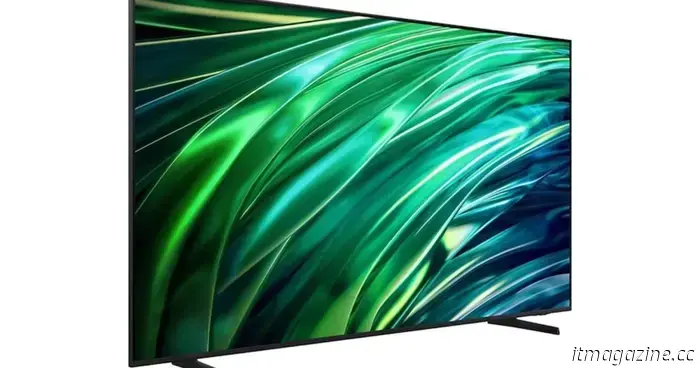 This 85-inch Samsung QLED TV is discounted by $2,250 — ideal for Super Bowl LIX.
The 85-inch Samsung QNX1D Neo QLED 4K TV is an ideal choice for viewing Super Bowl LIX, particularly since it is currently available at a huge discount of $2,250.
This 85-inch Samsung QLED TV is discounted by $2,250 — ideal for Super Bowl LIX.
The 85-inch Samsung QNX1D Neo QLED 4K TV is an ideal choice for viewing Super Bowl LIX, particularly since it is currently available at a huge discount of $2,250.
Apple's Vision Pro will feature the M5 chip, but that isn't the primary requirement for the device.
Apple's M5 chip is set to be integrated into the Vision Pro, but that's not the improvement the headset truly requires. Rather, Apple should focus on developing a more budget-friendly version.