
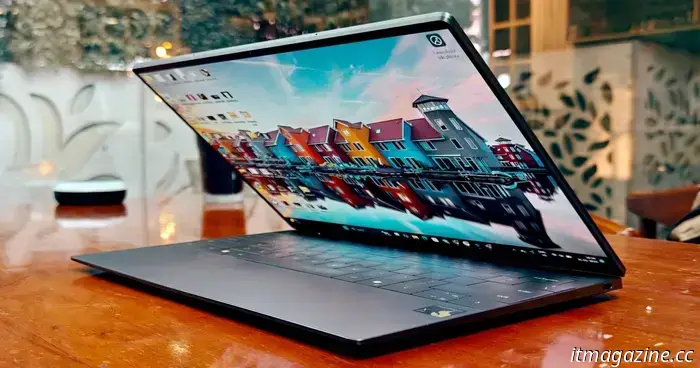
Qualcomm asserts that more than 10% of Windows PC sales priced above $800 consist of Snapdragon PCs.
Nadeem Sarwar / Digital Trends
During Qualcomm's earnings webcast for Q1 2025 (timestamp 22:49 if you're interested), President and CEO Cristiano Amon revealed a precise statistic: “In the sale of U.S. retail Windows laptops priced above $800, [Qualcomm] holds over a 10% share.” This means that more than 10% of all Windows laptops priced above $800 sold in the U.S. from October to December 2024 were powered by Snapdragon X chips.
The first observation is that 10% represents a significant increase from the 0.8% market share Qualcomm reportedly had in Q3 2024. However, the second observation points to the numerous qualifiers associated with this statement. The data pertains exclusively to Windows laptops over $800 and does not encompass all PCs or laptops. Additionally, it specifically addresses the U.S. and focuses on consumer sales.
Overall, this is quite specific—on the plus side, this specificity may lend more credibility to the claim since a straightforward 10% figure would be hard to believe without those qualifiers. Conversely, this specificity also makes the claim appear less impressive.
It's reasonable to give Qualcomm some leeway, as it's relatively new to the PC market and has generated considerable interest with its Snapdragon X chip. This development has significantly enhanced battery life for Windows laptops compared to x86 devices and has played a crucial role in the success of Windows-on-Arm. Though Qualcomm's ambition to capture 50% of the Windows PC market by 2029 may seem distant, significant changes can occur within four years.
Willow Roberts has been a Computing Writer at Digital Trends for a year and has been writing for approximately a decade. She has a…
Google reevaluates military applications of AI
On February 4, Google revised its "AI principles," a document outlining the company’s intentions regarding the use of artificial intelligence in its products and services. The previous version included two sections: "Objectives for AI applications" and "AI applications we will not pursue," which clearly committed to not developing AI weapons or surveillance systems.
The update was first reported by The Washington Post, highlighting that the "AI applications we will not pursue" section has been completely removed. The revised document now solely emphasizes "what Google will do," without any commitments regarding "what Google won't do."
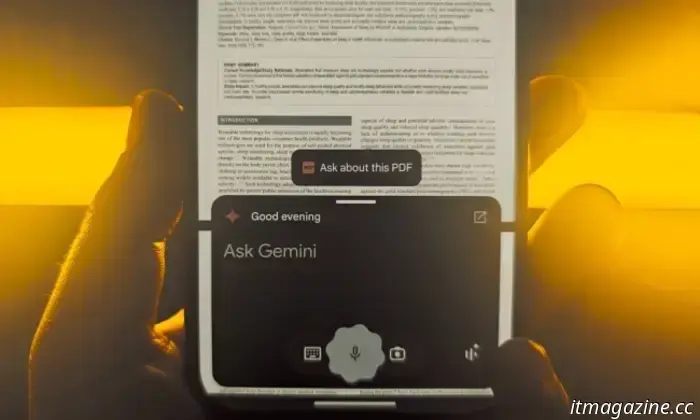
Google has some 'good ideas' for incorporating ads into Gemini
Google is considering incorporating advertisements into its Gemini AI. CEO Sundar Pichai mentioned the possibility during an earnings call but did not provide a specific timeline, as reported by The Verge. He also indicated that the company has "very good ideas" for how ads could be integrated in the future.
This year’s focus continues to be on improving user experience and expanding subscription offerings. Pichai noted that advertising has been crucial in scaling other Google services, like YouTube, suggesting that ads might eventually appear in Gemini. However, he did not elaborate on how ads would be integrated into Gemini when they do arrive. He reaffirmed their commitment to ensuring that the products are effective and accessible to a wide audience.
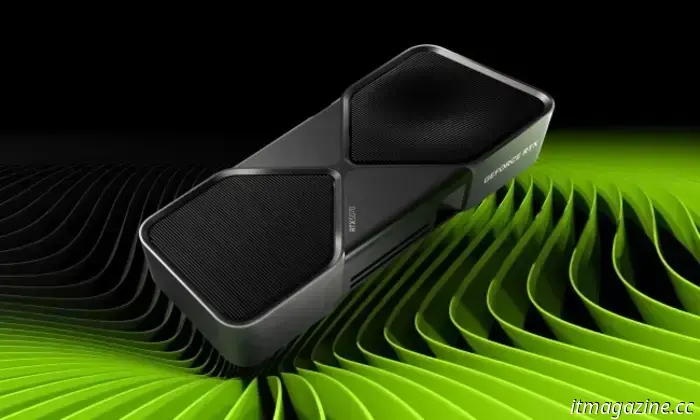
Can the 5070 Ti present a significant upgrade over the 4070 Ti?
The Nvidia RTX 5070 Ti is anticipated to be the next major graphics card release within the new generation of Blackwell GPUs. However, despite early exaggerated claims from Nvidia CEO Jensen Huang regarding the new 50-series, disappointing performance from the RTX 5080 indicates that the 5070 Ti could fall short of expectations.


Other articles
 Catch Super Bowl LIX on the incredible Samsung Odyssey Ark — now available at a discount!
The second-generation Samsung Odyssey Ark curved gaming monitor is available for $700 less at Samsung. It will be an excellent display for viewing Super Bowl LIX.
Catch Super Bowl LIX on the incredible Samsung Odyssey Ark — now available at a discount!
The second-generation Samsung Odyssey Ark curved gaming monitor is available for $700 less at Samsung. It will be an excellent display for viewing Super Bowl LIX.
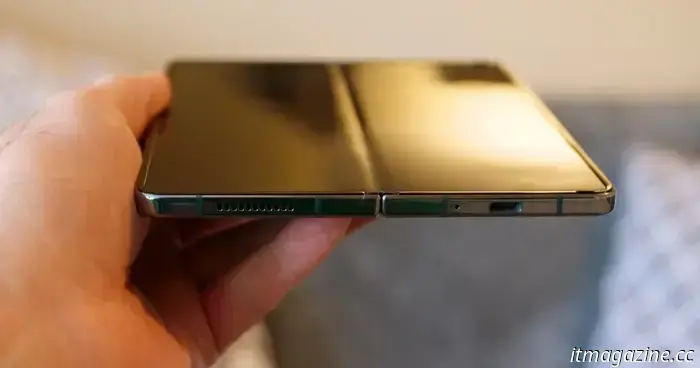 The disliked crease in foldable phone screens might finally be disappearing.
The founder of OnePlus and Oppo's product head has posted pictures of the anticipated Find N5 next to a Samsung foldable device. It appears that the display crease will conclude in 2025.
The disliked crease in foldable phone screens might finally be disappearing.
The founder of OnePlus and Oppo's product head has posted pictures of the anticipated Find N5 next to a Samsung foldable device. It appears that the display crease will conclude in 2025.
 The top Xbox Game Pass title of 2024 is set to be released on PS5.
The exciting and visually striking universe of Dungeons of Hinterberg is set to launch on PlayStation 5 in March, accompanied by extra bonus content.
The top Xbox Game Pass title of 2024 is set to be released on PS5.
The exciting and visually striking universe of Dungeons of Hinterberg is set to launch on PlayStation 5 in March, accompanied by extra bonus content.
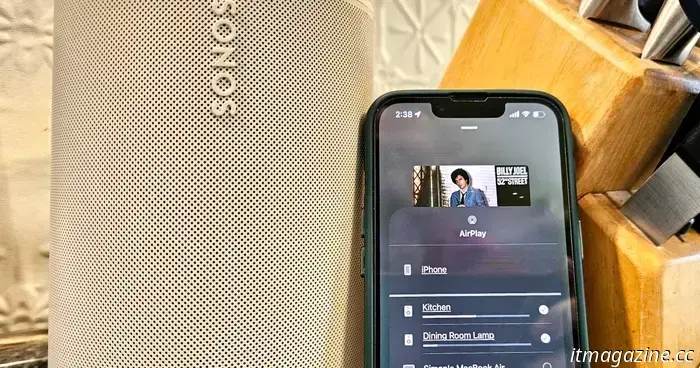 Sonos faces ongoing challenges as it lets go of 200 workers.
The layoffs at Sonos reflect the struggles the company has faced this year. Ultimately, only time will reveal whether the restructuring will enable the company to find its way again.
Sonos faces ongoing challenges as it lets go of 200 workers.
The layoffs at Sonos reflect the struggles the company has faced this year. Ultimately, only time will reveal whether the restructuring will enable the company to find its way again.
 Miles Teller has a single wish for Tom Cruise regarding Top Gun 3.
Will there be a Top Gun 3? If Miles Teller returns to the cockpit, he has a particular request for Tom Cruise.
Miles Teller has a single wish for Tom Cruise regarding Top Gun 3.
Will there be a Top Gun 3? If Miles Teller returns to the cockpit, he has a particular request for Tom Cruise.
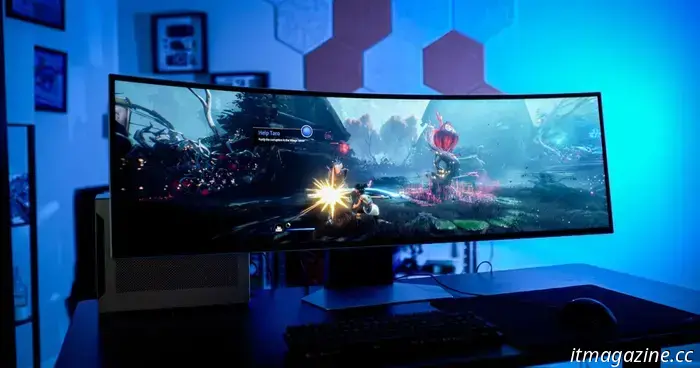 This offer on the Samsung Odyssey G9 OLED gaming monitor is ideal for Super Bowl LIX.
The 49-inch Samsung Odyssey OLED G9 curved gaming monitor, ideal for enjoying Super Bowl LIX, is currently available from Samsung with a $300 discount.
This offer on the Samsung Odyssey G9 OLED gaming monitor is ideal for Super Bowl LIX.
The 49-inch Samsung Odyssey OLED G9 curved gaming monitor, ideal for enjoying Super Bowl LIX, is currently available from Samsung with a $300 discount.
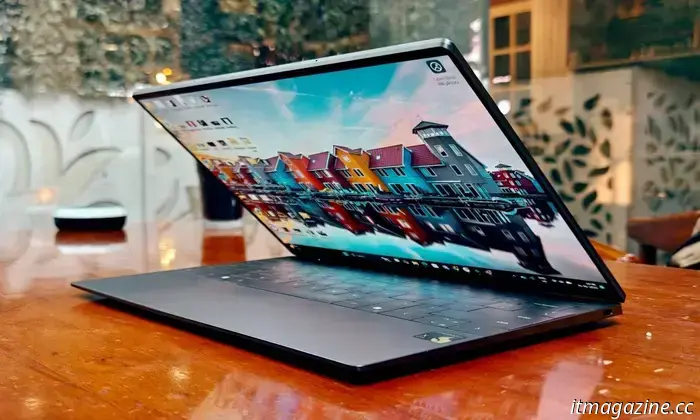
Qualcomm asserts that more than 10% of Windows PC sales priced above $800 consist of Snapdragon PCs.
Qualcomm has revealed an intriguing statistic regarding its Q4 PC sales; however, it isn't as remarkable as it may initially appear.