
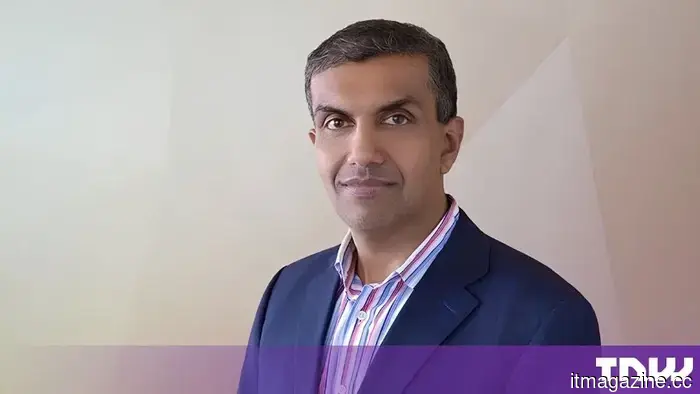
Adobe has just given Photoshop to a person who has never used it before.
Adobe announced that Anil Chakravarthy will take on the roles of president and chief executive starting December 1, with Shantanu Narayen transitioning to executive chair. Chakravarthy, who progressed through Digital Experience and global field operations, previously worked at enterprise data company Informatica and played a key role in the acquisitions of Workfront and Semrush. The board’s decision suggests they have chosen a leader from a division of Adobe that generative models are less likely to disrupt.
In a statement released on Wednesday, Adobe's board confirmed that Anil Chakravarthy will assume the position of president and chief executive on December 1 and will also join the board, while Shantanu Narayen will move to executive chair. Frank Calderoni, the lead independent director who led the selection committee, noted that their decision was unanimous following a thorough process.
Reviewing Chakravarthy's background, he joined Adobe in January 2020 to oversee Digital Experience, expanded to include global field operations that September, and became president of both divisions in December 2021.
Prior to joining Adobe, Chakravarthy served for four years as the CEO of Informatica, an enterprise cloud data management firm, after joining the company in 2013. His earlier experience includes roles at Symantec, VeriSign, and McKinsey, and he holds both a master’s and a PhD from MIT.
Within Adobe, his focus has been on enterprise software rather than creative tools. He has led initiatives like CX Enterprise, GenStudio, and Brand Visibility, scaled the Adobe Experience Platform, and pushed for the acquisitions of Workfront and Semrush.
This indicates a comprehensive marketing and data background. The individual now at the helm of the company that owns Photoshop has never managed Photoshop itself.
This choice reflects a strategic direction; Adobe's creative tools are most vulnerable to generative models. Competitors have quickly gained significant market share, with Freepik rebranding as Magnific, an AI creative platform with $230 million in annual recurring revenue.
In contrast, customer experience orchestration does not face a similar level of threat. The infrastructure related to enterprise data, campaign tools, and their integrations are secured by the complexity of integration and switching costs rather than quality of models.
Choosing the leader who has developed that side of the business signals where the board believes sustainable growth lies. This does not dismiss the creative sector but does imply a prioritization.
Chakravarthy expressed enthusiasm about leading Adobe into “the next era of agentic software for creativity, productivity, and customer experience.” Creativity is prioritized in this statement, alongside two other areas.
Narayen articulated the transition in similar terms, expressing confidence that Chakravarthy is the ideal choice to guide Adobe's growth in an AI-driven landscape. Neither statement specifies a particular creative product.
The notion of "agentic" software isn't new for Adobe. The Firefly assistant is already transforming Creative Cloud into a conversational interface across the different applications, mirroring a similar strategic approach focused on designers rather than marketers.
The acquisitions provide insight as well. The purchase of Semrush, a search and marketing intelligence firm, aligns with Adobe's preparation for a future where brands must monitor AI mentions about them.
This acquisition was accompanied by developments in Firefly agent work, a partnership with Disney, and LinkedIn integration, with Chakravarthy being recognized for championing it. Brand Visibility, a product he's credited for, addresses the same issue.
The creative division has also been active in acquisitions, with Adobe planning to buy Topaz Labs in June for its image and video enhancement capabilities, indicating that the pipeline remains active.
Chakravarthy steps into a transformative legacy. Narayen's leadership has been marked by shifting Adobe from traditional boxed software to a subscription model, a significant transformation in enterprise technology. This invites the comparison that a second transformation is now necessary.
The key difference is that the first transition redefined how Adobe monetized its existing products, while the current transformation relates to whether those products will continue to attract paying customers.
Moreover, distribution is evolving. Adobe has integrated over 70 tools into ChatGPT, broadening its reach and acknowledging that the starting point for creative tasks may no longer be an Adobe application.
Counterarguments exist as well. Adobe has aggressively incorporated AI into its creative products rather than taking a defensive stance, and Firefly’s developments in audio, video, and assistant functionality reflect a company competing through model integration rather than stepping back from it.
Chakravarthy’s enterprise experience could potentially be advantageous for the creative business, where challenges increasingly revolve around data, permissions, and workflow rather than simply aesthetic features. His operational background in oversight of the entire portfolio suggests broader exposure than his Digital Experience title might imply.
Key indicators to monitor include Adobe’s Q3 FY2026 report set for September 10, just a week after this announcement, and nearly three months prior to Chakravarthy's official start. The timing of a leadership change ahead of results is a deliberate
Other articles
Adobe has just given Photoshop to a person who has never used it before.
Anil Chakravarthy managed customer experience orchestration, rather than Creative Cloud. He will take over from Shantanu Narayen on December 1.