
Ultrahuman seeks your sleep data to enhance its Ring's ability to customize health insights.
Ultrahuman is banking on the premise that everyday sleep patterns recorded from hundreds of thousands of real individuals can resolve issues that small lab studies have failed to tackle.
New-age health wearables, particularly rings, have long had a notable limitation. The majority of the data behind their metrics is derived from a small and controlled group of participants.
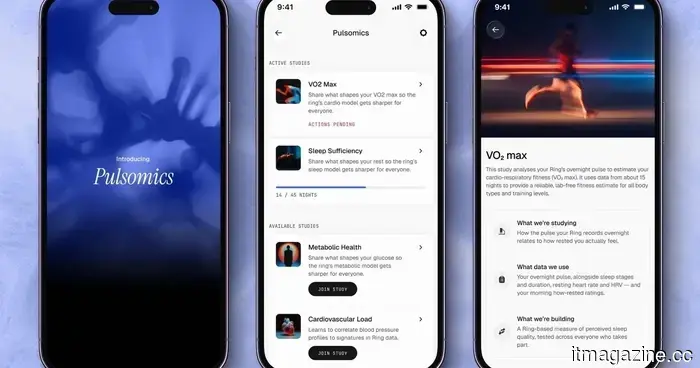
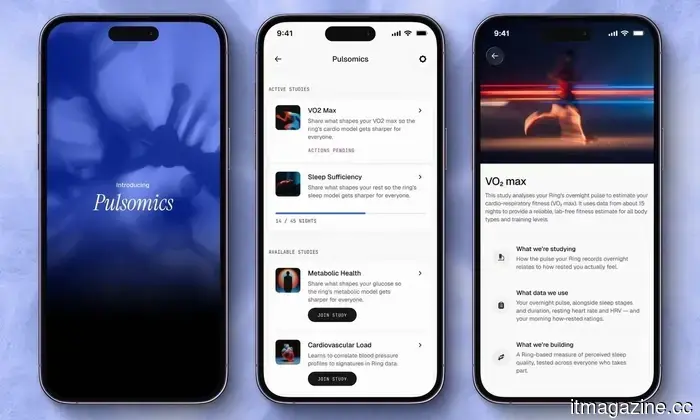
To address this issue, Ultrahuman has introduced Pulsomics, launching perfectly in time for IFA 2026. This program transforms the sleep data of Ring users into research findings at a scale that can truly benefit all users.
So, what is Pulsomics exactly?
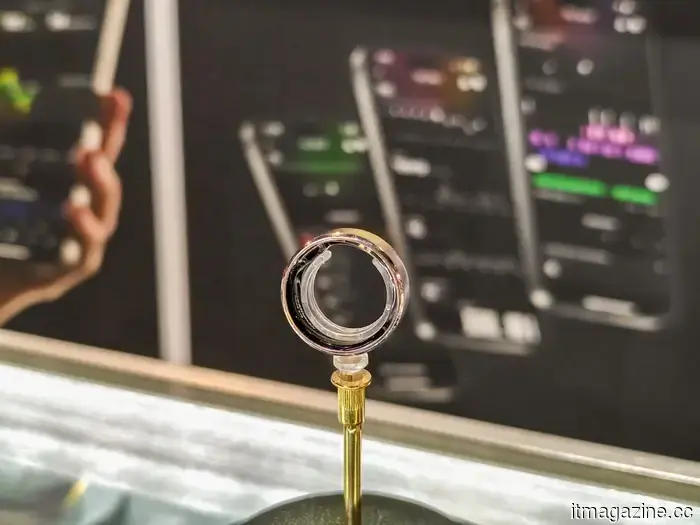
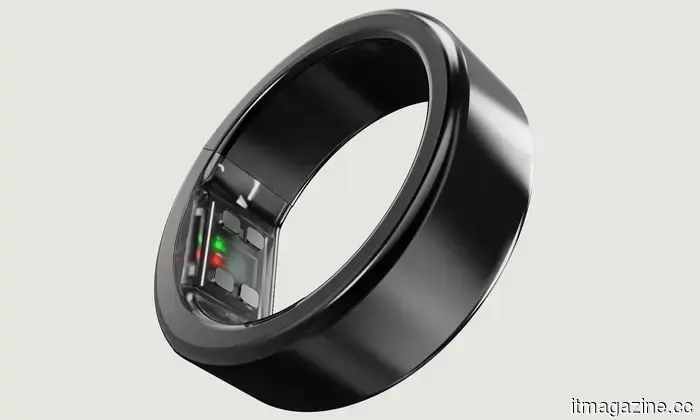
It is integrated directly into the Ultrahuman app and allows Ring users to participate in research by sharing their sleep analytics. The Ultrahuman Ring discreetly records your overnight pulse wave signal and correlates that information with your daily lifestyle habits and other biomarker readings it collects.
The aggregated data is then utilized to enhance health models, focusing on realistic and everyday data rather than lab-derived figures. This difference is significant. The accuracy of wearables is influenced by numerous factors, such as skin tone, body composition, and how well the device fits on the finger.
Given that most algorithms are developed based on a relatively small and closely monitored demographic, they often fail to capture the actual diversity in those factors, especially when dealing with tens of thousands of users. This is precisely what Pulsomics aims to address by broadening the participant pool.
Ultrahuman is launching three live studies today as part of this initiative. The first study is the Sleep Sufficiency Study, which correlates nighttime metrics with pulse data to determine how much sleep a specific individual needs, rather than the average.
The second study, Glucose Metabolism, combines pulse readings with recent blood tests to gain insights into metabolic health. Finally, the VO2 Max Study examines a person's pulse signal alongside fitness and laboratory benchmarks to estimate cardiovascular health.
As previously stated, joining the Pulsomics program is optional. To participate, you only need to enroll in a study, complete a few onboarding questions about your baseline health, and wear the Ring as you usually would.
All other processes, including the advanced metrics and data cross-referencing, occur unobtrusively in the background without any active monitoring required. Participation is both free and reversible. Ultrahuman promises that your data will be de-identified before use and will never be shared with third parties for targeted advertising.
Ultrahuman has recently also unveiled its most significant platform update, named Emerald, for those interested in exploring it.
For more than five years, Shikhar has been effectively simplifying advancements in consumer tech and delivering them in a clear manner.
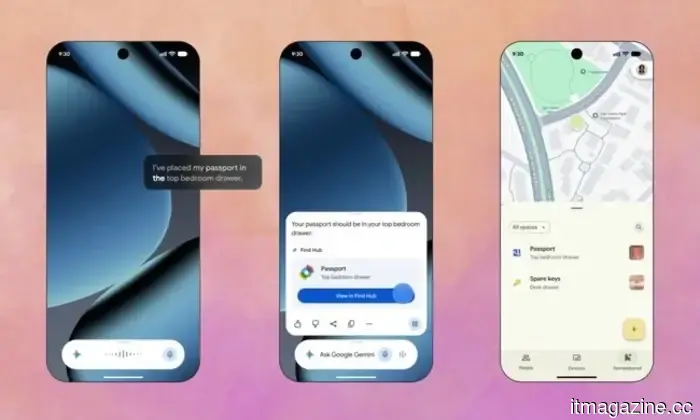
Gemini can now help you remember where you keep your items
Google has added a memory feature to Gemini so that it can remember where you store your belongings.
If you often forget where you've placed important documents, Gemini's latest update might be beneficial. Google will soon introduce a new feature for Gemini that recalls item locations based on your descriptions. This update is part of four other Android enhancements coming this month as part of the September Android Drop.
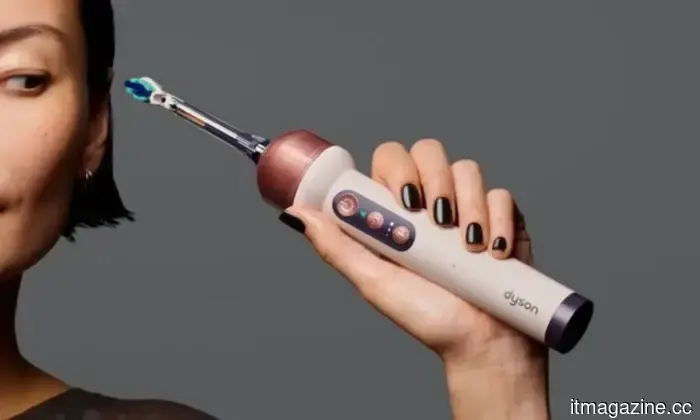
Dyson’s first toothbrush is priced like a budget smartphone and justifies its cost with advanced features
It includes a camera, AI functionality, and a companion app that can be installed on your smartphone.
I never thought I'd write this, but there's a toothbrush priced like a mid-range Android smartphone, equipped with Wi-Fi and a built-in camera. Dyson has recently launched the CameraJet, a toothbrush featuring an actual camera and an AI detection system designed specifically to locate and eliminate plaque between your teeth that regular brushes might overlook.
Why the Next Generation of Home AI is Mobile and Expressive
OlloBot shifts technology from the countertop to everyday life with a new expressive companion.
For the last decade, interactions with home AI have followed a predictable sequence. A user says a wake word, requests the weather or asks to turn off lights, a response is given, and the interaction ends there. While functional, this keeps smart devices purely transactional, serving only as tools for specific tasks rather than seamlessly integrating into daily living. OlloBot is taking a markedly different approach with the OlloNi SS1, an AI companion embodied within a physical, mobile form rather than confined to a screen.



Other articles
 Mozilla introduces a native ad blocker for Firefox on iOS, developed using Apple’s WebKit API.
Mozilla released an integrated ad blocker for Firefox on iOS utilizing Apple's WebKit API. Two and a half years following the DMA, no competing engine has been launched.
Mozilla introduces a native ad blocker for Firefox on iOS, developed using Apple’s WebKit API.
Mozilla released an integrated ad blocker for Firefox on iOS utilizing Apple's WebKit API. Two and a half years following the DMA, no competing engine has been launched.
 These 6 smart home deals for Labor Day address genuine issues.
Six smart home offers for Labor Day from Amazon and Best Buy that can genuinely enhance the functionality of your home.
These 6 smart home deals for Labor Day address genuine issues.
Six smart home offers for Labor Day from Amazon and Best Buy that can genuinely enhance the functionality of your home.
 The Sonos Beam Ultra demonstrates that a large soundbar isn't necessary for experiencing Dolby Atmos.
The Sonos Beam Ultra delivers authentic 7.1.2 Dolby Atmos sound in a sleek soundbar, featuring enhanced dialogue clarity and better bass performance.
The Sonos Beam Ultra demonstrates that a large soundbar isn't necessary for experiencing Dolby Atmos.
The Sonos Beam Ultra delivers authentic 7.1.2 Dolby Atmos sound in a sleek soundbar, featuring enhanced dialogue clarity and better bass performance.
 Nvidia’s DLSS 5 will launch alongside NBA 2K27 on September 3, and it appears to be much more realistic.
Following its contentious introduction, Nvidia's neural rendering technology is now being made available to gamers, featuring detailed artist controls, significantly reduced hardware demands, and NBA 2K27 as its initial practical application.
Nvidia’s DLSS 5 will launch alongside NBA 2K27 on September 3, and it appears to be much more realistic.
Following its contentious introduction, Nvidia's neural rendering technology is now being made available to gamers, featuring detailed artist controls, significantly reduced hardware demands, and NBA 2K27 as its initial practical application.
 John Deere introduces JD, an AI assistant designed to respond to inquiries using data specific to the farm.
John Deere introduced an AI assistant that comes with ten voluntary data principles. In the European Union, the Data Act has made the majority of these principles mandatory, imposing a new obligation starting on 12 September.
John Deere introduces JD, an AI assistant designed to respond to inquiries using data specific to the farm.
John Deere introduced an AI assistant that comes with ten voluntary data principles. In the European Union, the Data Act has made the majority of these principles mandatory, imposing a new obligation starting on 12 September.
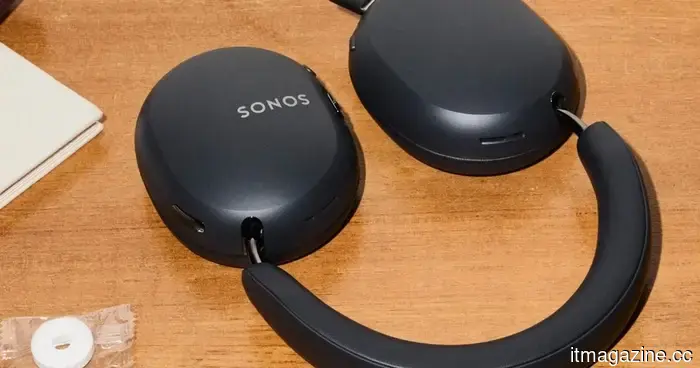 The Sonos Ace Ultra includes a feature that I wish all headphones had.
The Sonos Ace Ultra features improved noise cancellation, extended battery life, and an innovative method for transferring audio between your headphones and Sonos speakers without the need to use your phone.
The Sonos Ace Ultra includes a feature that I wish all headphones had.
The Sonos Ace Ultra features improved noise cancellation, extended battery life, and an innovative method for transferring audio between your headphones and Sonos speakers without the need to use your phone.
Ultrahuman seeks your sleep data to enhance its Ring's ability to customize health insights.
Ultrahuman's newly launched Pulsomics program enables Ring owners to participate in genuine scientific research simply by sleeping, initially focusing on three studies related to sleep, glucose, and fitness.