
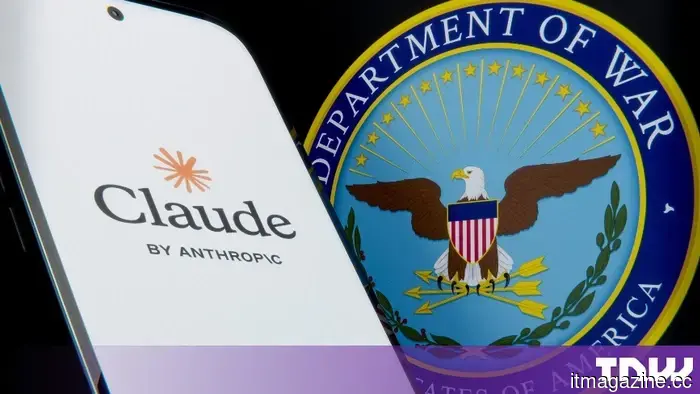
A US judge has deemed the Pentagon's blacklist of Anthropic as unlawful retaliation.
A federal judge has overturned the Pentagon's classification of Anthropic as a national security supply-chain threat, determining that the designation served as punishment for the company's public criticism of the Trump administration rather than as a true security evaluation. US District Judge Rita Lin, of California's Northern District, issued this ruling on Thursday in a comprehensive 59-page order.
Lin stated that “the superficial invocation of national security is not an carte blanche for punishing and retaliating against critics of the government,” as reported by Jack Queen for Reuters.
The ruling identified infringements of the First Amendment as well as the Fifth Amendment's due process clause, mandating that the government rescind its directives targeting the company, according to Quartz.
The controversy began on February 27, when then-President Donald Trump directed federal agencies to cease using Anthropic’s technology, and Defense Secretary Pete Hegseth labeled the company a supply-chain risk that same day. The trigger for this action, as noted by Courthouse News, was Anthropic’s refusal to lift two contractual restrictions on its AI model, Claude: one against mass surveillance of Americans and another against fully autonomous weapons.
Anthropic filed a lawsuit in March, claiming that the designation was unlawful retaliation, and Lin granted a preliminary injunction later that month based on First Amendment considerations. At that time, the Pentagon’s chief technology officer informed Breaking Defense that the ban would remain in effect regardless, and the situation has largely stagnated since then.
The order released on Thursday addresses cross-motions for summary judgment that were presented on July 30, at which point Lin had expressed doubts regarding the government's justification. “I don’t see additional evidence from the government really justifying what it did,” she remarked at that hearing, according to Axios. “If anything, it seems like the record, in some ways, has gotten worse for the government.”
In her written decision, she emphasized that the actions taken against Anthropic appeared to be motivated by a desire to set an example due to its “arrogance” and determined that the Pentagon could not impose severe penalties based solely on the company's critiques of administration policies.
Lin also pointed out the incongruity of the military continuing to seek collaboration with Anthropic while labeling it a security risk, a trend observable in other interactions the administration has had with the company.
The Justice Department contended that the designation stemmed from a contractual disagreement rather than from Anthropic's opinions, asserting that the company's usage limitations caused operational uncertainty for the military. The government has indicated its intention to appeal.
An Anthropic representative stated that the company remains “focused on working productively with the government to harness AI for our national security,” as conveyed in a statement to Axios.
A second legal challenge continues, as Anthropic is contesting a designation affecting civilian government contracts in Washington, DC, where the appeals court declined to grant emergency relief in April, reaching a different conclusion from Lin’s regarding similar conduct.
For European purchasers observing how far a government might go in penalizing a model provider over its safety terms, this divergence is particularly noteworthy. Lin has not announced a date for upcoming proceedings, and the government has not disclosed when it will submit its appeal.
Other articles
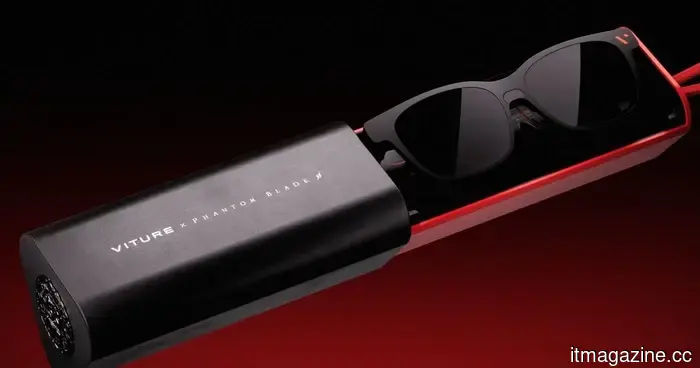 VITURE's latest XR glasses seem like they are directly inspired by Phantom Blade Zero.
Phantom Blade Zero is not just limited to your television. Its kung-fu universe is also coming right at you.
VITURE's latest XR glasses seem like they are directly inspired by Phantom Blade Zero.
Phantom Blade Zero is not just limited to your television. Its kung-fu universe is also coming right at you.
 The Galaxy S26 FE has been officially announced, and Samsung continues to play it safe.
Samsung has introduced the Galaxy S26 FE featuring an Exynos 2500 processor, a 4,900mAh battery, well-known camera specifications, and One UI 9.
The Galaxy S26 FE has been officially announced, and Samsung continues to play it safe.
Samsung has introduced the Galaxy S26 FE featuring an Exynos 2500 processor, a 4,900mAh battery, well-known camera specifications, and One UI 9.
 Plaud One AI earbuds have the ability to recall conversations and assist in completing tasks afterward.
The Plaud One Explorer Edition merges AI earbuds, 4G connectivity, and the Plaud Agent to record conversations, grasp context, and generate follow-ups within work applications.
Plaud One AI earbuds have the ability to recall conversations and assist in completing tasks afterward.
The Plaud One Explorer Edition merges AI earbuds, 4G connectivity, and the Plaud Agent to record conversations, grasp context, and generate follow-ups within work applications.
 AI agents are being equipped with wallets: the Web3 framework supporting the machine economy.
Varun Datta, CEO of Truth Ventures and Web3 venture capitalist, examines how AI agents, digital wallets, and micropayments generate fresh investment prospects.
AI agents are being equipped with wallets: the Web3 framework supporting the machine economy.
Varun Datta, CEO of Truth Ventures and Web3 venture capitalist, examines how AI agents, digital wallets, and micropayments generate fresh investment prospects.
 BYD recharged a vehicle 350 times over the span of nine days.
BYD reports that a Yangwang U7 retained 98.7% of its battery capacity following 350 ultra-fast charges within a span of nine days. The Euro 7 regulation will begin requiring 80% retention after five years starting in November.
BYD recharged a vehicle 350 times over the span of nine days.
BYD reports that a Yangwang U7 retained 98.7% of its battery capacity following 350 ultra-fast charges within a span of nine days. The Euro 7 regulation will begin requiring 80% retention after five years starting in November.
 The Galaxy S26 FE has been officially announced, and Samsung isn't significantly changing its approach.
Samsung has introduced the Galaxy S26 FE, featuring an Exynos 2500 processor, a 4,900mAh battery, well-known camera systems, and One UI 9.
The Galaxy S26 FE has been officially announced, and Samsung isn't significantly changing its approach.
Samsung has introduced the Galaxy S26 FE, featuring an Exynos 2500 processor, a 4,900mAh battery, well-known camera systems, and One UI 9.
A US judge has deemed the Pentagon's blacklist of Anthropic as unlawful retaliation.
Judge Rita Lin nullified the Pentagon's designation of supply-chain risk for Anthropic, stating it was a response to criticism. The government intends to appeal this decision.