

Dr. Dre states that only those who find it difficult to be creative are fearful of AI.
Dr. Dre has stated that he is incorporating AI in the studio and does not perceive it as a threat. He made this remark in a recent interview with the New York Times, published on Sunday, where his longtime business partner, Jimmy Iovine, was also present. Iovine further commented, "The only individuals who view it as a threat are those who struggle with creativity."
Dre drew a parallel to musicians' views on emerging technology. "I spoke with a few people a few days ago," he mentioned. "They were opposed to AI, and I said, you sound like someone who would have been against the drum machine upon its release. Or synthesizers, right?" He referred to AI as "a new tool for creativity," adding, "Some people are fearful of learning new things." He expressed enthusiasm about the potential of AI, stating, "I’m embracing it. I can’t wait to see what’s going to happen with this."
Regarding how he utilizes AI, Dre described it as a means to explore what it could do with his recent creations. However, he did not elaborate further. As noted by Tom Bedford from TechRadar, this opens a broad spectrum of possibilities, from creating entire tracks to isolating stems or organizing files. When questioned about his recent interaction with a chatbot, Dre mentioned his inquiry about gaining muscle while losing fat.
Iovine, on the other hand, supports AI in music creation without reservations. "I’m very pro-A.I. in music creation. I don’t see any disadvantages," he remarked. He acknowledged that there might be subpar music, just as there is currently. He suggested that talented musicians could produce better records with access to these tools, as summarized by Digital Trends, and commented on the poor communication skills of AI companies. Digital Trends highlighted the contrast between mass-producing trivial songs and skilled producers integrating software as part of a comprehensive process.
Iovine acknowledged another producer using AI, stating, "Timbaland is also utilizing it; he’s another brilliant producer." He added that many producers are experimenting with AI without revealing it. Timbaland, however, has been open about his use of AI in music, along with other artists like David Guetta and Grimes.
Dr. Dre, whose real name is Andre Romell Young, is 61 and emerged from N.W.A before establishing the Aftermath label. He co-founded Beats with Iovine and serves as its CEO under Apple, which acquired Beats in 2014 for over $3 billion. In 2023, Dre sold a collection of music revenue streams and assets to Shamrock Holdings and Universal Music Group for upwards of $200 million. He was included in the Forbes billionaires list for the first time this year with an estimated net worth of $1 billion.
Apple Music announced it will begin labeling songs generated by AI platforms later this year, while Dre manages Beats for the same corporation. Spotify has been proactive, tagging artists believed to be AI-generated as AI Personas, although it has generally progressed more slowly compared to its competitors, as noted by TechRadar. A coalition that includes the RIAA, IFPI, the Grammys, and SAG-AFTRA initiated efforts last month for an industry-wide labeling system akin to the parental advisory sticker.
Deezer reported that AI accounts for over half of the music it receives, most of which it considers fraudulent. The platform has since released a remix tool that does not utilize AI and a free detector to analyze listeners’ Spotify and Apple Music playlists for low-quality music. Tidal has stated it will withhold royalties from fully AI-generated tracks and label what it identifies. Qobuz mentioned it is developing its own strategy, while Bandcamp has taken the most stringent stance, banning music that is entirely or largely AI-generated.
In legal matters, Round Hill Music filed a lawsuit against Suno and Anthropic this month, accusing them of using hundreds of its songs to train models without authorization. All three major record labels have taken action against Suno; it settled with Warner Music Group last year and later formed a licensing agreement with BMG, which is also suing Anthropic for what it claims is widespread infringement. A recent hack exposed Suno's reliance on millions of scraped songs, and the company was valued at $5.4 billion in June, more than doubling its valuation in a mere six months.
Importantly, these new regulations target tracks created entirely by AI, which means Dre's extensive back catalog remains unaffected. Classics like "California Love" and "Straight Outta Compton" will not receive any AI-related tags, as noted by TechRadar. Yet, the policies the platforms have established are still evolving, and every one of these measures is relatively recent.
This isn’t the first time a music legend has commented on AI; Mick Jagger expressed in July that while AI is acceptable for musicians, it should not replicate his sound. This stance reflects a broader consensus within the industry: acceptance of technology but a rejection
Altri articoli
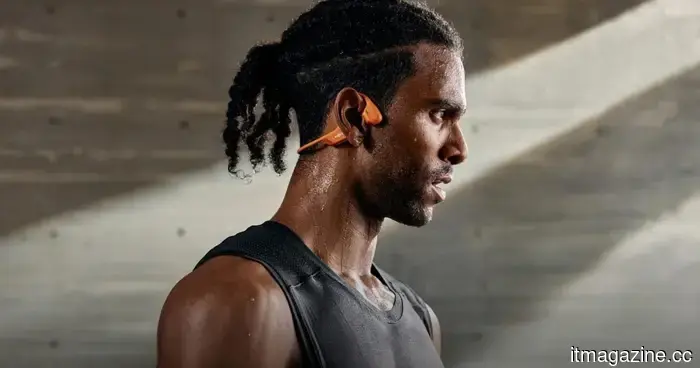 Shokz OpenRun Air 2 features USB-C charging, a 10-hour battery life, and an enhanced bone-conduction design.
The OpenRun Air 2 incorporates Shokz's renowned bone-conduction technology into a compact frame weighing just 26.4 grams, featuring enhanced PremiumPitch 3.0 audio, quicker charging capabilities, and durability against sweat and rain for all-day use.
Shokz OpenRun Air 2 features USB-C charging, a 10-hour battery life, and an enhanced bone-conduction design.
The OpenRun Air 2 incorporates Shokz's renowned bone-conduction technology into a compact frame weighing just 26.4 grams, featuring enhanced PremiumPitch 3.0 audio, quicker charging capabilities, and durability against sweat and rain for all-day use.
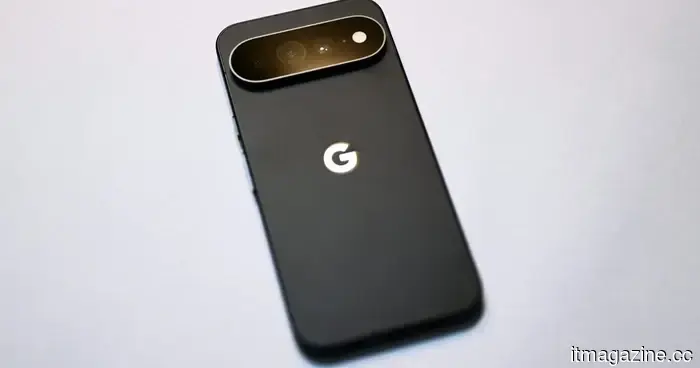 Your Pixel 11 Pro has just received its own AI tech support assistant.
A new Labs feature named Device help is transforming Gemini on the Pixel 11 Pro into a conversational tool for troubleshooting settings, battery, and storage issues.
Your Pixel 11 Pro has just received its own AI tech support assistant.
A new Labs feature named Device help is transforming Gemini on the Pixel 11 Pro into a conversational tool for troubleshooting settings, battery, and storage issues.
 The top limited series on Netflix that you can watch in one go.
This summary highlights 16 outstanding miniseries and limited series available on Netflix, showcasing a decade of prestigious television featuring nearly perfect ratings, critical praise, and some polarizing selections.
The top limited series on Netflix that you can watch in one go.
This summary highlights 16 outstanding miniseries and limited series available on Netflix, showcasing a decade of prestigious television featuring nearly perfect ratings, critical praise, and some polarizing selections.
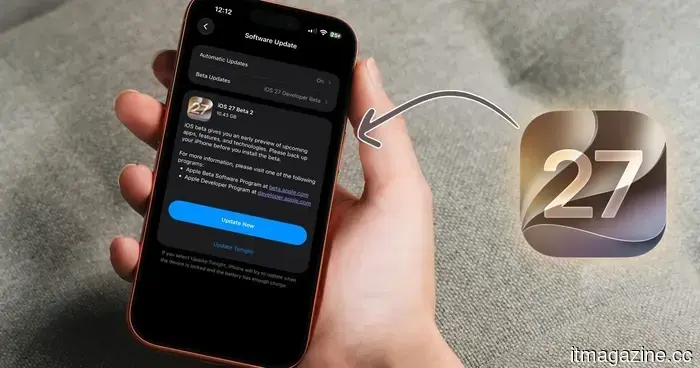 iOS 27 Beta 7 has been released, Beta 8 is on the way, and Apple’s autumn software is almost complete.
Today, iOS 27 beta 7 was released, along with updates for iPadOS, macOS, tvOS, watchOS, and visionOS, primarily aimed at addressing bugs at this stage of the development cycle.
iOS 27 Beta 7 has been released, Beta 8 is on the way, and Apple’s autumn software is almost complete.
Today, iOS 27 beta 7 was released, along with updates for iPadOS, macOS, tvOS, watchOS, and visionOS, primarily aimed at addressing bugs at this stage of the development cycle.
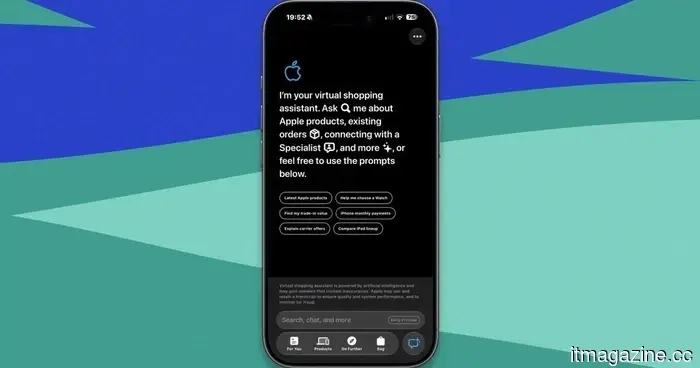 Apple's latest AI shopping assistant is capable of assisting you in selecting your next iPhone or Mac.
Apple's AI-driven virtual shopping assistant is subtly emerging in the Apple Store app for a limited number of iPhone users, enabling them to verify trade-in values, compare products, and receive assistance with purchases.
Apple's latest AI shopping assistant is capable of assisting you in selecting your next iPhone or Mac.
Apple's AI-driven virtual shopping assistant is subtly emerging in the Apple Store app for a limited number of iPhone users, enabling them to verify trade-in values, compare products, and receive assistance with purchases.
 Developers at Harvard have created an AI application designed to assist visually impaired individuals in navigating their surroundings.
An AI application developed by Harvard assisted visually impaired users in navigating an outdoor route more quickly while minimizing contact with obstacles during initial trials.
Developers at Harvard have created an AI application designed to assist visually impaired individuals in navigating their surroundings.
An AI application developed by Harvard assisted visually impaired users in navigating an outdoor route more quickly while minimizing contact with obstacles during initial trials.
Dr. Dre states that only those who find it difficult to be creative are fearful of AI.
In an interview with Jimmy Iovine for the New York Times, Dr. Dre stated that he utilizes AI in music production and does not consider it a threat.