
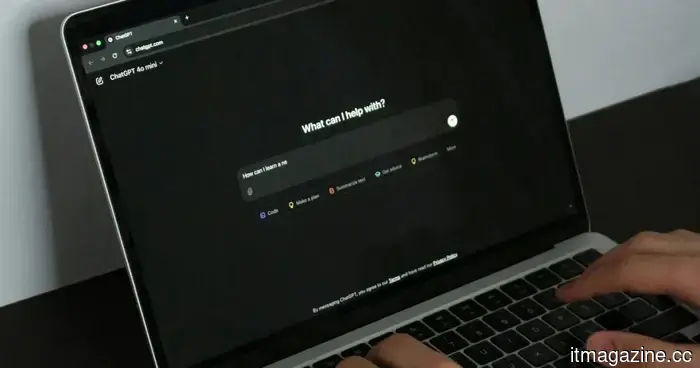
OpenAI aims to track AI misuse without requiring customers to submit their data.
OpenAI's new Private Safety Processing system adopts a distinct strategy compared to Anthropic, which maintains a 30-day retention policy for some of its advanced models.
OpenAI aims to improve the detection of misuse of its frontier AI models without requiring privacy-focused customers to forgo Zero Data Retention (ZDR). In an announcement made on August 19, OpenAI introduced Private Safety Processing, a system designed to identify suspicious behavior across various interactions while maintaining ZDR for eligible API users.
According to OpenAI, its current ZDR measures assess requests individually, making it difficult to recognize patterns across multiple interactions. Private Safety Processing is intended to address this issue without granting OpenAI employees access to the specific prompts or responses involved.
At this stage, the system is being piloted with selected early customers, targeting enterprise and API users rather than individual ChatGPT subscribers, as reported by Axios.
**How Private Safety Processing operates**
Rather than analyzing individual requests one at a time, the system can identify suspicious patterns through related interactions. Upon detecting potential misuse, OpenAI receives a limited signal concerning the activity instead of the customer’s original content.
In deployments utilizing Zero Data Retention, that content remains within infrastructure controlled by the customer. OpenAI is also developing another framework allowing encrypted content to reside on its infrastructure while customers retain ownership of the encryption keys, which OpenAI itself would not have access to.
**Why Anthropic took a different path**
Anthropic has opted for a different compromise. For its Covered Models, prompts and outputs are stored for 30 days, even for organizations that previously utilized Zero Data Retention. Anthropic asserts that this retention period aids its safeguards in identifying attacks that only become visible across multiple requests.
OpenAI strives to tackle the same safety issue while preserving ZDR for eligible clients. For organizations that adopted ZDR specifically to limit the duration that an AI provider can retain their content, these are substantially different approaches.
**What Zero Data Retention still misses**
Private Safety Processing is still in an early preview phase, and OpenAI has not yet publicly demonstrated its capability to provide abuse detection comparable to methods that retain customer data. The technical specifics regarding these privacy measures are also not publicly available.
There is one clear exception: OpenAI states that images flagged as potential child sexual abuse material may still be kept for legally mandated manual review and reporting, even under Zero Data Retention.
OpenAI plans to start deploying Private Safety Processing and publish a technical white paper in September, which should provide customers with a clearer understanding of whether cross-session safety monitoring can be effective without compromising the existing ZDR protections they depend on.





Other articles
 Alibaba's profits declined by 75% as its quarterly expenditures on AI reached $10 billion.
Alibaba's expenditure on AI reached $9.98 billion in the June quarter, while profits decreased by 75%. Meanwhile, the cloud division, which incurs costs, achieved a segment profit increase of 133%.
Alibaba's profits declined by 75% as its quarterly expenditures on AI reached $10 billion.
Alibaba's expenditure on AI reached $9.98 billion in the June quarter, while profits decreased by 75%. Meanwhile, the cloud division, which incurs costs, achieved a segment profit increase of 133%.
 Android 17 prefers to slow down a single problematic app instead of affecting the performance of your entire phone.
Android 17 implements tougher memory limits for individual apps, which can either slow down or shut down apps that are using excessive memory. This provides Google with a fresh method to safeguard overall phone performance before a single memory-intensive app leads to broader issues.
Android 17 prefers to slow down a single problematic app instead of affecting the performance of your entire phone.
Android 17 implements tougher memory limits for individual apps, which can either slow down or shut down apps that are using excessive memory. This provides Google with a fresh method to safeguard overall phone performance before a single memory-intensive app leads to broader issues.
 Munich Re is acquiring the cyber-insurance company At-Bay for $575 million, which is half of its value from 2021.
Munich Re has reached an agreement to acquire the cyber-insurance startup At-Bay for $575 million, which is less than 50% of its 2021 valuation of $1.35 billion, marking a shift for the insurtech sector.
Munich Re is acquiring the cyber-insurance company At-Bay for $575 million, which is half of its value from 2021.
Munich Re has reached an agreement to acquire the cyber-insurance startup At-Bay for $575 million, which is less than 50% of its 2021 valuation of $1.35 billion, marking a shift for the insurtech sector.
 Baidu's Apollo Go has launched on Uber in Dubai, and operates without a safety driver.
Uber introduced Baidu's Apollo Go in Dubai without a safety driver, just one day following the launch of its first European autonomous vehicle rides in Zagreb, where a safety driver was present.
Baidu's Apollo Go has launched on Uber in Dubai, and operates without a safety driver.
Uber introduced Baidu's Apollo Go in Dubai without a safety driver, just one day following the launch of its first European autonomous vehicle rides in Zagreb, where a safety driver was present.
 Two senators have set a deadline of September 1 for TikTok to clarify its safety evaluations.
Two senators set a deadline of 1 September for TikTok to respond to 13 inquiries regarding the safety experiment conducted on 15 million users in the US.
Two senators have set a deadline of September 1 for TikTok to clarify its safety evaluations.
Two senators set a deadline of 1 September for TikTok to respond to 13 inquiries regarding the safety experiment conducted on 15 million users in the US.
 Android 17 prefers to throttle one problematic app instead of affecting the performance of your whole phone.
Android 17 implements stricter memory limits for individual apps, which can slow down or stop apps that consume excessive resources. This gives Google a new method to safeguard the overall performance of the phone, preventing a single memory-intensive app from causing broader issues.
Android 17 prefers to throttle one problematic app instead of affecting the performance of your whole phone.
Android 17 implements stricter memory limits for individual apps, which can slow down or stop apps that consume excessive resources. This gives Google a new method to safeguard the overall performance of the phone, preventing a single memory-intensive app from causing broader issues.
OpenAI aims to track AI misuse without requiring customers to submit their data.
OpenAI's Private Safety Processing aims to identify abuse across various interactions while maintaining Zero Data Retention, directly contrasting with Anthropic's 30-day data retention policy.