
SpaceX has finalized its $60 billion deal with Cursor, which had acquired a company just the day prior.
SpaceX has confirmed completion in a regulatory filing, with Bloomberg’s Carmen Arroyo and Natasha Mascarenhas reporting on the closure. The desk discussed the binding agreement back in June, when SpaceX filed an 8-K and anticipated completion in the third quarter, pending regulatory approval. That approval has now been granted, adhering to the timeline outlined in the filing.
Cursor released its own note on the same day, comprising two paragraphs of strategy and one key sentence: “We will have access to the largest fleet of GPUs in the world, giving us the compute to build stronger models that are also more economical to run.” The implication is commercial, with the expectation of more efficient models at a lower cost for customers. Cursor also suggests that the timeline for this process predates official filings, as the acquisition finalizes a partnership initiated in April with SpaceXAI aimed at enhancing model training. Cursor highlighted Grok 4.6, released Wednesday, as an initial example of their collaborative efforts.
Notably, the announcement lacked specific figures, changes in leadership, or product commitments beyond that model. On August 13, one day before the deal finalized, Cursor disclosed that Firetiger had joined the company. Additionally, in December 2025, it acquired Graphite. A company being acquired for $60 billion was still making acquisitions at the time of closing, which is unusual and indicates the expectations from both parties regarding the arrangement. Cursor retains its name, blog, and independent transactions under the legal entity Anysphere. Their vision for the future is intentionally limited, as SpaceX is responsible for the computing capacity, with Cursor aiming to be "one place where that intelligence becomes useful."
The interest for SpaceX lies in coding, with identifiable competitors. According to Bloomberg, the deal is part of Musk's strategy to compete with Anthropic and OpenAI. SpaceXAI required assistance, having previously experienced limited business adoption accompanied by job cuts and restructuring. Cursor enhances what SpaceXAI was missing; its assistant launched in 2023, became one of the fastest-growing startups, and is central to the vibe-coding era. They have already collaborated, with Grok 4.5 released in July as an Opus-class model aimed at industries like coding, legal, and finance, priced competitively against rivals. Grok Bot, introduced on August 11, functions like a team of agents managing assignments throughout the day.
An interesting element in the competitive landscape involves Anthropic, which is both a rival and a customer, having agreed in May to pay SpaceX nearly $45 billion for computing resources, equating to approximately $15 billion annually, as reported by Axios. Google has also established a similar arrangement with SpaceX for computing services. Hence, the same infrastructure supports both SpaceX’s models and those of its competitors. This highlights the evolving business model of SpaceX, where selling computing power funds the development of its own models.
Musk informed SpaceX staff this month that the company "must succeed on the software front" and provided a timeline. He mentioned that AI revenue is expected to surpass rocket earnings by September and significantly outperform other revenue streams in the fourth quarter. Aligning the $60 billion acquisition with this timeline clarifies the rationale: a rocket company is transitioning to a software business projected to become its largest source of revenue shortly. Investors reacted positively, with SpaceX shares rising around 3.6% to $136.20. This was the first opportunity for the company to experience a market response since its share price was relatively new when the Cursor acquisition was announced in June.
The four MIT co-founders have become billionaires with the completion of the deal, which is a noteworthy element that gains attention but is less significant in the broader context. More importantly, the transfer of team and technology is at stake; Cursor engineers now have access to SpaceX’s inventory of advanced AI chips. Cursor's ambition has shifted from simply completing code to developing AI teammates capable of performing real tasks. Whether the access to compute translates into reduced costs remains uncertain; Cursor believes it will, and it has a unique opportunity to test that directly. Ownership of the chips modifies the unit economics but does not inherently change the product; it’s crucial that the models remain valuable.
Cursor does not escape a challenging market. The value in AI coding has been transitioning from the model itself to the orchestration layer that manages it. Enterprises have been reported shifting towards open-source solutions that allocate tasks to more affordable models, with claims of cost reductions reaching 97%. This scenario underscores the advantage of owning GPUs; if the competition centers around cost per task, a company not renting compute holds a competitive edge. Conversely, there are concerns about justifying the $60 billion expenditure for a product layer, and the validity of either argument hinges on the same market shift, allowing only one to prevail.
Three factors could clarify the situation: first, September, when Musk predicted that AI revenue would surpass all other lines at SpaceX, a
Other articles
 SpaceX has finalized its $60 billion deal with Cursor, which made a purchase of a company just the day prior.
The acquisition of Cursor by SpaceX was finalized on 14 August. Cursor claims it now has access to the largest GPU fleet globally, along with more affordable models.
SpaceX has finalized its $60 billion deal with Cursor, which made a purchase of a company just the day prior.
The acquisition of Cursor by SpaceX was finalized on 14 August. Cursor claims it now has access to the largest GPU fleet globally, along with more affordable models.
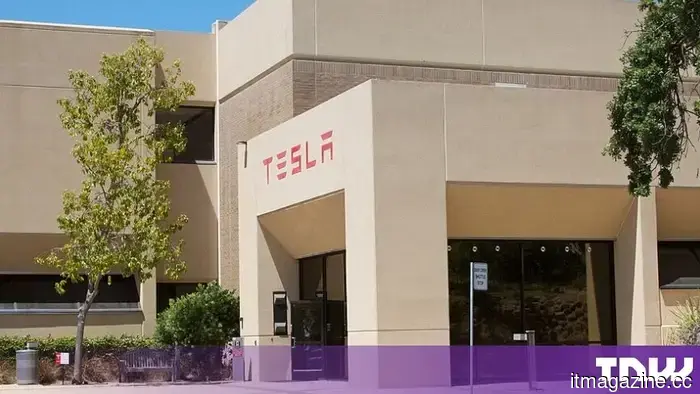 Tesla resolved Sweden's longest strike by purchasing out all remaining strikers.
The strike at Tesla Sweden concludes after 1,021 days. IF Metall reports that Tesla has bought out approximately 80 members who were on strike, resulting in no remaining individuals to continue the protest.
Tesla resolved Sweden's longest strike by purchasing out all remaining strikers.
The strike at Tesla Sweden concludes after 1,021 days. IF Metall reports that Tesla has bought out approximately 80 members who were on strike, resulting in no remaining individuals to continue the protest.
 Reddit is entering the S&P 500 while its stock has dropped 31% this year.
On 18 August, Reddit will be included in the S&P 500, taking the place of AvalonBay. The stock saw an 11% surge, yet it remains down 31% year-to-date.
Reddit is entering the S&P 500 while its stock has dropped 31% this year.
On 18 August, Reddit will be included in the S&P 500, taking the place of AvalonBay. The stock saw an 11% surge, yet it remains down 31% year-to-date.
 SpaceX has finalized its $60 billion deal with Cursor, which had acquired a company the day prior.
The acquisition of Cursor by SpaceX was finalized on 14 August. Cursor claims it now has access to the world's largest fleet of GPUs, including more affordable models.
SpaceX has finalized its $60 billion deal with Cursor, which had acquired a company the day prior.
The acquisition of Cursor by SpaceX was finalized on 14 August. Cursor claims it now has access to the world's largest fleet of GPUs, including more affordable models.
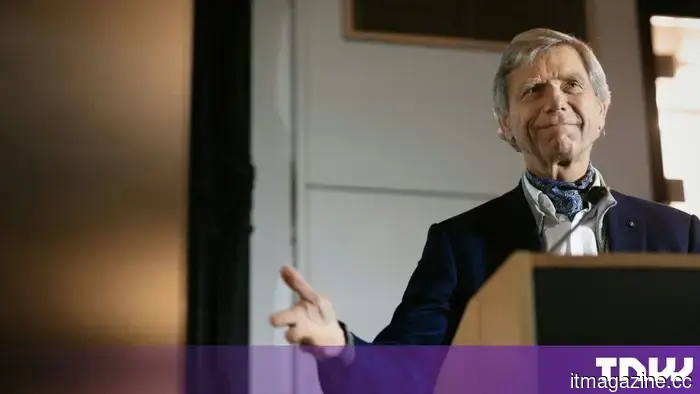 The co-founder of Arm states that AI will generate more value than any previous revolution and predicts it will be a thrilling ride.
Hermann Hauser, co-founder of Arm, believes that AI will generate greater value than any previous revolution, though he cautions that certain valuations have become overly inflated.
The co-founder of Arm states that AI will generate more value than any previous revolution and predicts it will be a thrilling ride.
Hermann Hauser, co-founder of Arm, believes that AI will generate greater value than any previous revolution, though he cautions that certain valuations have become overly inflated.
 Canva's investors reduced its valuation by $7.1 billion, while its internal appraiser made an even larger cut.
Blackbird and Airtree have reduced Canva's valuation to $34.9 billion, and the company's internal assessment has declined further following a revenue downgrade due to AI expenses.
Canva's investors reduced its valuation by $7.1 billion, while its internal appraiser made an even larger cut.
Blackbird and Airtree have reduced Canva's valuation to $34.9 billion, and the company's internal assessment has declined further following a revenue downgrade due to AI expenses.
SpaceX has finalized its $60 billion deal with Cursor, which had acquired a company just the day prior.
The acquisition of Cursor by SpaceX was finalized on 14 August. Cursor claims it now has access to the largest GPU fleet globally, along with more affordable models.