
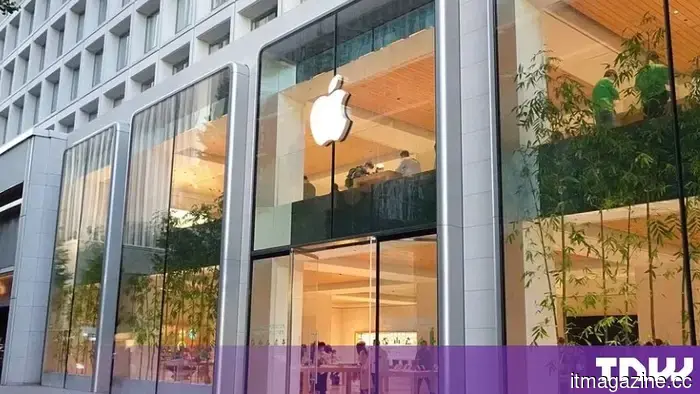
Apple developed its own AI model specifically for China and handed it over to Alibaba.
Apple has developed its own large language model specifically for the Chinese market with assistance from Alibaba, marking a notable departure from the company's typical reliance on external models. As reported by Reuters, Apple is the first foreign company that Beijing has permitted to provide a proprietary AI model in mainland China, a significant exception in a market that carefully controls its algorithms.
This model will power Apple Intelligence on products like the iPhone, iPad, Mac, and Vision Pro sold in China, and a rollout is anticipated in the coming months. This collaboration, which Alibaba chairman Joe Tsai publicly acknowledged in February 2025, has taken much of the subsequent time to navigate through China's regulatory processes.
For a company that values control over every aspect of its products, this partnership is intriguing. While Apple has developed the model, the core intelligence is not entirely its own. This situation arises as the company has also been quietly experimenting with Chinese memory chips amid a global component shortage and is now taking a similar chance with Chinese software.
The distribution of roles is noteworthy. Alibaba’s Qwen model is integrated into the Chinese version of Apple Intelligence, and Baidu’s technology manages the search functions. Essentially, the two primary features that users rely on—the assistant that responds to inquiries and the search capability—are driven by domestic Chinese technologies rather than by Apple itself in Cupertino.
This is surprising for a company renowned for creating its own chips, designing its own software, and minimizing external dependencies. The regulatory landscape offers insight into this compromise. China's AI regulations are stringent, and its censorship rules are even stricter, necessitating that all generative models available to the public be registered with the government.
The Cyberspace Administration of China registered Apple’s service in July 2026, approximately 22 months after Apple Intelligence was initially launched elsewhere, indicating the cautious approach Beijing takes toward foreign technology.
There is also a competitive aspect to consider. Domestic competitors have not remained idle, as Huawei’s AI-enabled phones have gained market share during the time Apple’s assistant was mired in regulatory challenges. By creating a model tailored to local regulations and partners, Apple aims to regain some lost ground.
The sensitivity surrounding this situation is evident. Apple temporarily published, then swiftly removed, a Chinese-language guide detailing how to connect Qwen to Siri and its Writing Tools, revealing the delicate nature of this launch.
Following the July approval, Alibaba's US-listed shares increased by about 4%, with the stock serving as an indicator that Qwen’s integration into Apple Intelligence holds substantial value.
The deal also falls within a larger debate about the extent to which Western companies should engage with Chinese AI. Even Mark Zuckerberg has suggested that the US shouldn't prohibit Chinese AI models, though many in Washington oppose this view, seeing any link to Chinese models as a security concern to mitigate rather than an opportunity to pursue.
Apple is acutely aware of this landscape. American lawmakers have cautioned the company against using Chinese memory chips on national security grounds, and a domestically developed Chinese AI model, no matter how cleverly positioned, is unlikely to avoid similar scrutiny.
For the moment, the narrative revolves less around a single model and more around a framework. Apple, which tightly controls its ecosystem, has delegated the core functionality of its AI for China to Alibaba and Baidu while constructing the remainder to align with Beijing's guidelines. This represents a concession presented as a strategy, clearly illustrating the conditions under which Western technology can operate within China's restricted environment. Whether competing firms interpret this as a cautionary tale or a blueprint may be the more intriguing question.
Otros artículos
 Microsoft объединяет свои приложения Copilot перед запланированным дебютом «суперприложения»
Приложения Microsoft Copilot объединяются в единый опыт, при этом подкасты, глубокие исследования и групповой чат будут выведены из эксплуатации.
Microsoft объединяет свои приложения Copilot перед запланированным дебютом «суперприложения»
Приложения Microsoft Copilot объединяются в единый опыт, при этом подкасты, глубокие исследования и групповой чат будут выведены из эксплуатации.
 Goldman Sachs привлекает инвесторов к финансированию Nvidia в размере $500 миллиардов на вычисления в области ИИ.
Goldman Sachs привлекает инвесторов к финансированию Nvidia в размере 500 миллиардов долларов на вычисления в области ИИ после того, как занял ведущую роль, и хочет превратить чипы в торгуемый актив, похожий на облигации.
Goldman Sachs привлекает инвесторов к финансированию Nvidia в размере $500 миллиардов на вычисления в области ИИ.
Goldman Sachs привлекает инвесторов к финансированию Nvidia в размере 500 миллиардов долларов на вычисления в области ИИ после того, как занял ведущую роль, и хочет превратить чипы в торгуемый актив, похожий на облигации.
 Goldman Sachs привлекает инвесторов к финансированию Nvidia в размере 500 миллиардов долларов на вычисления в области ИИ.
Goldman Sachs привлекает инвесторов к финансированию Nvidia на сумму $500 миллиардов для ИИ-вычислений после того, как занял ведущую роль, и хочет превратить чипы в торгуемый актив, похожий на облигации.
Goldman Sachs привлекает инвесторов к финансированию Nvidia в размере 500 миллиардов долларов на вычисления в области ИИ.
Goldman Sachs привлекает инвесторов к финансированию Nvidia на сумму $500 миллиардов для ИИ-вычислений после того, как занял ведущую роль, и хочет превратить чипы в торгуемый актив, похожий на облигации.
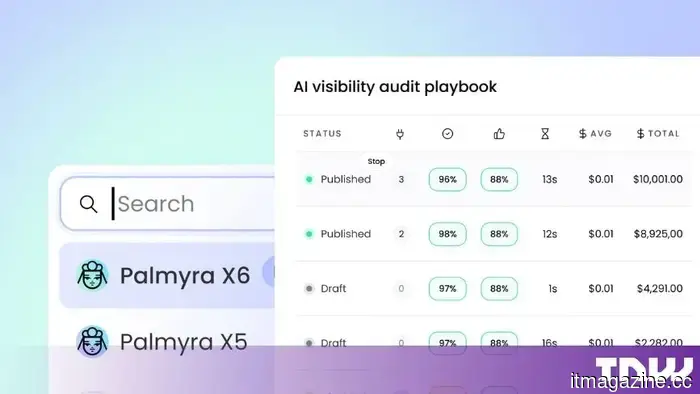 Писатель делает ставку на более дешевых ИИ-агентов с Palmyra X6 и более легким обвесом.
Компания Writer запустила Palmyra X6 и обновленный комплект, который, по ее словам, может сократить затраты на AI-агентов до 50%, делая ставку на то, что backlash по затратам для предприятий уже наступил.
Писатель делает ставку на более дешевых ИИ-агентов с Palmyra X6 и более легким обвесом.
Компания Writer запустила Palmyra X6 и обновленный комплект, который, по ее словам, может сократить затраты на AI-агентов до 50%, делая ставку на то, что backlash по затратам для предприятий уже наступил.
 Goldman Sachs привлекает инвесторов к финансированию Nvidia в размере $500 млрд для вычислений на основе ИИ.
Goldman Sachs привлекает инвесторов к финансированию Nvidia на сумму 500 миллиардов долларов для ИИ-вычислений после того, как занял ведущую роль, и хочет превратить чипы в торгуемый актив, похожий на облигации.
Goldman Sachs привлекает инвесторов к финансированию Nvidia в размере $500 млрд для вычислений на основе ИИ.
Goldman Sachs привлекает инвесторов к финансированию Nvidia на сумму 500 миллиардов долларов для ИИ-вычислений после того, как занял ведущую роль, и хочет превратить чипы в торгуемый актив, похожий на облигации.
 Новый ультрабыстрый режим OpenAI работает на GPT-5.6 Sol в 14 раз быстрее на чипах Cerebras.
OpenAI представила Ultrafast, уровень API, который работает на GPT-5.6 Sol с максимальной скоростью до 14 раз на оборудовании Cerebras, делая ставку на то, что задержка, а не только интеллект, делает ИИ-агентов удобными для использования.
Новый ультрабыстрый режим OpenAI работает на GPT-5.6 Sol в 14 раз быстрее на чипах Cerebras.
OpenAI представила Ultrafast, уровень API, который работает на GPT-5.6 Sol с максимальной скоростью до 14 раз на оборудовании Cerebras, делая ставку на то, что задержка, а не только интеллект, делает ИИ-агентов удобными для использования.
Apple developed its own AI model specifically for China and handed it over to Alibaba.
Apple has developed a large language model specifically for China with assistance from Alibaba, making it the first foreign company authorized to provide a proprietary AI model in mainland China.