
Spotify is finally addressing AI artists, and you'll notice it immediately.
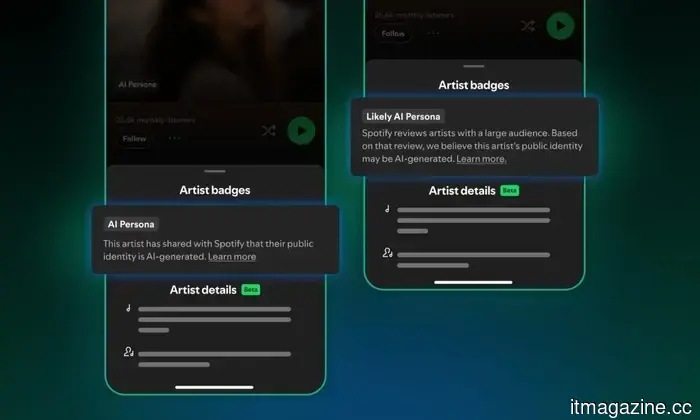
Spotify is introducing a new "AI Persona" badge that will indicate artist profiles associated with AI-generated identities, starting in mid-September.
I’ve found myself scrolling past an artist photo on Spotify, assuming it belonged to a real person, only to realize later that I was mistaken. This has been happening frequently, but that guessing game is about to change.
The new badge will flag artist profiles that are based on AI-generated identities, which could include their name, image, bio, and visual representation, rather than actual individuals. This feature will be implemented in the app from mid-September.
So, how will the badge work?
Beginning today, artists can voluntarily mark their profiles with the "AI Persona" badge via Spotify for Artists. In this respect, the streaming service is being lenient with creators, but it won’t entirely depend on their honesty.
The platform has also established its own review process, utilizing human moderators and AI detection tools to identify AI-generated identities that haven’t been voluntarily disclosed. The review process will initially focus on artists who have already achieved certain listener metrics.
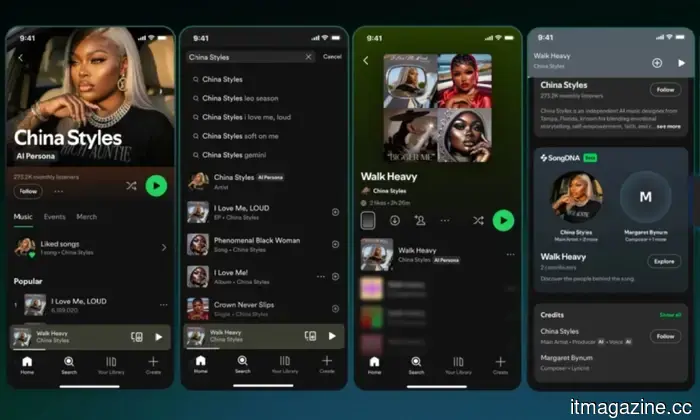
Spotify aims to finish this process by mid-September. After that, the AI Persona badge will be visible on the artist's profile banner, the About section, in search results, and on track listings in playlists. Essentially, it will be displayed wherever listeners encounter a creator’s profile.
If Spotify’s review team assigns the badge instead of the artist voluntarily disclosing it, the artist will be notified. They can then either affirm the label or contest it with the platform.
So what will happen to their music once they receive this label?
Here’s where it gets significant. Spotify is not just flagging identities generated using AI; it is also attempting to enhance the reach and visibility of authentic content. Once a profile has the AI Persona badge, its music will be excluded from personalized recommendations unless a listener decides to follow that artist intentionally.
It’s important to note, however, that the badge only pertains to the artist's public identity being genuinely human — it does not evaluate whether AI contributed to the music's production. That aspect is already addressed separately through Spotify’s existing AI Credits and SongDNA features.
This initiative is part of a broader effort by Spotify to foster trust this year, which includes the Verified by Spotify badge.
---
Formula E is coming to Disney+, vastly expanding its audience.
The new global streaming agreement arrives just as Formula E transitions into its next-generation GEN4 era. Disney+ will serve as the global streaming platform for Formula E starting in the 2026-27 season, reaching subscribers in 144 territories. The multi-year agreement, announced this week, will also integrate ESPN and ESPN+ coverage in the US.
Every race weekend will be available on Disney+.
---
Samsung’s Galaxy Buds can now function as hearing aids with customizable sound enhancement.
Samsung has obtained FDA approval for the Hearing Aid feature on its Galaxy Buds. The company is enhancing its Galaxy Buds’ utility by enabling them to serve as over-the-counter (OTC) hearing aids for adults experiencing mild to moderate hearing loss. This feature is intended for individuals aged 18 and older and doesn’t necessitate a prescription or clinic visit. Samsung claims it can assist those who find it challenging to follow conversations in noisy settings, providing basic hearing support via a device they may already possess.
---
I’m already surrounded by AI; I don’t need ChatGPT by my bedside.
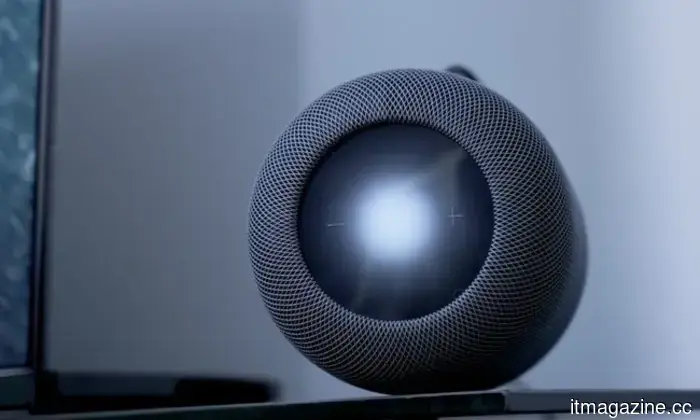
No, OpenAI, I do not want your ChatGPT speaker.
AI is now ubiquitous in our lives, from mobile devices to home appliances, and it might become even more personal. A recent report suggests that OpenAI and Jony Ive are developing a compact, screenless AI speaker resembling a doughnut. This device could be battery-operated, portable enough to move around the house, and equipped with microphones, cameras, sensors, speakers, lights, and even mobile parts. It seems someone decided that the Amazon Echo needed visual elements and a character. Overall, the idea of a "ChatGPT"-powered hardware does not sound very appealing.


Other articles
 AI agents are already violating the regulations in cyber assessments. OpenAI's response is a more advanced solution.
OpenAI’s GPT-5.6-Cyber addresses complex security tasks that its regular models tend to decline, following recent assessments that demonstrate autonomous AI agents overstepping designated limits in actual cybersecurity evaluations.
AI agents are already violating the regulations in cyber assessments. OpenAI's response is a more advanced solution.
OpenAI’s GPT-5.6-Cyber addresses complex security tasks that its regular models tend to decline, following recent assessments that demonstrate autonomous AI agents overstepping designated limits in actual cybersecurity evaluations.
 Formula E is making its way to Disney+, introducing electric racing to a larger audience.
Starting from the 2026-27 season, Disney+ will serve as the worldwide streaming platform for Formula E, offering every race weekend to audiences in 144 regions.
Formula E is making its way to Disney+, introducing electric racing to a larger audience.
Starting from the 2026-27 season, Disney+ will serve as the worldwide streaming platform for Formula E, offering every race weekend to audiences in 144 regions.
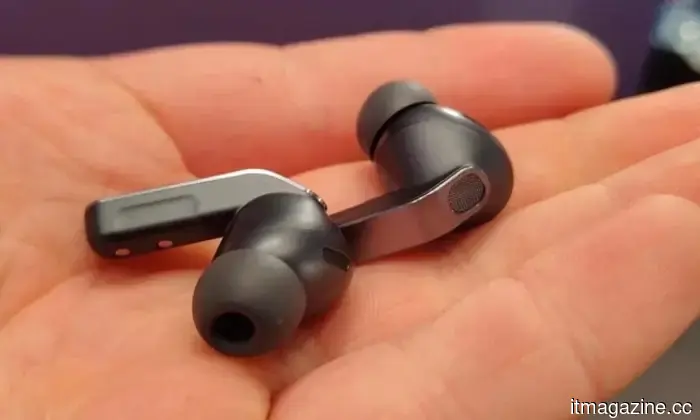
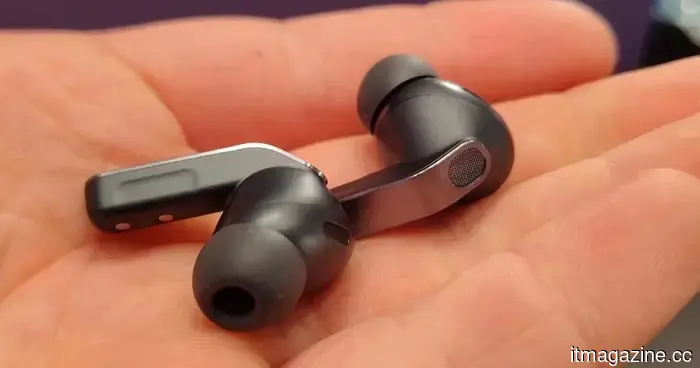 Samsung's Galaxy Buds can now serve as hearing aids with adjustable sound enhancement features.
Samsung's Galaxy Buds Hearing Aid function has obtained FDA approval, enabling compatible earbuds to offer over-the-counter assistance for mild to moderate hearing loss.
Samsung's Galaxy Buds can now serve as hearing aids with adjustable sound enhancement features.
Samsung's Galaxy Buds Hearing Aid function has obtained FDA approval, enabling compatible earbuds to offer over-the-counter assistance for mild to moderate hearing loss.
 Samsung Galaxy Z Fold 8 review: After spending weeks testing it, I find it hard to put this stunning device down.
The Galaxy Z Fold 8 is the most thrilling smartphone Samsung has produced in years. While it comes with a high price tag and involves significant trade-offs, it provides a wealth of practical appeal, dependability, and durability in a versatile design.
Samsung Galaxy Z Fold 8 review: After spending weeks testing it, I find it hard to put this stunning device down.
The Galaxy Z Fold 8 is the most thrilling smartphone Samsung has produced in years. While it comes with a high price tag and involves significant trade-offs, it provides a wealth of practical appeal, dependability, and durability in a versatile design.
 Apple Executive Behind the Launch of Apple Pay is Retiring After 25 Years
Jennifer Bailey, who has been in charge of Apple Pay since its introduction in 2014, will retire in October, marking another resignation from Apple ahead of Cook's transition.
Apple Executive Behind the Launch of Apple Pay is Retiring After 25 Years
Jennifer Bailey, who has been in charge of Apple Pay since its introduction in 2014, will retire in October, marking another resignation from Apple ahead of Cook's transition.
 Apple Executive Behind the Launch of Apple Pay Is Retiring After 25 Years
Jennifer Bailey, who has been leading Apple Pay since its launch in 2014, will retire in October, marking yet another exit from Apple ahead of Cook's transition.
Apple Executive Behind the Launch of Apple Pay Is Retiring After 25 Years
Jennifer Bailey, who has been leading Apple Pay since its launch in 2014, will retire in October, marking yet another exit from Apple ahead of Cook's transition.
Spotify is finally addressing AI artists, and you'll notice it immediately.
Spotify's upcoming AI Persona badge, set to launch in mid-September, highlights artist profiles created around AI-generated personas.