

Bumble is allowing men to take the initiative, breaking the foundational rule it was established on.
Bumble is preparing to allow men to initiate conversations, a change that reverses the core rule on which the app was founded. According to Bloomberg, an upcoming messaging update will enable men to start conversations in opposite-sex matches, although the specific details are still being clarified, and Bumble has not fully outlined them.
For those familiar with the app, the importance of this shift cannot be overstated. Since its inception, Bumble operated on a straightforward principle: in heterosexual matches, only women could send the first message. This inversion was less a product gimmick and more a minor effort towards gender balance. Now, however, the company is moving away from that foundation.
When Bumble first expanded beyond the United States, founder and CEO Whitney Wolfe Herd established its identity on the notion that women should dictate the terms of the conversation, a feminist perspective that set Bumble apart from numerous similar swipe apps. In 2024, the company introduced an “Opening Moves” feature allowing women to pre-write prompts for matches, but this new change goes significantly further.
The messaging change is part of a larger overhaul planned for 2026, which will affect nearly every aspect of the user experience. Bumble intends to eliminate swiping altogether in select markets during the fourth quarter and will instead focus on its “Bee” AI matchmaker, designed to better understand users' relationship desires. The redesign includes chapter-style profiles, an increased emphasis on real-life meetups, and a new cloud-native AI platform.
The rationale behind these changes is clear, as the company's financial situation is troubling. Paying users declined by 21.1% to 3.2 million in the first quarter of 2026, down from four million a year prior, while total revenue dropped 14.1% to $212.4 million. Revenue for the full year of 2025 also fell about 10% to $966 million, and the stock has lost over 90% of its value since the company's successful 2021 IPO.
Bumble attributes its issues to a broader sentiment it refers to as “dating app fatigue,” particularly prevalent among Gen Z, the demographic that every dating platform is striving to retain. Whether this fatigue is a temporary trend or a lasting shift in how young people connect remains uncertain, and Bumble is not alone in facing this challenge; competitors like Tinder and Hinge are also grappling with a similar decline in engagement.
Wolfe Herd, who has returned to her leadership role, has attempted to recast the user decline as a strategic choice rather than a setback. She described the shrinking user base as “a deliberate reset of our member base,” emphasizing quality over quantity, and assured investors that “it’s time for the next Bumble,” promising something “revolutionary for the category.”
Such a characterization of reversing the foundational idea is bold. The contradiction is clear, as Bumble has spent a decade promoting the app as a means for women to have control, only to now dismantle the mechanism that upheld that promise amid significant commercial pressure.
The optimistic viewpoint suggests that a rule that once felt empowering had begun to seem burdensome, an additional task in an already tiring ritual, and that quietly abolishing it may liberate women who never enjoyed being the one required to initiate contact. Bumble prefers to frame the transition as reducing friction instead of retreating from its principles.
However, the more pessimistic interpretation is difficult to ignore. With the removal of the women-first rule, the introduction of the AI matchmaker, and the elimination of swiping, one might question what truly differentiates Bumble from the multitude of competitors in a saturated and disenchanted market. This reversal could rejuvenate the app, or it might diminish the very feature that once made it unique.
Other articles
 Meta's smart glasses have been prohibited in courts throughout England and Wales.
HMCTS has prohibited Meta smart glasses in court buildings throughout England and Wales, seizing them upon entry, as organizations rush to establish guidelines for constantly active wearable cameras.
Meta's smart glasses have been prohibited in courts throughout England and Wales.
HMCTS has prohibited Meta smart glasses in court buildings throughout England and Wales, seizing them upon entry, as organizations rush to establish guidelines for constantly active wearable cameras.
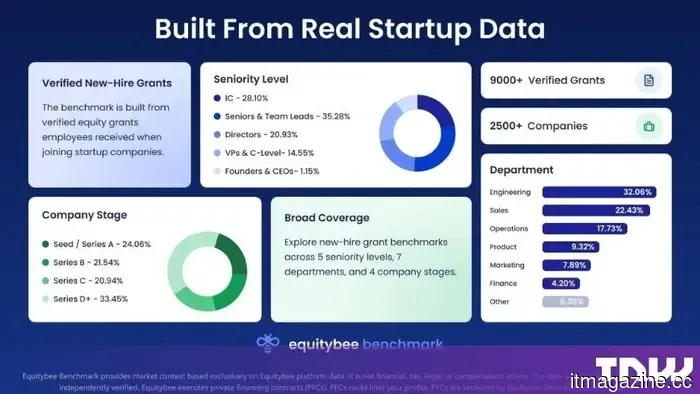 Equitybee introduces a complimentary benchmarking tool as startup employees gain access to equity data that companies have possessed for years.
Equitybee Benchmark allows employees of US startups to compare equity grants from over 9,000 verified options grants across more than 2,500 companies. While companies have had access to this data for years, it is now available to employees as well.
Equitybee introduces a complimentary benchmarking tool as startup employees gain access to equity data that companies have possessed for years.
Equitybee Benchmark allows employees of US startups to compare equity grants from over 9,000 verified options grants across more than 2,500 companies. While companies have had access to this data for years, it is now available to employees as well.
 Trump Media reports a quarterly loss of $238 million as its investment in bitcoin turns unfavorable.
Trump Media disclosed a second-quarter loss of $238.1 million, primarily due to cryptocurrency markdowns, with revenue amounting to only $1.67 million, as the parent company of Truth Social increasingly focuses on bitcoin.
Trump Media reports a quarterly loss of $238 million as its investment in bitcoin turns unfavorable.
Trump Media disclosed a second-quarter loss of $238.1 million, primarily due to cryptocurrency markdowns, with revenue amounting to only $1.67 million, as the parent company of Truth Social increasingly focuses on bitcoin.
 Valve continues to expand the reach of SteamOS, and more handheld devices are finally being included.
The latest beta of SteamOS from Valve introduces gamepad support for handhelds from MSI, Ayaneo, and Konkr, while also enhancing compatibility for various OneXPlayer and MSI devices.
Valve continues to expand the reach of SteamOS, and more handheld devices are finally being included.
The latest beta of SteamOS from Valve introduces gamepad support for handhelds from MSI, Ayaneo, and Konkr, while also enhancing compatibility for various OneXPlayer and MSI devices.
 Meta smart glasses prohibited in courts throughout England and Wales.
HMCTS has prohibited Meta smart glasses in court buildings throughout England and Wales, seizing them upon entry, as organizations attempt to establish regulations for continuously recording wearable cameras.
Meta smart glasses prohibited in courts throughout England and Wales.
HMCTS has prohibited Meta smart glasses in court buildings throughout England and Wales, seizing them upon entry, as organizations attempt to establish regulations for continuously recording wearable cameras.
 Trump Media reports a quarterly loss of $238 million as its investment in bitcoin declines.
Trump Media announced a second-quarter loss of $238.1 million, primarily due to cryptocurrency markdowns, with revenue totaling only $1.67 million, as the parent company of Truth Social increasingly focuses on bitcoin.
Trump Media reports a quarterly loss of $238 million as its investment in bitcoin declines.
Trump Media announced a second-quarter loss of $238.1 million, primarily due to cryptocurrency markdowns, with revenue totaling only $1.67 million, as the parent company of Truth Social increasingly focuses on bitcoin.
Bumble is allowing men to take the initiative, breaking the foundational rule it was established on.
Bumble will allow men to initiate conversations first, changing the women-first policy that characterized the app, as the number of paying users declines and the platform invests in an AI-driven redesign.