
Harvey is raising $15.5 billion, an increase of 40% over the past five months.
The legal-AI startup is in discussions to secure at least $500 million at a $15.5 billion valuation, including new funds, as reported by The Information. This represents a 40% increase from the $11 billion valuation set just five months ago when it raised $200 million. Lightspeed Venture Partners is interested in leading this round.
This latest fundraising follows a revenue boom. Founded four years ago, Harvey now generates over $350 million in annual revenue, an increase of more than 80% from $190 million in January. At a valuation of $15.5 billion, the company is valued at approximately 44 times its current revenue run rate, a figure that presumes ongoing growth.
Vertical AI is gaining traction at this time. Harvey exemplifies vertical AI, which involves software designed for specific professions rather than the general public. The expectation is that a tool focused on contracts, filings, and case law will outperform generic chatbots in legal tasks. Its performance indicates lawyers share this view, and competitors like Legora are pursuing the same market.
The momentum extends beyond funding. Recently, Harvey secured strategic investments from Goldman Sachs and JPMorgan, strengthened its partnership with Microsoft, and achieved firmwide implementations in major law firms. The goal is to become an essential infrastructure rather than just an add-on.
The optimistic outlook, and the associated risks. The timing is notable, as investors are withdrawing from public software amid what’s being termed the SaaSpocalypse, stemming from concerns that AI might undermine subscription-based companies. However, record investments continue to flow into private AI, with Harvey serving as a notable exception. Established legal entities are also feeling this shift, as evidenced by Thomson Reuters laying off engineers while restructuring around AI.
The real risk lies beneath the surface. Harvey relies on models from companies like OpenAI and Anthropic, which could eventually perform the tasks directly. App developers like Cursor have already experienced difficulties when a model provider revised their terms. A 44-times multiple leaves little cushion if that pressure intensifies.
For the moment, investors are showing confidence. A four-year-old startup is valued higher than most publicly traded software companies, bolstered by a product that lawyers weren't aware they needed just two years ago. Whether the $15.5 billion valuation turns out to be a steal or a peak is the gamble for its upcoming investors.
Other articles
 Malicious AI 'capabilities' transformed agents into credential theft operatives, on a large scale.
Zenity Labs discovered AI agent "skills" that were booby-trapped on Vercel's skills.sh, with one skill having 1.7 million installs, which convert agents into credential stealers.
Malicious AI 'capabilities' transformed agents into credential theft operatives, on a large scale.
Zenity Labs discovered AI agent "skills" that were booby-trapped on Vercel's skills.sh, with one skill having 1.7 million installs, which convert agents into credential stealers.
 Bill Ackman shares Jeff Bezos' view that the most effective way to contribute to the world is to create something that is functional.
Ackman claims that capitalism addresses issues more effectively than philanthropy. His new Brain Research Institute employs nonprofit funding to create for-profit enterprises.
Bill Ackman shares Jeff Bezos' view that the most effective way to contribute to the world is to create something that is functional.
Ackman claims that capitalism addresses issues more effectively than philanthropy. His new Brain Research Institute employs nonprofit funding to create for-profit enterprises.
 The group responsible for Paddington 2 had the opportunity to create a Star Wars droid film.
After the success of Paddington 2, Paul King and Simon Farnaby presented a concept for a Star Wars film focused on a droid. However, Lucasfilm desired a greater emphasis on Star Wars elements. This idea might evolve into a different project altogether.
The group responsible for Paddington 2 had the opportunity to create a Star Wars droid film.
After the success of Paddington 2, Paul King and Simon Farnaby presented a concept for a Star Wars film focused on a droid. However, Lucasfilm desired a greater emphasis on Star Wars elements. This idea might evolve into a different project altogether.
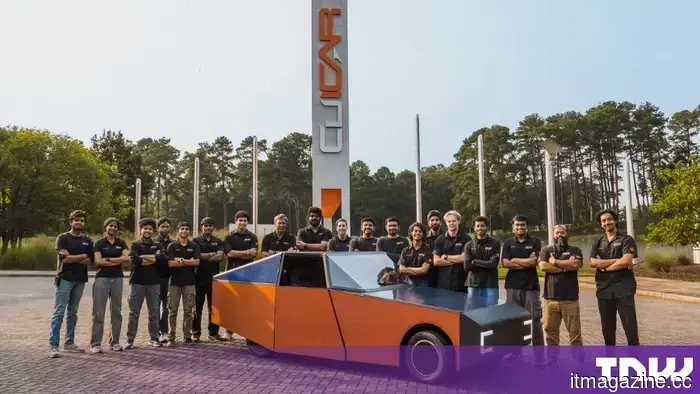 BMW tasked students with creating an electric vehicle that generates more energy than it consumes. They equipped it with 1,700 solar panels, and it is functioning successfully.
Students at Clemson created the Luminetta, a solar electric vehicle weighing 1,212 pounds, equipped with 1,700 photovoltaic cells that produce a daily range of 31 miles solely from sunlight. The project received support from BMW.
BMW tasked students with creating an electric vehicle that generates more energy than it consumes. They equipped it with 1,700 solar panels, and it is functioning successfully.
Students at Clemson created the Luminetta, a solar electric vehicle weighing 1,212 pounds, equipped with 1,700 photovoltaic cells that produce a daily range of 31 miles solely from sunlight. The project received support from BMW.
 Malicious AI capabilities transformed agents into credential theft operators on a large scale.
Zenity Labs discovered AI agent "skills" with hidden traps on Vercel's skills.sh, including one that has 1.7 million installs, which can convert agents into credential stealers.
Malicious AI capabilities transformed agents into credential theft operators on a large scale.
Zenity Labs discovered AI agent "skills" with hidden traps on Vercel's skills.sh, including one that has 1.7 million installs, which can convert agents into credential stealers.
 OpenAI is delaying its upcoming model due to significant cybersecurity concerns.
OpenAI states that it "cannot eliminate the possibility" of essential cyber capabilities in its forthcoming Astra model, leading them to halt development and decelerate the model's progress because of this.
OpenAI is delaying its upcoming model due to significant cybersecurity concerns.
OpenAI states that it "cannot eliminate the possibility" of essential cyber capabilities in its forthcoming Astra model, leading them to halt development and decelerate the model's progress because of this.
Harvey is raising $15.5 billion, an increase of 40% over the past five months.
Legal AI startup Harvey is negotiating to secure $500 million at a valuation of $15.5 billion, marking a 40% increase in just five months, based on $350 million in annualized revenue.