

Children's smartwatches are designed to ensure their safety, but hackers can exploit them as tools for stalking.
Millions of children's smartwatches may have a similar security vulnerability that can be exploited.
A smartwatch intended to assist parents in tracking their children has proven to be remarkably easy to compromise. In a recent demonstration, security researchers illustrated how hackers could covertly monitor a child wearing a GPS-enabled smartwatch.
They found they could take photographs, listen through the microphone, and track the location without the wearer being aware. These results, shared by Wired, reveal a much broader issue that extends beyond just one device.
One smartwatch unveiled a more significant security concern.
Security experts Vangelis Stykas and Felipe Solferini tested a $30 kids' smartwatch sold online and discovered they could discreetly follow its wearer throughout the day. Even when the GPS signal was unstable, the watch continued to transmit nearby Wi-Fi data, allowing the researchers to determine the wearer's location.
They also managed to activate the camera remotely to take photographs and listened through the integrated microphone, all without any visible alert on the device. This smartwatch operates on SETracker, a platform developed by the Shenzhen manufacturer YiQingTeng, which contained an authentication flaw that permitted anyone to send commands to any connected device.
The discovery is particularly troubling because the smartwatch is not an isolated case. It reflects a broader trend seen in many family-oriented connected devices, where outsiders can silently gain access without the family's knowledge. According to the researchers, many different smartwatch brands utilize the same foundational software platforms and backend services.
What does this mean for millions of other kids?
The researchers identified vulnerabilities that could allow attackers to access location data, intercept messages, change emergency contacts, record audio, and capture photos or videos on compatible devices. These issues were reported to the companies privately months ago. While one company seemed to address some of the flaws shortly before their public presentation, others either did not respond or remained unaddressed.
After analyzing more than 70 GPS-enabled devices, they concluded that millions of smartwatches and vehicle trackers are produced using only a few shared supply chains. This implies that a single security flaw could impact products sold under various brand names. Thus, parents in separate countries could each purchase differently branded watches while transmitting their child's location to the same vulnerable server, entirely unaware.
Manisha Priyadarshini is a technology and entertainment writer with over nine years of editorial experience.
The Pixel 11 is approaching, but my excitement is more about potential features.
August means one thing for those who closely follow smartphones: the arrival of new Pixels is imminent. Google is set to hold its next Made by Google event on August 12, where a well-rounded lineup of phones is anticipated. Expected to be introduced are the Pixel 11, Pixel 11 Pro, Pixel 11 Pro XL, and Pixel 11 Pro Fold. Although this mirrors last year's four-phone lineup, the more intriguing aspect will be the changes beneath the surface. With expected enhancements in camera technology, new hardware, and various AI innovations from Google, there should be much to discuss.
Moreover, the phones may not be the only focus. Google likely has additional announcements planned, making this one of its most significant hardware events of the year. If you're interested in tuning in, here's when the Made by Google event begins, how you can watch it, and what we expect to hear from Google.
Caviar has given Meta’s smart glasses a luxurious gold upgrade but neglected aesthetics.
Meta's Ray-Ban AI glasses have received a $6,840 gold transformation that few desired.
Caviar, a luxury customization brand, has established a niche for adorning popular gadgets with gold, diamonds, and exotic materials. Its latest endeavor follows this trend, now focusing on wearable AI. Caviar has launched a luxury edition of the Ray-Ban Meta AI glasses, featuring 24-karat gold accents and an alligator leather case, significantly raising the price to $6,840.
Named the Odyssey, this limited-edition smart eyewear comes at a pivotal time for the category. AI glasses are gradually entering the mainstream as companies like Meta, Google, and Apple continue to invest in wearable technology. However, Caviar is not attempting to enhance the underlying technology. Instead, it is relying on exclusivity to persuade affluent consumers to pay nearly ten times the price of the standard version.
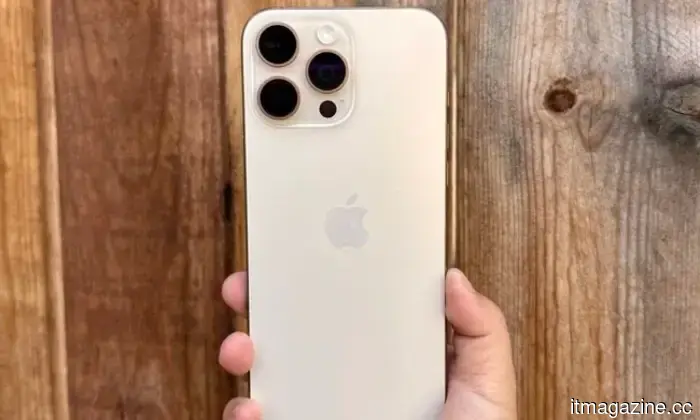
Apple raises trade-in values for iPhones, iPads, Macs, and select Android devices.
The new trade-in estimates arrive just weeks before Apple is set to announce the iPhone 18 Pro lineup.
In anticipation of the launch, Apple has updated trade-in values for iPhones, iPads, Macs, and Apple Watch models in the U.S. The company has also included a limited selection of Android phones in the trade-in program, featuring models from Samsung, Google, and OnePlus.
The values for iPhones and iPads are rising across the board.






Otros artículos
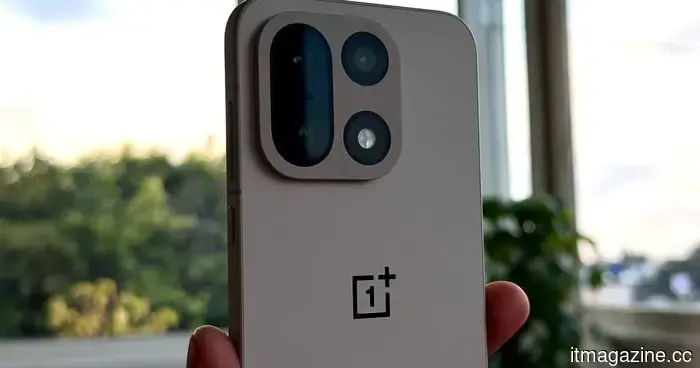 OnePlus has unveiled its initial ColorOS beta, marking the beginning of the shift from OxygenOS.
OnePlus has launched the inaugural closed ColorOS beta program for the OnePlus 15 and OnePlus 15R, marking the beginning of its transition away from OxygenOS.
OnePlus has unveiled its initial ColorOS beta, marking the beginning of the shift from OxygenOS.
OnePlus has launched the inaugural closed ColorOS beta program for the OnePlus 15 and OnePlus 15R, marking the beginning of its transition away from OxygenOS.
 Warehouse Management Systems: The Hidden Software Driving e-Commerce
In numerous industries, executing a lengthy series of decisions in order can be one of the most challenging yet essential aspects of ensuring that daily operations run smoothly. The e-commerce sector is no different, as retailers must navigate dozens, if not hundreds, of decisions from the moment a sale is completed to […]
Warehouse Management Systems: The Hidden Software Driving e-Commerce
In numerous industries, executing a lengthy series of decisions in order can be one of the most challenging yet essential aspects of ensuring that daily operations run smoothly. The e-commerce sector is no different, as retailers must navigate dozens, if not hundreds, of decisions from the moment a sale is completed to […]
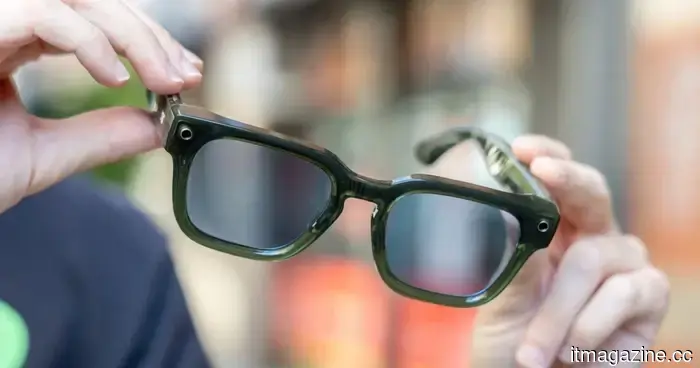 Caviar has bestowed a gold finish on Meta's smart glasses, but it seems they overlooked the aesthetic appeal.
The luxury brand Caviar has introduced a $6,840 edition of the Ray-Ban Meta AI glasses, featuring 24-karat gold details and an alligator leather case.
Caviar has bestowed a gold finish on Meta's smart glasses, but it seems they overlooked the aesthetic appeal.
The luxury brand Caviar has introduced a $6,840 edition of the Ray-Ban Meta AI glasses, featuring 24-karat gold details and an alligator leather case.
Children's smartwatches are designed to ensure their safety, but hackers can exploit them as tools for stalking.
A $30 smartwatch for kids allowed researchers to covertly monitor the wearer's location, take photos, and capture audio, revealing a significant vulnerability common to numerous GPS smartwatch brands globally.