

Amazon is phasing out the majority of its Nova AI models.
Amazon is phasing out the majority of its primary Nova AI models, focusing instead on a singular, larger initiative to create one truly competitive foundation model. This shift highlights a withdrawal that previously appeared to be characterized by closed offices and job reductions.
As first reported by Business Insider, the company has started to decommission most of its proprietary Nova lineup. This includes the premium Premier and Omni models, the Reel video generator, and the Canvas image generator. Some employees refer to this as “KTLO” mode, meaning “keep the lights on.” While these models will still be supported for current customers, they are no longer a priority for further development.
This update provides clarity on a narrative we initially reported months ago, which began with the closure of Amazon's AGI Lab and its exit from a race it never led. At that time, the news focused on the lab's closure and staff layoffs; now, it is apparent which products are being sacrificed and the reasons behind those sacrifices.
The company is now allocating resources to a new initiative named Frontier Model Research, or FMR, under the leadership of Pieter Abbeel. He joined Amazon as part of its acquisition of the robotics startup Covariant in 2024. A new flagship model is anticipated to be unveiled at Amazon’s re:Invent conference this fall, and it could still retain the Nova branding.
The rationale behind this strategy is an emphasis on focus. Under former AI head Rohit Prasad, Amazon had diversified into text, image, and video models. However, Peter DeSantis, who took over the consolidated group in December, has redirected talent and limited computational resources towards fewer, more significant initiatives. Prasad departed at the end of 2025, and AGI Lab’s founder David Luan left in February.
The Nova brand is not entirely disappearing, as Amazon has indicated that several products will remain available. These include Nova 2 Lite, Nova 2 Sonic, the Nova Forge customization service, and the Nova Act agent tool. However, the company’s AGI division in San Francisco, which consisted of 80 researchers, has been shut down, according to GeekWire.
Where Amazon has an edge is in its existing infrastructure. Unlike competitors like OpenAI, Anthropic, and Google, who made their models household names, Amazon’s Nova never achieved the same level of recognition. Additionally, its systems were costly to operate in relation to the value offered, facing competition from cheaper alternatives in a market moving towards lower-cost solutions.
Consequently, Amazon has leaned into its core strengths by focusing on infrastructure. AWS serves as a key provider for much of the industry, with significant compute commitments of $138 billion from OpenAI and over $100 billion from Anthropic. Its custom Trainium chips have evolved into a multibillion-dollar business that Jeff Bezos describes as a fourth pillar of the company.
An Amazon spokesperson dismissed suggestions of a retreat, stating, “AI models remain one of the most important things we’re working on, and that hasn’t changed,” while also noting that the company “continually evolves” its offerings based on customer needs.
The more challenging question remains one that Nova has yet to resolve. Amazon can host various models from other companies and sell the underlying chips. However, whether it can develop a frontier model that developers choose over competitors like Claude, Gemini, or GPT is what the upcoming re:Invent will determine.
Other articles
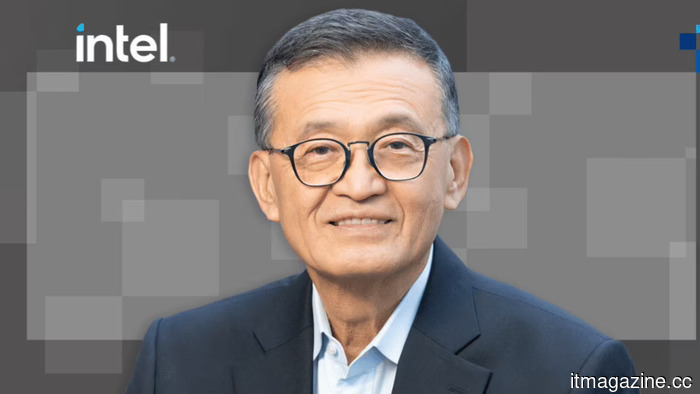 Intel transfers its Atom chip technology to a startup associated with its CEO.
Intel is granting the stealth startup Rosaic uncommon access to its Atom chip technology. Rosaic is led by a long-time co-investor of Intel's CEO, Lip-Bu Tan.
Intel transfers its Atom chip technology to a startup associated with its CEO.
Intel is granting the stealth startup Rosaic uncommon access to its Atom chip technology. Rosaic is led by a long-time co-investor of Intel's CEO, Lip-Bu Tan.
 The Top Password Managers for 2026
The way we protect our online accounts is evolving quicker than many individuals perceive. With more advanced security tools and passwordless login options, modern password managers are transforming into much more than mere password storage solutions, making them deserving of your attention before your next sign-in.
The Top Password Managers for 2026
The way we protect our online accounts is evolving quicker than many individuals perceive. With more advanced security tools and passwordless login options, modern password managers are transforming into much more than mere password storage solutions, making them deserving of your attention before your next sign-in.
 Winamp has returned, now featuring streaming powered by Deezer.
Winamp is set to make a return: a new player expected in 2027 will include a subscription powered by Deezer, in addition to your local files, radio, and podcasts.
Winamp has returned, now featuring streaming powered by Deezer.
Winamp is set to make a return: a new player expected in 2027 will include a subscription powered by Deezer, in addition to your local files, radio, and podcasts.
 Senators caution Apple against using Chinese memory chips.
A bipartisan coalition of US senators has called on Apple to abandon its intentions to purchase memory chips from Chinese manufacturers CXMT and YMTC, citing concerns over national security.
Senators caution Apple against using Chinese memory chips.
A bipartisan coalition of US senators has called on Apple to abandon its intentions to purchase memory chips from Chinese manufacturers CXMT and YMTC, citing concerns over national security.
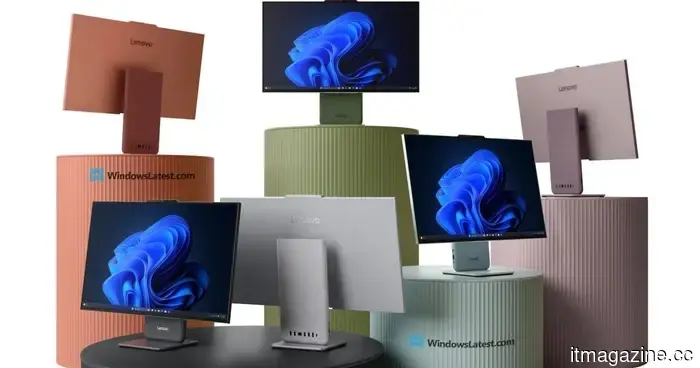 A Lenovo leak reveals an upcoming IdeaCentre desktop that takes inspiration from the iMac.
A new Lenovo leak suggests a vibrant all-in-one desktop that integrates aesthetics with functionality.
A Lenovo leak reveals an upcoming IdeaCentre desktop that takes inspiration from the iMac.
A new Lenovo leak suggests a vibrant all-in-one desktop that integrates aesthetics with functionality.
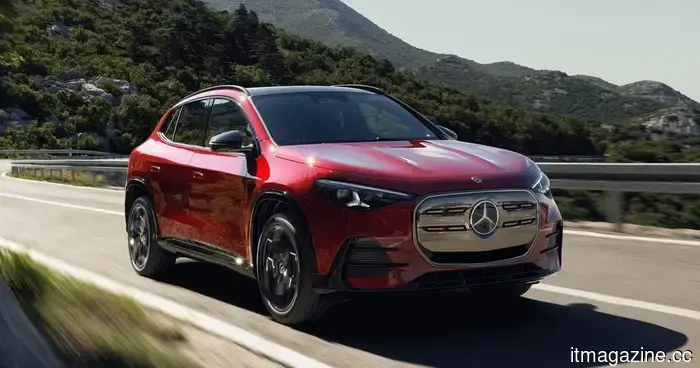 Mercedes-Benz unveils the 2028 GLA in two variants, featuring a host of impressive technology.
Mercedes-Benz unveiled the revamped 2028 GLA in both electric and hybrid versions, showcasing an 800-volt architecture, a range of up to 408 miles, and an AI-enhanced MBUX that includes Gemini and ChatGPT.
Mercedes-Benz unveils the 2028 GLA in two variants, featuring a host of impressive technology.
Mercedes-Benz unveiled the revamped 2028 GLA in both electric and hybrid versions, showcasing an 800-volt architecture, a range of up to 408 miles, and an AI-enhanced MBUX that includes Gemini and ChatGPT.
Amazon is phasing out the majority of its Nova AI models.
Amazon is reducing the number of its Nova AI models to concentrate on a new frontier model, which is expected to be revealed at re:Invent this fall.