
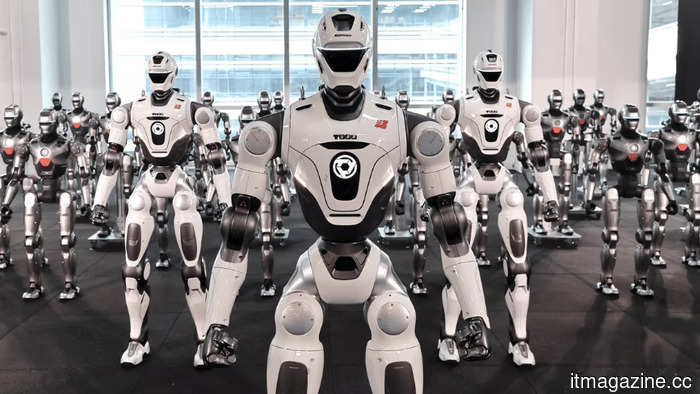
FCC prohibits foreign robots and inverters due to concerns regarding China.
The United States has taken steps to prohibit new imports of foreign-made robots and power inverters due to concerns that a hostile nation could use these devices for espionage or to disable them remotely. While the order doesn’t explicitly name China, it doesn’t have to.
On Tuesday, the Federal Communications Commission (FCC) added two new categories to its Covered List, as first reported by CNBC. One category encompasses "advanced robotic devices," which includes mobile robots like humanoids and quadrupeds. The other category pertains to connected power inverters, devices that link solar panels, batteries, and data-center equipment to the grid.
Being included in the Covered List signifies a significant commercial barrier; equipment listed there cannot obtain FCC authorization. Almost all electronic devices must receive this clearance before entering the US market, similar to the actions taken against DJI drones and Huawei networking equipment.
What stands out in the FCC document is its restriction on foreign-made robots and inverters “regardless of the nationality of origin.” While the politics point to Beijing, the language encompasses all manufacturers.
This gap is intentional. It allows Washington to label China as the threat while equally applying pressure to all manufacturers to either produce in America or undergo a security review. An administration official informed CNBC that the goal is to safeguard the US AI development and encourage firms to bring production back to the US. “Economic security is national security,” the official stated.
There is an avenue for manufacturers to pursue “Conditional Approval” to continue sales if they pass a security check. The Department of Defense oversees robots, while the Department of Homeland Security governs inverters. In theory, any manufacturer, including Chinese firms, can apply. However, this effectively places the Pentagon in charge of determining which robots can be sold in the US.
The rationale for focusing on robots and inverters together may seem unusual until one examines the security implications. Both types of devices are networked and can respond to remote signals.
Grid inverters connect to networks for monitoring and firmware updates. The interagency assessment cautions that this communication channel may enable a foreign entity to “turn off the inverters or use them to collect and exfiltrate data.” Increasing solar and battery integration means more devices that can be controlled remotely.
Robots pose a similar risk. The FCC’s findings indicate that connected robots “collect data that could be exploited by malicious actors to surveil Americans," or could permit an attacker to “remotely control the robots.” Unitree, a Chinese company, exemplifies this category as its humanoids and quadrupeds transition from laboratory demonstrations to a potential public listing, drawing attention from the Pentagon.
The actual impact of this measure may be less substantial than headlines imply, at least initially. The block affects only new device models seeking authorization and does not pertain to already purchased robots or inverters, approved models, or equipment utilized by the federal government.
Thus, this serves as an import barrier rather than a recall. Its significance will grow over time as newer models become ineligible while previously approved devices remain available. The FCC previously implemented a similar phased strategy with drones and consumer routers. The Cybersecurity and Infrastructure Security Agency (CISA) is now advising companies to vet suppliers against the list.
A more pressing question is whether the US can successfully bridge the gap, as China dominates these supply chains. The same issues regarding rare-earth materials and battery supply that complicated the drone ban are applicable here. Banning imports can be enacted swiftly, but developing a domestic industry to replace them is a lengthy process, as is reinforcing a grid that is already vulnerable to external threats.
For now, Washington has chosen to draw the line where it is most manageable: at the border and concerning the next generation of machinery. The critical test will be whether manufacturing follows suit, as merely being listed will not resolve the issue.
Other articles
 Reasons the Starbucks AI inventory system did not succeed at full scale.
The Starbucks AI inventory tool was discontinued following its complete national implementation. NomadGo, the 30-member startup responsible for its development, was informed on April 3rd.
Reasons the Starbucks AI inventory system did not succeed at full scale.
The Starbucks AI inventory tool was discontinued following its complete national implementation. NomadGo, the 30-member startup responsible for its development, was informed on April 3rd.
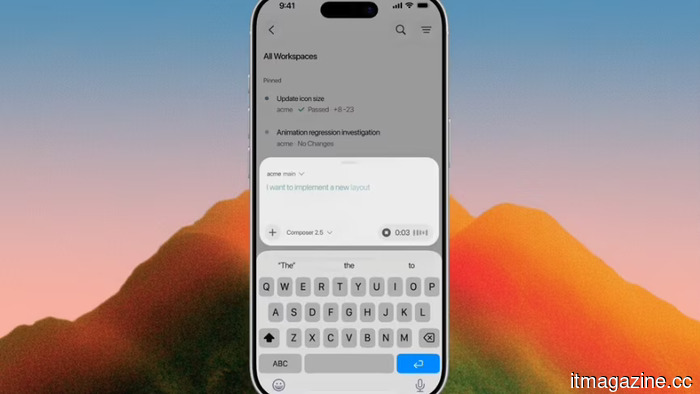 Cursor's $7 plan for India operates on its proprietary AI models.
Cursor introduced a ₹649 plan exclusive to India, developed using its own models instead of those from OpenAI or Anthropic, which allows it to offer the service at one-third of the Pro price.
Cursor's $7 plan for India operates on its proprietary AI models.
Cursor introduced a ₹649 plan exclusive to India, developed using its own models instead of those from OpenAI or Anthropic, which allows it to offer the service at one-third of the Pro price.
 The security of AI-generated code has reached a standstill at 56%.
Veracode monitored over 100 models for a year. The security of AI-generated code remains at a 56% pass rate, despite AI currently producing half of all code.
The security of AI-generated code has reached a standstill at 56%.
Veracode monitored over 100 models for a year. The security of AI-generated code remains at a 56% pass rate, despite AI currently producing half of all code.
 Reasons behind the failure of the Starbucks AI inventory tool at full scale.
The AI inventory tool from Starbucks was discontinued following its complete national rollout. NomadGo, the 30-member startup that created it, received the news on April 3.
Reasons behind the failure of the Starbucks AI inventory tool at full scale.
The AI inventory tool from Starbucks was discontinued following its complete national rollout. NomadGo, the 30-member startup that created it, received the news on April 3.
 Researchers have developed a tool capable of detecting the AI utilized to create a counterfeit video.
Researchers at UC Riverside developed SAGA, a tool that identifies the specific system responsible for creating AI-generated fake videos by utilizing subtle visual patterns as digital fingerprints.
Researchers have developed a tool capable of detecting the AI utilized to create a counterfeit video.
Researchers at UC Riverside developed SAGA, a tool that identifies the specific system responsible for creating AI-generated fake videos by utilizing subtle visual patterns as digital fingerprints.
FCC prohibits foreign robots and inverters due to concerns regarding China.
The FCC included foreign-manufactured humanoid robots and grid inverters in its Covered List, prohibiting new imports to the US for security reasons. The primary focus is China.