
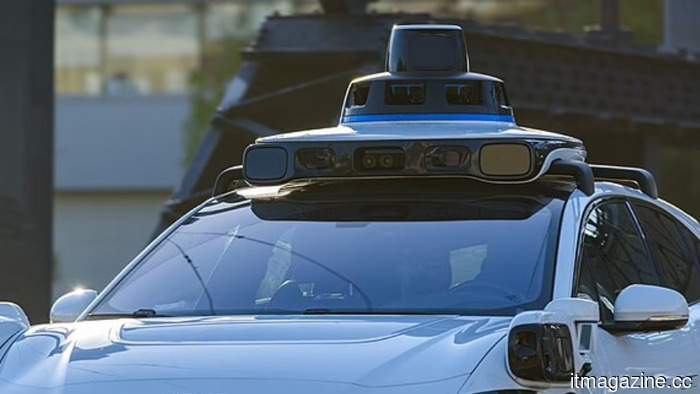
A Korean AI model evaluates every potential driving route for safety prior to the car's movement. CVPR has highlighted this achievement.
TL;DR: The SafeDrive model from Seoul National University evaluates multiple driving routes for safety before selecting one. It is the first autonomous driving paper from Korea to be featured as a highlight at CVPR.
Most self-driving AI systems analyze human driving behaviors and attempt to replicate them. While they perform well under typical conditions, they often fail to clarify the rationale behind their path choices, which can lead to critical errors in split-second decisions. A team from Seoul National University, led by professor Jun Won Choi, has created SafeDrive, which employs a distinct methodology: it generates several potential trajectories, evaluates each for safety using sensor data, and selects the safest option, providing transparency in its decision-making process.
This approach, known as Fine-grained Safety Reasoning, was recognized as a highlight paper at CVPR 2026, a leading conference in computer vision and AI, with only about 3% of submissions receiving this honor. This marks the first time that a Korean-developed paper on end-to-end autonomous driving has been highlighted at CVPR, highlighting South Korea's growing competitiveness in a research area traditionally led by US and Chinese institutions. The country has pledged $880 billion over the next decade for advancements in AI, semiconductors, and robotics, and SafeDrive is among the first successful outcomes of this investment to gain prominent academic recognition.
SafeDrive is being implemented beyond the laboratory; it has been integrated into EAD, a reference model supported by Korea’s Ministry of Trade, Industry and Energy. Choi’s team is collaborating with local autonomous driving companies to test the system in real vehicles, with ambitions toward commercialization utilizing proprietary driving data. The frequency of crashes involving Tesla's Austin robotaxis, which occur four times more often than incidents involving human drivers, highlights the real-world implications of the safety and explainability challenges SafeDrive aims to solve. When an autonomous vehicle errs, it is crucial for regulators, insurance providers, and the justice system to understand the reasons behind those decisions. A model that evaluates options and chooses the safest one provides a traceable decision-making process that traditional black-box systems lack.
Other articles
 Thinking of purchasing a monitor? This Mac application can uncover issues before the return period ends.
Screen Test performs over 25 display assessments completely offline, assisting Mac users in identifying dead pixels, inconsistent lighting, ghosting, and other issues before they turn into costly regrets.
Thinking of purchasing a monitor? This Mac application can uncover issues before the return period ends.
Screen Test performs over 25 display assessments completely offline, assisting Mac users in identifying dead pixels, inconsistent lighting, ghosting, and other issues before they turn into costly regrets.
 Tesla exceeded delivery expectations in Q2, yet the stock declined. The upcoming earnings report on Wednesday may encounter a similar issue.
In Q2, Tesla delivered 480,126 vehicles, surpassing expectations. However, the stock saw a decline. Rivian's R2 aims at Tesla's main price range. Options traders are adopting a bearish stance.
Tesla exceeded delivery expectations in Q2, yet the stock declined. The upcoming earnings report on Wednesday may encounter a similar issue.
In Q2, Tesla delivered 480,126 vehicles, surpassing expectations. However, the stock saw a decline. Rivian's R2 aims at Tesla's main price range. Options traders are adopting a bearish stance.
 Interested in exploring film photography? Kodak's new $35 camera is an excellent option to begin with.
This $35 point-and-shoot camera brings 35mm film photography within reach, featuring simple controls and a chic sliding lens cover.
Interested in exploring film photography? Kodak's new $35 camera is an excellent option to begin with.
This $35 point-and-shoot camera brings 35mm film photography within reach, featuring simple controls and a chic sliding lens cover.
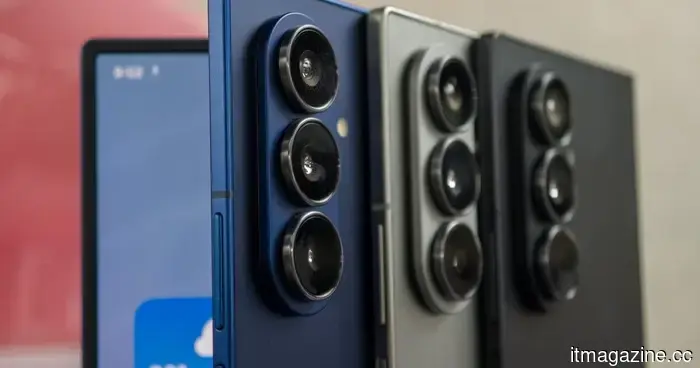 The prices for the Galaxy Z Fold 8 could be harsher than initially anticipated.
The most recent leak indicates that Samsung's upcoming foldable devices and watches may see significant price increases in certain areas.
The prices for the Galaxy Z Fold 8 could be harsher than initially anticipated.
The most recent leak indicates that Samsung's upcoming foldable devices and watches may see significant price increases in certain areas.
-Review-Dells-classic-Windows-laptop-returns-and-its-hard-to-put-down.jpg) Dell XPS 14 (2026) Review: Dell's timeless Windows laptop makes a comeback, and it's difficult to resist.
The Dell XPS 14 DA14260 features a high-quality CNC aluminum construction, a vivid OLED touchscreen, impressive battery performance, and surprisingly powerful Intel Arc graphics, although its price is notable.
Dell XPS 14 (2026) Review: Dell's timeless Windows laptop makes a comeback, and it's difficult to resist.
The Dell XPS 14 DA14260 features a high-quality CNC aluminum construction, a vivid OLED touchscreen, impressive battery performance, and surprisingly powerful Intel Arc graphics, although its price is notable.
 The upcoming QuietComfort headphones from Bose may incorporate the best features of the Ultra model.
A recent leak indicates that Bose's QuietComfort headphones are set to receive an update — featuring enhanced capabilities, a revamped design, and maintaining the current price.
The upcoming QuietComfort headphones from Bose may incorporate the best features of the Ultra model.
A recent leak indicates that Bose's QuietComfort headphones are set to receive an update — featuring enhanced capabilities, a revamped design, and maintaining the current price.
A Korean AI model evaluates every potential driving route for safety prior to the car's movement. CVPR has highlighted this achievement.
Seoul National University's SafeDrive produces several trajectories and evaluates each for safety prior to making a selection. It is the first Korean paper to receive a highlight at CVPR.