
Alibaba has made its AI chip software stack available as open-source at WAIC, aiming to challenge Nvidia's CUDA dominance.
Alibaba's T-Head has announced the open-source release of SAIL, the software stack for its Zhenwu AI chips, at the World AI Conference in Shanghai. This initiative aims to ease the transition for developers currently reliant on Nvidia’s CUDA. T-Head indicated that developers can modify SAIL to fit into popular AI frameworks within a week.
A significant number of AI developers globally utilize CUDA, Nvidia's proprietary toolkit for GPU programming, which effectively binds them to Nvidia hardware — a situation that has contributed to the company achieving a $3.4 trillion market capitalization. During the same conference, Xi Jinping emphasized that no single country should dominate AI, and the decision to open-source SAIL reflects this perspective: for China to attain AI independence, it must break free from the reliance on CUDA at the software level, beyond merely creating alternative chips.
T-Head is not acting alone; Huawei open-sourced CANN, the software environment for its Ascend AI processors, in 2025, while Moore Threads has pursued a similar approach with its GPU stack. All three companies are competing for developers to create software that is compatible with Chinese hardware while maintaining access to frameworks like PyTorch. The challenge lies more in habits than in technology; CUDA has a significant head start of 17 years and boasts the largest ecosystem of libraries in the sector.
The timing of this announcement is significant for Alibaba. Last month, Anthropic accused Alibaba's Qwen lab of conducting an extensive AI distillation campaign against a U.S. firm, and in June, the Pentagon added Alibaba to its Chinese military companies blacklist. By open-sourcing SAIL, the company positions itself as a provider of open AI infrastructure while contesting these designations legally. The 560,000 Zhenwu chips already shipped to over 400 clients now have a publicly accessible software layer, thereby strengthening its ecosystem and making it more difficult for any government to impose restrictions.
Other articles
 Another price increase from Apple has occurred, this time affecting Apple One.
Apple has increased the monthly cost of its Family and Premier Apple One bundles by $2, while the Individual plan stays the same.
Another price increase from Apple has occurred, this time affecting Apple One.
Apple has increased the monthly cost of its Family and Premier Apple One bundles by $2, while the Individual plan stays the same.
 Cybercriminals leaked 802,000 stolen accounts in a single day amidst the World Cup group stage.
HUMAN Security discovered 12 million hacked streaming accounts from 10 platforms that are showing World Cup matches. The value of the black market is estimated at $220 million.
Cybercriminals leaked 802,000 stolen accounts in a single day amidst the World Cup group stage.
HUMAN Security discovered 12 million hacked streaming accounts from 10 platforms that are showing World Cup matches. The value of the black market is estimated at $220 million.
 Apple Music has increased its prices.
Apple has recently increased the starting price for its music streaming service, which is now set at $11.99 in the United States.
Apple Music has increased its prices.
Apple has recently increased the starting price for its music streaming service, which is now set at $11.99 in the United States.
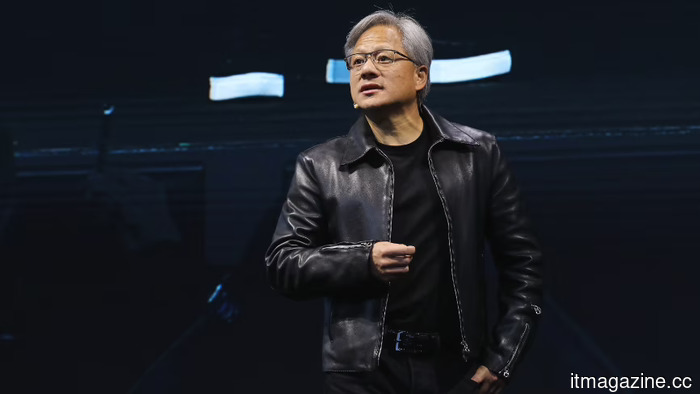 Jensen Huang's leather jacket fetched $960,000 at Sotheby's, which is 96 times its original retail price.
Following 65 bids from 45 collectors, the signed Tom Ford jacket of Nvidia CEO Jensen Huang was sold for $960,000. The pre-sale estimate was between $40,000 and $60,000, while it has a retail price of $10,000.
Jensen Huang's leather jacket fetched $960,000 at Sotheby's, which is 96 times its original retail price.
Following 65 bids from 45 collectors, the signed Tom Ford jacket of Nvidia CEO Jensen Huang was sold for $960,000. The pre-sale estimate was between $40,000 and $60,000, while it has a retail price of $10,000.
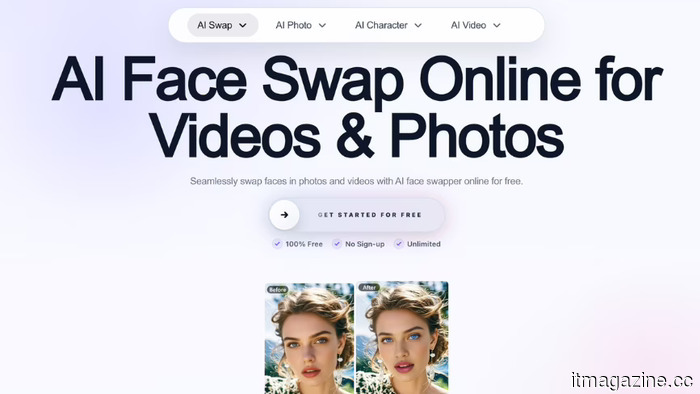 Face AI enhances its video face swap tool, offering quicker processing and improved tracking capabilities.
Face AI has enhanced its video face swap functionality with better facial tracking, improved expression mapping, and processing times under a minute. The update is aimed at TikTok and Reels creators.
Face AI enhances its video face swap tool, offering quicker processing and improved tracking capabilities.
Face AI has enhanced its video face swap functionality with better facial tracking, improved expression mapping, and processing times under a minute. The update is aimed at TikTok and Reels creators.
 Google utilized Veo and Gemini to recreate the most remarkable goal Pelé ever scored, a moment that was never captured on film.
Pelé's "Gol da Rua Javari" from 1959 was never recorded on film. Google DeepMind reconstructed it using 2,000 historical documents, interviews with witnesses, and AI models.
Google utilized Veo and Gemini to recreate the most remarkable goal Pelé ever scored, a moment that was never captured on film.
Pelé's "Gol da Rua Javari" from 1959 was never recorded on film. Google DeepMind reconstructed it using 2,000 historical documents, interviews with witnesses, and AI models.
Alibaba has made its AI chip software stack available as open-source at WAIC, aiming to challenge Nvidia's CUDA dominance.
Alibaba's T-Head division has made SAIL, the software stack for its Zhenwu AI chips, available as open-source at WAIC. This move comes after Huawei's CANN was also open-sourced and aims to facilitate the transition away from CUDA.