
Netflix reports that it has employed AI in more than 300 titles, and there’s no turning back now.
AI in Hollywood is no longer merely an experiment.
The ongoing debate in Hollywood about the role of AI in film and television production may have been eclipsed by reality. Netflix has revealed that its creative partners utilized generative AI workflows on approximately 300 titles in 2026, with the majority of this work occurring in post-production.
It's important to clarify that this figure refers to AI-assisted production workflows rather than 300 entirely AI-generated films and shows. Nonetheless, it illustrates the rapid advancements of the technology beyond isolated trials.
Netflix is employing AI where productions reach their limits
The streaming service particularly spotlighted three projects: the Indian film Glory, Brazil’s Brasil 70: A Saga do Tri, and the American documentary series The American Experiment. In these productions, generative AI was used to create or enhance crowds, depict historical battles, and aid in establishing shots to construct larger fictional and historical settings.
Netflix co-CEO Ted Sarandos mentioned that The American Experiment includes 17 minutes of AI-enhanced footage. Reportedly, those sequences were produced twice as fast and at half the cost compared to previous methods. Without AI tools, some of these scenes would have been scrapped entirely due to budgetary and scheduling constraints that conventional production techniques could not accommodate.
Additionally, the pace of adoption has escalated swiftly. In 2025, Netflix publicly acknowledged a building-collapse sequence in The Eternaut as its first instance of generative AI footage appearing in a final production. Eyeline Studios completed that effect approximately 10 times faster than traditional visual effects methods, according to Sarandos. Now, just a year later, AI workflows are present in hundreds of titles.
The conversation has shifted beyond the question of whether Hollywood will integrate AI
Netflix has indicated that the technology now supports concept development, previsualization, and more. The company runs Eyeline, an animation lab, and has recently acquired InterPositive, an AI company focused on filmmaking, co-founded by Ben Affleck. Sarandos anticipates that savings generated through these workflows will be reinvested into new programming.
Netflix has also set guidelines for production partners. Any intended use of AI must be disclosed to Netflix, and the final footage, likenesses of talent, personal data, and third-party intellectual property may require written authorization. The guidelines forbid generating or replacing performances and union-covered work without consent and necessary agreements.
It is safe to conclude that generative AI has already become part of mainstream film and television production. The next conflict in Hollywood will revolve around who controls the technology, who reaps the benefits of the savings, and whose work may be sidelined in the process.



Other articles
 Sonos users are finally receiving a more user-friendly app, but the launch has a drawback.
The Sonos app will feature improved navigation, customizable sorting of speakers, and revamped volume controls for iOS, though the gradual rollout may take up to two weeks to reach all users.
Sonos users are finally receiving a more user-friendly app, but the launch has a drawback.
The Sonos app will feature improved navigation, customizable sorting of speakers, and revamped volume controls for iOS, though the gradual rollout may take up to two weeks to reach all users.
 The Pentagon has halted 155 wind projects across 24 states, arguing that drones could conceal themselves within wind farms.
The year-long suspension impacts 44GW of capacity and has resulted in a $2 billion loss for developers. The wind industry claims it is driven by political motives. Legal action is currently in progress.
The Pentagon has halted 155 wind projects across 24 states, arguing that drones could conceal themselves within wind farms.
The year-long suspension impacts 44GW of capacity and has resulted in a $2 billion loss for developers. The wind industry claims it is driven by political motives. Legal action is currently in progress.
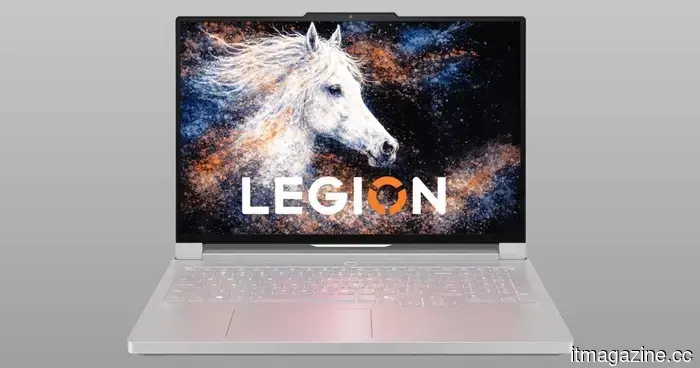 Lenovo's latest gaming laptop is the first to offer a 240Hz OLED display printed with inkjet technology.
Lenovo's latest Legion R9000P is the first laptop to incorporate an inkjet-printed OLED display, boasting a refresh rate of 240Hz and more than 99% coverage of the DCI-P3 color space.
Lenovo's latest gaming laptop is the first to offer a 240Hz OLED display printed with inkjet technology.
Lenovo's latest Legion R9000P is the first laptop to incorporate an inkjet-printed OLED display, boasting a refresh rate of 240Hz and more than 99% coverage of the DCI-P3 color space.
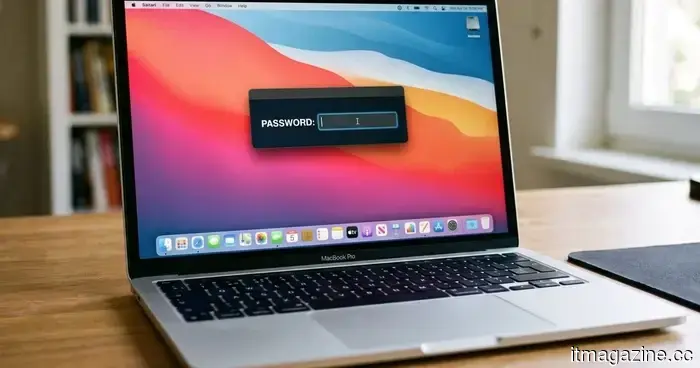 This new malware for Mac will prevent you from using your computer until you give up your password.
ClickLock is a new malware for macOS that persistently terminates system processes and deceives victims into providing their login passwords to steal confidential information.
This new malware for Mac will prevent you from using your computer until you give up your password.
ClickLock is a new malware for macOS that persistently terminates system processes and deceives victims into providing their login passwords to steal confidential information.
 Tesla produced a balance bike for toddlers priced at $225. It features no motor and no pedals, and is already out of stock.
Tesla's Balance Bike for Kids is a toy designed for children aged 2 to 5, featuring a magnesium frame and no pedals or motors. It sold out immediately. Musk continues to refrain from producing an electric bike for adults.
Tesla produced a balance bike for toddlers priced at $225. It features no motor and no pedals, and is already out of stock.
Tesla's Balance Bike for Kids is a toy designed for children aged 2 to 5, featuring a magnesium frame and no pedals or motors. It sold out immediately. Musk continues to refrain from producing an electric bike for adults.
 Next month, Microsoft will cease syncing OneDrive on older versions of Windows 10.
As of August 15, OneDrive sync updates will cease for Windows 10 versions earlier than 22H2. There will be no further fixes or security updates available. Users can choose to use the web interface or upgrade to Windows 11.
Next month, Microsoft will cease syncing OneDrive on older versions of Windows 10.
As of August 15, OneDrive sync updates will cease for Windows 10 versions earlier than 22H2. There will be no further fixes or security updates available. Users can choose to use the web interface or upgrade to Windows 11.
Netflix reports that it has employed AI in more than 300 titles, and there’s no turning back now.
Netflix indicates that generative AI played a role in approximately 300 productions in 2026, assisting creators in rapidly and cost-effectively developing crowds, battles, environments, and various sequences.