
Anthropic and Blackstone have introduced Ode, a firm focused on AI implementation.
The competition in AI has focused on developing the most advanced model. However, a new company supported by Anthropic believes that the true opportunity lies in implementing those models effectively within large organizations. This company, named Ode, was officially launched this week with backing from partners including Anthropic, Blackstone, and Hellman & Friedman, establishing a $1.5 billion venture, as first reported by TechCrunch.
The concept
Ode specializes in AI implementation. It deploys small teams of experienced engineers into businesses to identify areas where AI can provide assistance and then develops the necessary systems. The founders refer to this as a “Claude-first” strategy, leveraging Anthropic’s models when possible and considering competitors' models when necessary.
The goal is clear. CEO Chris Taylor remarked to TechCrunch that he can “easily envision this as a trillion-dollar company in the future if we execute successfully.” Many enterprise AI trials fail to reach full production, and Ode aims to be the company that bridges that gap.
Specialized teams, not a large workforce
The heart of EU tech: recent insights from the EU tech landscape, a narrative from our experienced founder Boris, and some questionable AI-generated art. It’s free and arrives in your inbox weekly. Sign up today! The firm operates with approximately 100 engineers, over half of whom are former startup founders. A Blackstone executive referred to them as “special forces” rather than just a large pool of engineers.
Ode is based on Fractional AI, an applied-AI boutique it acquired in May. Blackstone identified this startup while integrating AI into its own portfolio firms. When the acquisition was finalized, Fractional concluded its 11-month partnership with OpenAI. The founders, Taylor and Eddie Siegel, now lead Ode.
Siegel downplays the importance of model selection in this context. “While choosing a model is significant, it’s not where most effort is invested,” he explained. He likens it to selecting a programming language—they matter, but don’t ultimately determine the project's success.
A competitive emerging market
Ode is not the only company making this play. OpenAI has created its own version called The Deployment Company, and consulting giants Deloitte and Accenture have established similar teams. Even Microsoft continues to emphasize that AI only delivers value when it fundamentally transforms business operations.
The need for such services is genuine, but there are obstacles. Companies are cautious following incidents like HubSpot’s customer data backlash, and many struggle to assess whether their AI implementations are effective—a challenge that others are also eager to tackle. Ode’s bet is that a small group of highly skilled engineers can succeed where pilots have faltered.
Other articles
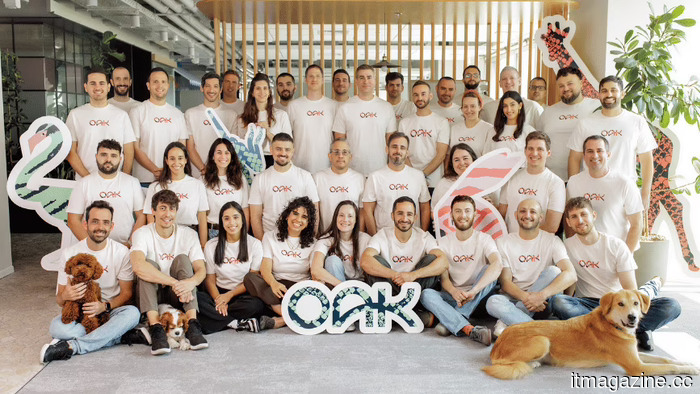 Oak secures $60 million for an AI-driven identity platform.
Israeli startup Oak has secured $60 million for an AI-native identity platform that manages all users, machines, and AI agents from one centralized control panel.
Oak secures $60 million for an AI-driven identity platform.
Israeli startup Oak has secured $60 million for an AI-native identity platform that manages all users, machines, and AI agents from one centralized control panel.
 HTC's smart glasses are reportedly on their way to the US, although the company has not confirmed this.
Amazon temporarily posted listings for HTC's VIVE Eagle smart glasses, indicating a US launch on September 1 for $499, but later removed the pages before HTC had officially verified the move beyond Taiwan.
HTC's smart glasses are reportedly on their way to the US, although the company has not confirmed this.
Amazon temporarily posted listings for HTC's VIVE Eagle smart glasses, indicating a US launch on September 1 for $499, but later removed the pages before HTC had officially verified the move beyond Taiwan.
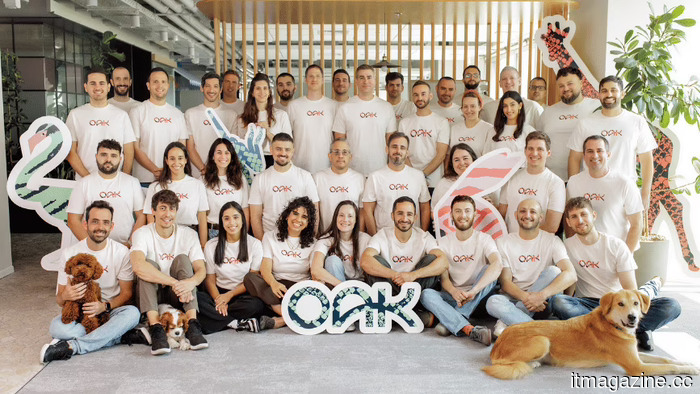 Oak secures $60 million for an AI-driven identity platform.
Israeli startup Oak has secured $60 million for an AI-native identity platform that manages every user, machine, and AI agent from a unified control panel.
Oak secures $60 million for an AI-driven identity platform.
Israeli startup Oak has secured $60 million for an AI-native identity platform that manages every user, machine, and AI agent from a unified control panel.
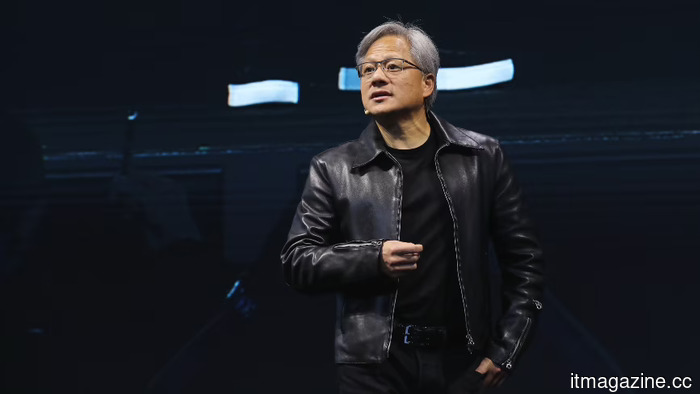 Nokia and Nvidia introduce the inaugural commercial AI-RAN.
Nokia and Nvidia have developed the first commercial AI-RAN platform, which is expected to double the network capacity using the current spectrum, with a launch planned for 2027.
Nokia and Nvidia introduce the inaugural commercial AI-RAN.
Nokia and Nvidia have developed the first commercial AI-RAN platform, which is expected to double the network capacity using the current spectrum, with a launch planned for 2027.
 OpenAI created a small $230 keyboard that enables you to enhance an AI's capabilities.
OpenAI and Work Louder have created a $230 mini keyboard that offers Codex users physical shortcuts, lights indicating live agent status, and a dial for modifying the AI's processing intensity.
OpenAI created a small $230 keyboard that enables you to enhance an AI's capabilities.
OpenAI and Work Louder have created a $230 mini keyboard that offers Codex users physical shortcuts, lights indicating live agent status, and a dial for modifying the AI's processing intensity.
 Google Play will allow third-party app stores starting on July 22.
Starting July 22, Google will include third-party app stores within Google Play in the US, following the decision of Google and Epic to abandon their efforts to modify the court ruling.
Google Play will allow third-party app stores starting on July 22.
Starting July 22, Google will include third-party app stores within Google Play in the US, following the decision of Google and Epic to abandon their efforts to modify the court ruling.
Anthropic and Blackstone have introduced Ode, a firm focused on AI implementation.
Anthropic and Blackstone have introduced Ode, a $1.5 billion AI implementation company that believes the next big opportunity in AI lies in deployment rather than in developing improved models.