
DeepSeek's IPO approaches as it aims for a valuation of $71 billion.
DeepSeek is preparing for its public offering. The Chinese AI lab has begun setting the stage for an initial public offering (IPO), as reported by Bloomberg. The company could potentially file this year, aiming for a market debut in 2027. However, it first intends to secure additional funding privately.
The lab in Hangzhou recently completed its first external funding round, raising approximately $7 billion and achieving a valuation of about $50 billion. Now, it is in discussions with new investors for another funding round, with a pre-money valuation set at a minimum of 480 billion yuan, or around $71 billion.
According to Bloomberg, DeepSeek is looking to raise at least 10 billion yuan, which is roughly $1.5 billion. The final amount could be significantly higher depending on the number of investors that participate. The Financial Times initially reported on the new fundraising efforts, while The Information has suggested a target closer to $7.4 billion for this second round.
In just three months, the company has experienced a substantial revaluation. A $71 billion valuation represents an increase of around 40% in just six weeks. When viewed from a broader perspective, the growth is even more pronounced: DeepSeek first opened to outside funding in April at approximately $10 billion. Shortly after, discussions with Tencent and Alibaba raised the valuation to over $20 billion. By May, it was approaching $45 billion, closing the funding round at nearly $50 billion in June.
This initial funding round was unique in its structure. Only one investor, the National Artificial Intelligence Industry Investment Fund of China, received direct equity and voting rights. Other investors contributed to a limited partnership managed by founder Liang Wenfeng, without voting power and subjected to a five-year lock-up period. Typically, such a structure would deter interest; however, this round was reportedly oversubscribed.
Regarding the IPO schedule, DeepSeek is collaborating with accounting and banking advisors to complete its financial statements by the end of December, as one source informed Bloomberg. This is a necessary step prior to any filing. The public listing could occur late this year or early in 2027, depending on the readiness of the financial data.
No specific exchange has been announced yet, but expectations lean toward either mainland China or Hong Kong, where local competitors Zhipu and MiniMax have already gone public. Since its debut in January, Zhipu's shares have surged nearly 1,600%, which contributes to DeepSeek's inclination to enter public markets. The proposed timeline would also align DeepSeek alongside OpenAI, which has recently delayed its own IPO to 2027, aiming for a valuation of $1 trillion.
Investors are not solely motivated by speculation regarding DeepSeek's valuation. Recent reports indicate that the company’s annual revenue has reached between $400 million to $500 million, largely from cloud access to its models. As of June, the lab represented nearly 23% of the enterprise AI gateway tokens processed by Vercel, according to TechCrunch, placing it just behind Anthropic, which held 32%.
DeepSeek has achieved this standing by utilizing open-source reasoning models that perform competitively with leading U.S. laboratories, despite export restrictions limiting China’s access to advanced Nvidia chips. Instead, DeepSeek's cloud service operates on hardware supplied by Huawei, signaling a noteworthy development showing that a capable AI framework can function independently of American technology.
For Liang, this valuation has been life-changing. His ownership stake, around 78%, has soared in value to approximately $36 billion on paper, up from $16.7 billion, per the Bloomberg Billionaires Index, positioning him as the richest AI founder globally, surpassing Anthropic’s Dario Amodei and OpenAI’s Greg Brockman.
Liang has informed potential investors that DeepSeek will focus on long-term research rather than quick commercialization, committing to releasing open-source models on the path to achieving artificial general intelligence. This trajectory is easier to commit to when the backers lack the ability to outvote him. However, whether it remains consistent once DeepSeek becomes accountable to public shareholders is the fundamental challenge that its IPO would ultimately address.
Other articles
 Children in China are now prohibited from developing romantic feelings for chatbots.
China has prohibited emotional AI relationships that involve minors as regulators aim to reduce dependency on chatbots and tackle the nation's historically low birth rate.
Children in China are now prohibited from developing romantic feelings for chatbots.
China has prohibited emotional AI relationships that involve minors as regulators aim to reduce dependency on chatbots and tackle the nation's historically low birth rate.
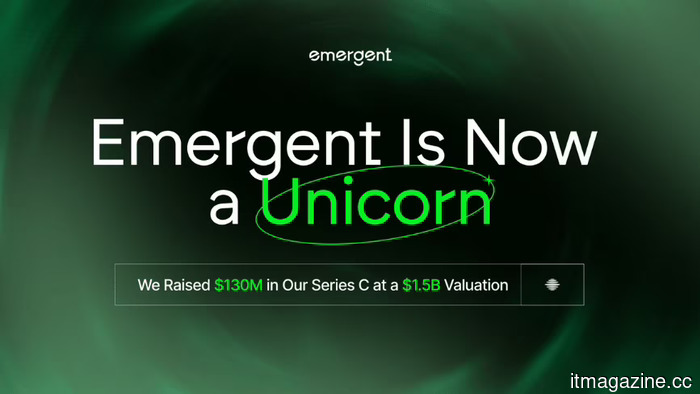 Emergent reaches $1.5 billion as vibe coding creates another unicorn.
Emergent's vibe coding platform has secured $130 million at a valuation of $1.5 billion, achieving unicorn status just a year after its launch, as it competes with Lovable, Replit, and Cursor.
Emergent reaches $1.5 billion as vibe coding creates another unicorn.
Emergent's vibe coding platform has secured $130 million at a valuation of $1.5 billion, achieving unicorn status just a year after its launch, as it competes with Lovable, Replit, and Cursor.
 Spotify has introduced a conversational AI that allows users to influence playback through voice commands.
Premium users can now use voice or text commands to control playback, check listening history, and discover music on Spotify. Additionally, managed accounts for children are now available at no cost.
Spotify has introduced a conversational AI that allows users to influence playback through voice commands.
Premium users can now use voice or text commands to control playback, check listening history, and discover music on Spotify. Additionally, managed accounts for children are now available at no cost.
 OnePlus is set to withdraw from the US and Europe as soon as this week.
Oppo is closing OnePlus in the US and Europe due to financial difficulties, geopolitical issues, and the memory crisis that has impacted budget smartphones. An exit from India is expected in 2027.
OnePlus is set to withdraw from the US and Europe as soon as this week.
Oppo is closing OnePlus in the US and Europe due to financial difficulties, geopolitical issues, and the memory crisis that has impacted budget smartphones. An exit from India is expected in 2027.
 China grants approval for Apple Intelligence on iPhones, with Alibaba and Baidu becoming partners.
Apple Intelligence has obtained regulatory approval in China, paving the way for the introduction of AI features tailored to the local market, partially utilizing technology from Alibaba's Qwen and Baidu.
China grants approval for Apple Intelligence on iPhones, with Alibaba and Baidu becoming partners.
Apple Intelligence has obtained regulatory approval in China, paving the way for the introduction of AI features tailored to the local market, partially utilizing technology from Alibaba's Qwen and Baidu.
 Declining Samsung Health AI training will not erase your health history, after all.
Samsung states that opting out of AI training in Samsung Health will solely erase the data gathered for AI development, while leaving current health records unaffected.
Declining Samsung Health AI training will not erase your health history, after all.
Samsung states that opting out of AI training in Samsung Health will solely erase the data gathered for AI development, while leaving current health records unaffected.
DeepSeek's IPO approaches as it aims for a valuation of $71 billion.
A DeepSeek IPO may occur as early as this year. Initially, the Chinese AI laboratory is seeking a new funding round at a valuation of $71 billion, an increase from the $50 billion it was valued at six weeks prior.